
Data last updated: September 28, 2026
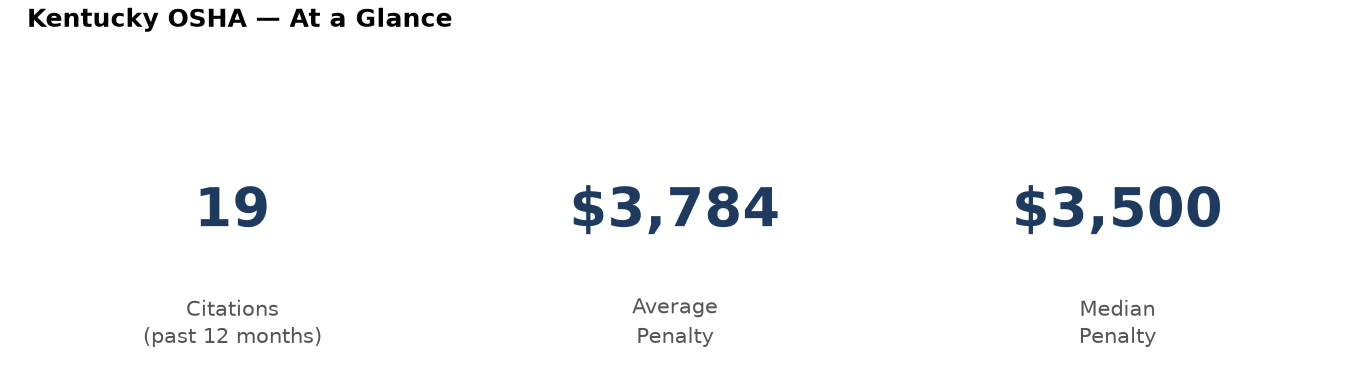
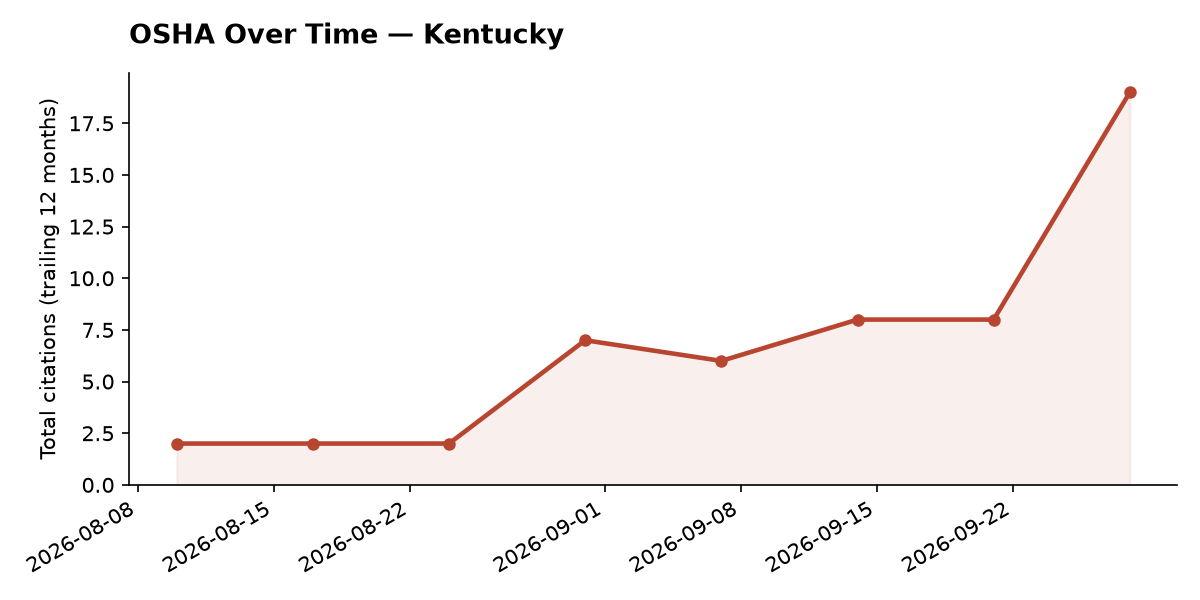
Nineteen scaffolding citations. Every single one classified Serious. An average penalty of $3,784, a median of $3,500, and Danville sitting at the top of the list for most citations in the state. Kentucky isn’t a high-volume enforcement state for scaffolding, but when OSHA shows up, it’s not writing warnings — it’s writing checks with real teeth.
If you’ve just opened an envelope with a citation number on it, the clock is already running. You have 15 working days from receipt to file a Notice of Contest, and that window closes faster than most business owners expect. Before you decide whether to pay, negotiate, or fight it, talk to a Kentucky OSHA defense attorney who handles scaffolding cases specifically.
What 1926.451 Actually Demands on Your Jobsite
Every one of Kentucky’s 19 citations this period traces back to the same rulebook: the 1926.451 standard, OSHA’s general requirements for scaffolding. This isn’t a niche technical rule — it’s the baseline for any scaffold used on a construction site, covering how the structure is built, how much weight it can bear, how workers get on and off it safely, what fall protection has to be in place once someone’s up there, and how guardrails and planking need to be configured.
Look at the citation subsections in Kentucky’s own cases and the pattern is clear. Several of the citations here — including ones at Jtb Construction Llc and Mmj Masonry Llc in Danville, and at Noe Vega Diaz in Lexington — were issued under the B01 provision, which deals with scaffold capacity and structural design. Others, like the citation at Danco Construction Inc in Saint Joseph, fell under G04, which touches on fall protection requirements for workers on scaffolds. Capital Square Living Llc in Prospect was cited under D05, related to guardrail and platform configuration. These aren’t obscure paperwork violations — they’re the specific physical safeguards that keep a worker from falling off a platform.
Who’s Getting Cited: Specialty Trades Lead, Commercial Builders Close Behind
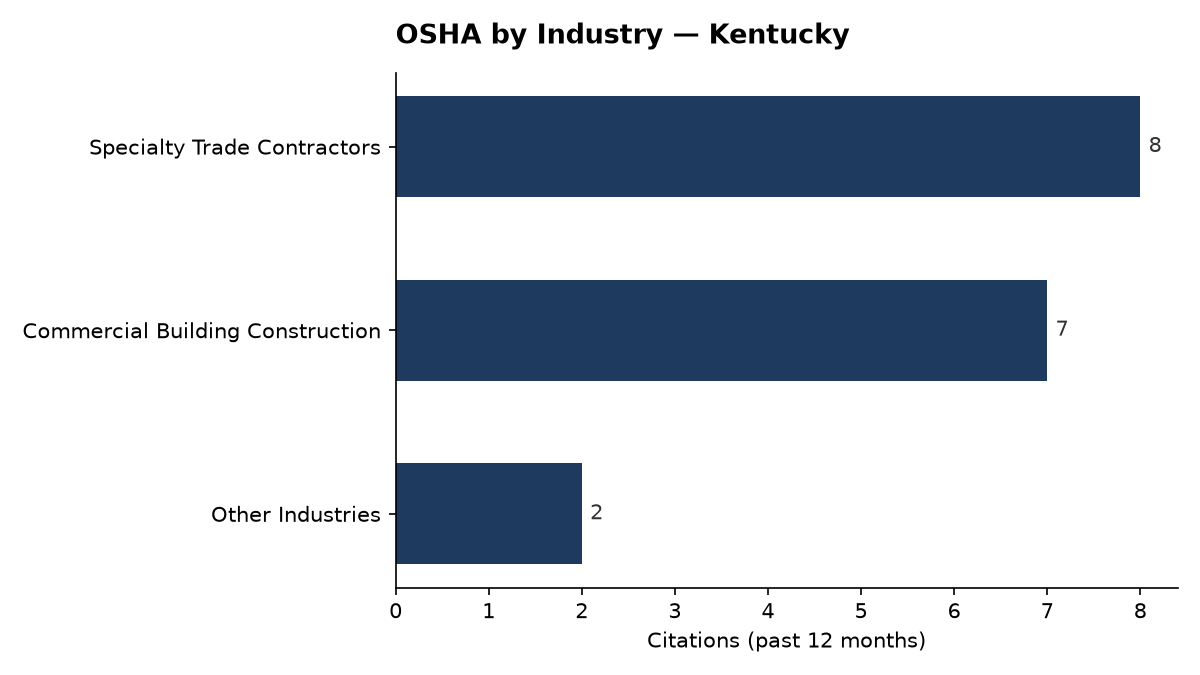
Of the 19 citations issued statewide, 8 went to specialty trade contractors — the masons, framers, and finish crews who set up and take down scaffolding constantly as part of daily work, often on tighter schedules and smaller crews than general contractors. Commercial building construction firms accounted for 7 more, with the remaining 2 spread across other industries.
That split makes sense operationally. Specialty trade crews are frequently the ones physically erecting and modifying scaffolds mid-project, which means more exposure to citation if the setup drifts from spec between inspections. Commercial builders, meanwhile, tend to run larger, multi-trade sites where a scaffold built by one subcontractor gets used by several different crews — and OSHA holds the controlling employer accountable regardless of who built it.
What a Citation Actually Costs in Kentucky
The dollar figures tell their own story. Capital Square Living Llc in Prospect was hit with a $7,000 penalty, the highest in this data set, issued January 12, 2026. Danco Construction Inc and Jtb Construction Llc both landed at $4,200. Noe Vega Diaz in Lexington and Mmj Masonry Llc in Danville each received $3,500 penalties — right at the state median.
Every citation in Kentucky’s current data was classified Serious rather than Willful or Repeat, which matters. Serious violations already carry substantial fines, but Willful and Repeat classifications can multiply the exposure several times over — so a Serious citation today, left unaddressed, can set the stage for a much costlier Repeat finding down the road if the same hazard shows up again. For more on how OSHA calculates these figures, see this breakdown of OSHA scaffolding violations penalty amounts.
Here’s a number worth paying attention to: the average penalty reduction between initial and final amounts in Kentucky sits at 11%. That gap didn’t close itself. It reflects employers who pushed back, corrected documented hazards, or negotiated terms rather than simply paying the initial number on the citation letter. An 11% reduction on a $7,000 penalty is meaningful money, and it rarely happens without someone advocating on the employer’s behalf.
That gap is exactly why it pays to get an experienced set of eyes on your case before you write a check. Talk to a Kentucky OSHA defense attorney before your response deadline passes — negotiating room tends to shrink the longer a citation sits unanswered.
Your Options Once the Citation Arrives
Once you’re cited, you’re not stuck with the number on the page. OSHA gives employers 15 working days from the date they receive a citation to file a Notice of Contest — a formal step that opens the door to negotiation, an informal conference with the area office, or a full hearing before the Occupational Safety and Health Review Commission. Miss that window and the citation becomes a final order, penalty and all, with essentially no further recourse.
Given that Kentucky’s data shows an average penalty reduction of 11% for those who engage with the process, letting the deadline pass without a fight is usually the costliest option available. Before you do anything — pay, ignore, or argue — read through this guide on how to contest an OSHA citation, and get a qualified opinion on whether your specific citation has grounds for challenge, reduction, or dismissal.
If you’re staring down a citation number today, don’t wait for the 15-day clock to run out while you decide what to do. Speak with a Kentucky OSHA defense attorney now — the earlier they’re involved, the more options you typically have on the table.
Whether your citation lists a B01 capacity issue, a G04 fall protection gap, or a D05 guardrail problem, the underlying question is the same: was the hazard real, was the classification accurate, and is the penalty proportionate. Get that answered by someone who does this work regularly, before the response window closes on you.