

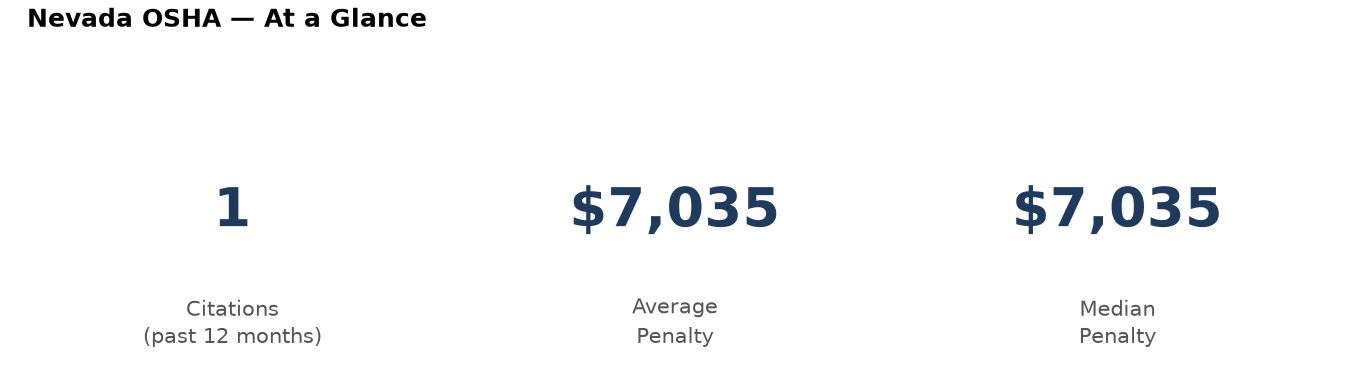
Nevada is not a state where scaffolding citations pile up by the hundreds. Over the past 12 months, OSHA issued exactly one scaffolding citation in the state, against Jt Thorpe Industrial, Inc. in Sparks, for $7,035. That single case is classified as Serious, cited under subsection 19260451 F15 of the scaffolding standard, and issued July 16, 2026. One citation might sound like a low-risk environment. It is not. It means Nevada inspectors are selective about when they show up on a scaffold, and when they do, they write a citation that sticks.
If your company has already received a scaffolding citation in Nevada, or you’re worried one is coming after a recent inspection, the smartest move is talking to someone who handles these cases regularly before you respond to OSHA.
Talk to a Nevada OSHA defense attorney about your specific citation and what your options look like right now.
What OSHA Actually Expects Under the Scaffolding Rule
The citation against Jt Thorpe Industrial falls under the 1926.451 standard, which is the general rulebook for scaffold safety on any construction site. It’s not a narrow technical rule. It covers how a scaffold has to be built and rated for the load it will carry, how workers are supposed to get on and off it safely, what fall protection has to be in place once someone is working at height on the structure, and how guardrails and planking need to be arranged so nobody steps into a gap or off an unsecured edge.
In practice, most citations under this standard trace back to one of a handful of recurring problems: platforms that aren’t fully planked, missing or incomplete guardrail systems, scaffolds erected without a competent person signing off on the setup, or workers on a scaffold without the fall protection the height and configuration require. A Serious classification, which is what Nevada’s one citation carries, means OSHA determined there was a real chance of death or serious physical harm connected to the condition cited. That’s a different animal than a paperwork violation, and it’s priced accordingly.
Why Specialty Trade Contractors Are the Ones Getting Looked At
Nevada’s only scaffolding citation this period landed on a company classified under specialty trade contractors, and that’s not a coincidence. This sector covers the subcontractors who actually build, move, and work off scaffolding day to day, industrial insulation, painting, drywall, mechanical, and similar trades that spend more hours at height than the general contractors managing the job. When OSHA does show up in Nevada for a scaffold-related inspection, it tends to be because a specialty trade crew is the one physically on the structure when something looks off to an inspector or draws a complaint.
Sparks, where this citation was issued, was also the state’s top city for this violation type over the period, which lines up with the industrial and trade work concentrated in that area outside Reno. If your crew does scaffold-dependent work in that corridor, assume inspectors are paying attention to the same conditions that got Jt Thorpe Industrial cited.
What a Citation Like This Actually Costs
The average and median penalty for Nevada’s scaffolding citation both landed at $7,035, since there was only one case to average. That figure matches what you’d expect for a single Serious violation under current OSHA penalty schedules, and it lines up with national patterns described on our page on scaffolding violation penalty amounts. What stands out here is the reduction rate: 0%. In this case, the penalty that was initially proposed is the same amount that stuck. That’s worth paying attention to, because in many states initial penalties get negotiated down through settlement or contest. When that doesn’t happen, it usually means either the employer didn’t push back, or the facts of the case didn’t support a reduction. Either way, it shows you can’t assume a citation amount is just an opening offer.
A $7,035 penalty on paper is manageable for most contractors. The bigger cost is what comes after: a Serious citation on your OSHA record affects future inspection targeting, can influence bidding on jobs that screen for safety history, and raises the stakes if a second violation of the same type shows up later and gets classified as Repeat, which multiplies the penalty several times over.
Before you decide whether to pay, negotiate, or fight a citation, it’s worth getting a professional opinion on which path actually protects you long term.
Speak with a Nevada OSHA defense attorney before the penalty and the record become permanent.
The Clock Starts the Day You Open the Letter
If you’re holding a citation right now, the most important number isn’t the penalty amount, it’s the 15 working days you have to file a Notice of Contest. That clock starts running from the date you receive the citation, not the date you get around to reading it carefully or the date you decide to deal with it. Miss that window and the citation, along with the full proposed penalty, becomes a final order automatically. There’s no informal appeal after that point.
Filing a Notice of Contest doesn’t commit you to a drawn-out legal fight. It preserves your options, including the chance to negotiate a reduced penalty or amended classification through an informal conference with OSHA, which is the process explained on our guide to contesting an OSHA citation. Given that Nevada’s one recorded case this period saw zero reduction from initial to final penalty, that’s a signal that contractors here may not be using the contest process as often or as effectively as they could.
Whatever the classification on your citation, Serious, Willful, or Repeat, the clock doesn’t wait for you to feel ready. Get the paperwork in front of someone who reads these for a living, figure out your realistic options, and make your decision before day 15 arrives instead of after.
If a scaffolding citation has landed on your desk, don’t let the deadline pass while you’re still deciding what to do about it. Get in touch with a Nevada OSHA defense attorney now and find out where you actually stand.