

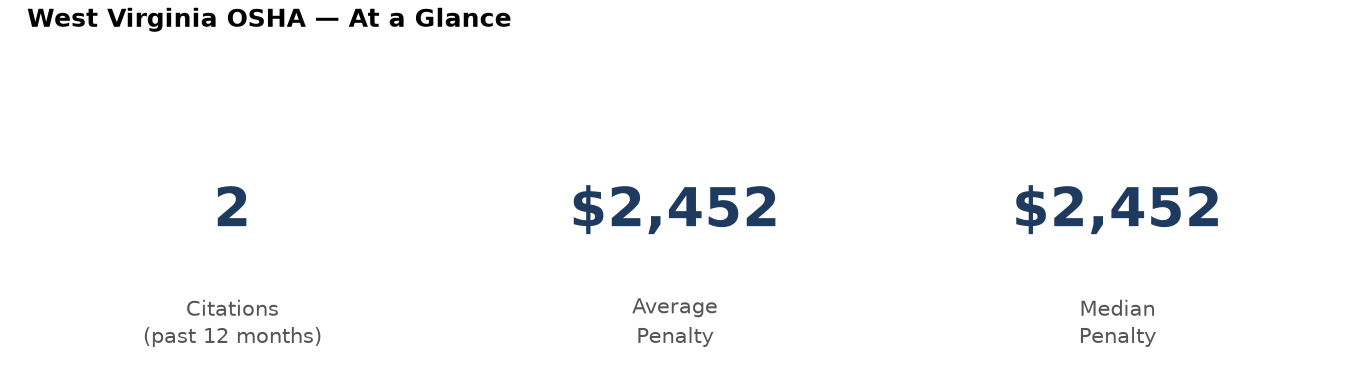
West Virginia issued just two ladder-related citations under 1926.1053 in the past 12 months, but do not let the small number fool you. Both were classified as Serious, both landed on small contracting companies, and the average penalty came in at $2,452 — with one case, out of Hurricane, running well above that at $3,405. When OSHA does show up in this state for a ladder issue, it is not writing warning slips.
If you have already received a citation, or an inspector has flagged a ladder problem on your site, the clock is already running. Talk to a West Virginia OSHA defense attorney before you decide how to respond — the filing window is shorter than most employers expect.
What 1926.1053 Actually Requires on a Jobsite
The standard behind both of these citations, 1926.1053, covers the basics of ladder use on construction sites: how a ladder has to be set up, how far it needs to extend past a landing point, what load it can safely bear, and the requirement that damaged or compromised ladders get pulled from service immediately rather than patched and reused. It also governs proper use during actual work — things like maintaining three points of contact and not using the top step as a work platform.
None of this is exotic. It is the kind of rule most crews think they already follow, which is exactly why it keeps generating citations nationwide. An inspector does not need to catch a fall in progress — an extension ladder set at the wrong angle, or one that stops short of the roof edge, is enough on its own.
Roofing and Siding Crews Are Carrying the Enforcement Load
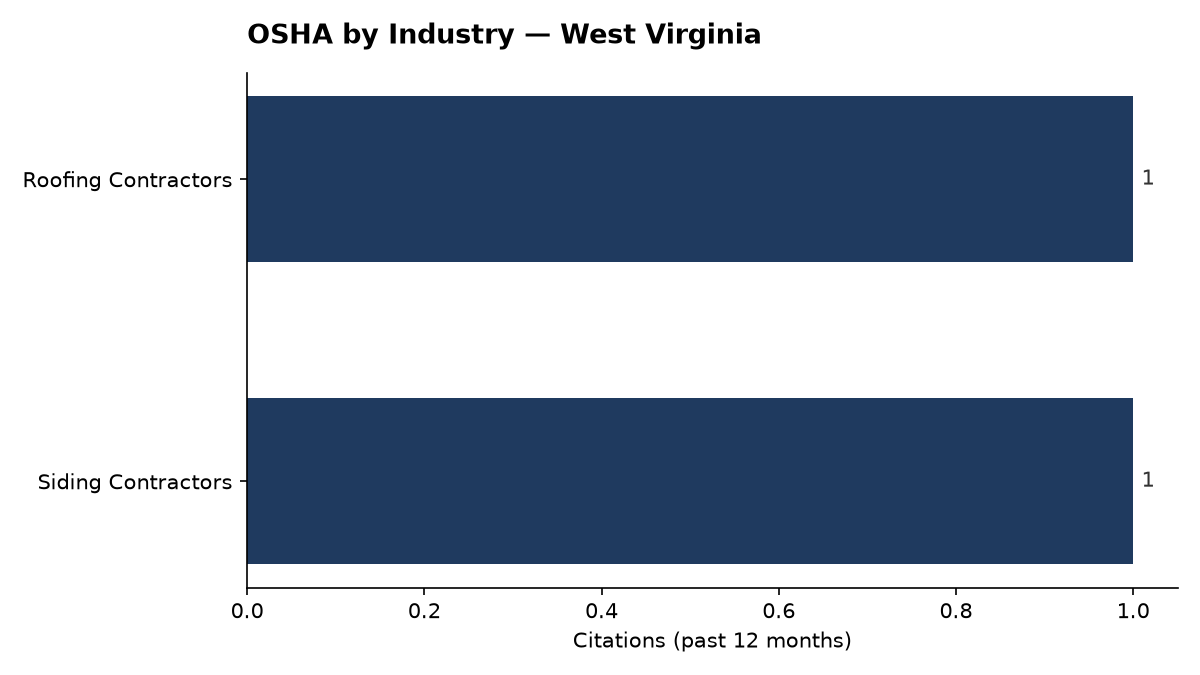
Of the two citations issued in West Virginia this period, one went to a roofing contractor and the other to a siding contractor — one citation apiece. That is a small sample, but it tracks with the national pattern: any trade that puts workers on extension ladders against a roofline, gutter, or upper wall multiple times a day is going to see more ladder scrutiny than a trade working mostly at ground level. Roofing and siding work also tends to happen on tight residential lots where OSHA compliance officers doing a drive-by can spot a ladder problem from the street, without ever needing a formal complaint to trigger a visit.
What These Citations Actually Cost in West Virginia
The numbers here are worth sitting with. Tri-State Roof Masters LLC, based in Hurricane, was cited for a Serious violation under 19261053 B04, issued December 23, 2025, with a penalty of $3,405. Morales Contractor, L.L.C., out of Charleston, was cited under 19261053 B13 on January 8, 2026, for a Serious violation carrying a $1,500 penalty. Both citations came in as Serious rather than Willful or Repeat — meaning OSHA determined the employer either knew or should have known about the hazard, but did not treat it as a deliberate or recurring failure. That distinction matters, because Willful and Repeat classifications carry substantially steeper fines and much less room to negotiate.
Statewide, the average and median penalty landed at the same figure — $2,452 — and employers who pushed back saw penalties reduced by an average of 6% between the initial citation and final resolution. That is a modest reduction compared to some states, which tells you West Virginia citations in this category are not being written loosely to begin with. It also means the difference between accepting a citation as issued and getting it reviewed by counsel can still be worth real money, even if the swing is smaller than elsewhere. For a full breakdown of how these figures are calculated and what drives them up or down, see this explanation of OSHA ladder violation penalty amounts.
A $2,452 average penalty might not sound like it threatens a company’s survival, but stack it against the cost of a lawyer’s initial consultation and the calculus changes fast. Most employers never even find out whether they had a viable defense because they let the deadline pass. Get a West Virginia OSHA defense attorney to look at your citation before you decide anything.
The 15-Day Window Nobody Tells You About Until It’s Too Late
Here is the part that trips up more employers than the citation itself: you have only 15 working days from the date you receive an OSHA citation to file a Notice of Contest. Miss that window, and the citation — along with the full penalty — becomes a final order automatically, whether or not you agree with it. There is no informal grace period once those 15 working days run out.
Filing a Notice of Contest does not mean you are picking a fight with OSHA for the sake of it. It preserves your right to negotiate the classification, the penalty amount, or the abatement terms, and it keeps your options open while you and an attorney sort out whether the citation holds up. Given that West Virginia’s own numbers show real, if modest, reductions are achievable, it is rarely in an employer’s interest to just pay and move on without at least having someone review the file. For a step-by-step look at the process, see this guide on how to contest an OSHA citation.
If your citation was issued as Serious like the two cases above, there is often more room to negotiate than employers assume — but only if you act inside that 15-working-day window. Once it closes, so does most of your leverage.
If you are holding a citation right now, do not wait for the deadline to sneak up on you. Contact a West Virginia OSHA defense attorney today, get the specific subsection and penalty amount on your citation reviewed, and find out whether contesting it, negotiating it, or paying it outright is the smartest move for your business.