

Data last updated: August 31, 2026
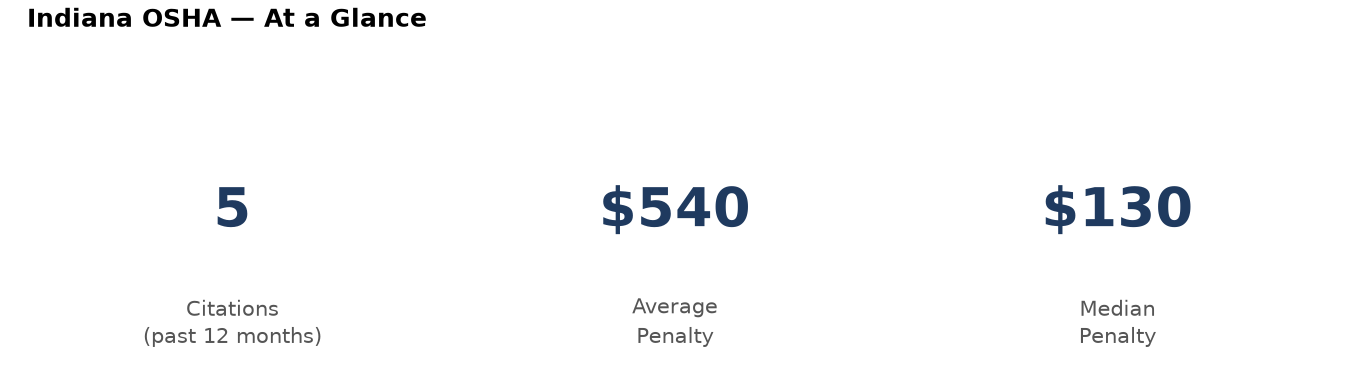
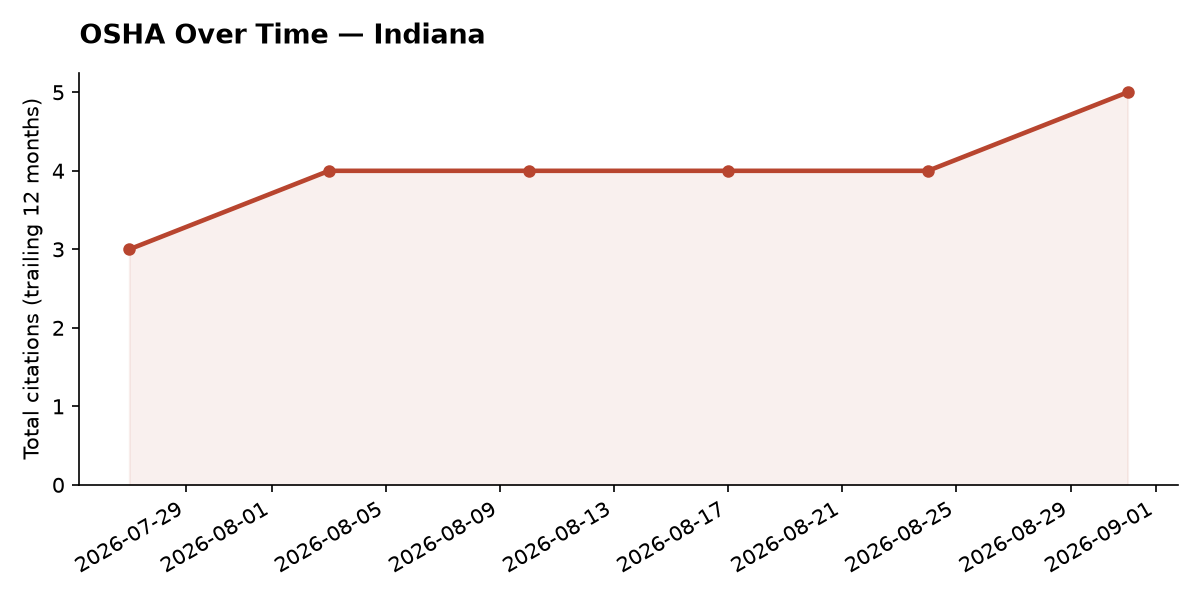
Indiana employers received just 5 scaffolding violation citations under OSHA standard 1926.451 in the past 12 months. That number sounds small, but every single one was classified as Serious — meaning OSHA determined each involved a real risk of death or serious physical harm. The average penalty came to $540, the median sat at $130, and Merrillville was the city with the most activity. Small caseload does not mean small stakes.
If you run a construction or trade business in Indiana and a scaffold citation just landed on your desk, the clock is already moving. Talking to an Indiana OSHA defense attorney before you respond can change how much you actually end up paying.
What OSHA Actually Expects From a Scaffold Under 1926.451
The rule behind every one of these five citations, 1926.451, is the general-requirements standard for scaffolding on construction sites. It is not a niche technical rule — it is the baseline that governs how a scaffold gets built, how much weight it can carry, how workers get on and off it safely, and whether guardrails and planking are installed the way they need to be before anyone climbs up.
In practice, inspectors check things like whether platforms are fully planked, whether access points are safe rather than improvised, and whether fall protection is in place at height. When any of those pieces are missing, OSHA does not treat it as a paperwork issue — it gets written up as a hazard with real injury potential, which is exactly why Indiana’s five citations all landed in the Serious category rather than a lower tier.
Roofing, Masonry, and a Broad Other-Industries Bucket Carry the Load
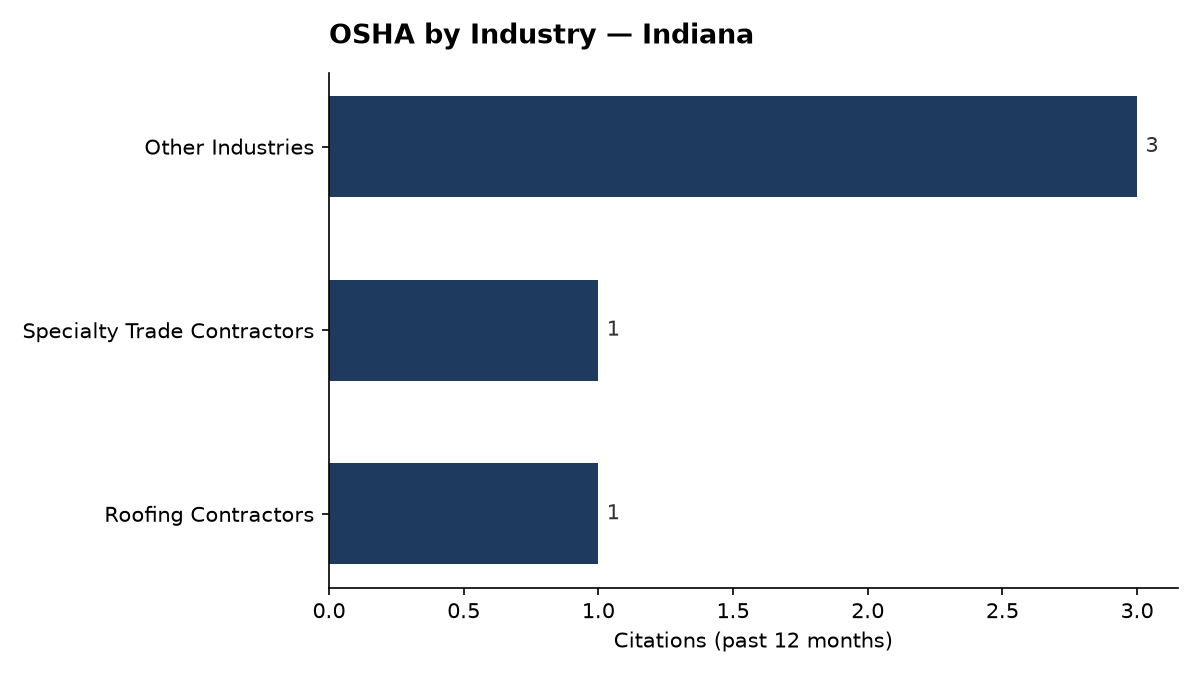
The industry breakdown in Indiana is telling. Three of the five citations fell into a broad grouping OSHA classifies as other industries, one went to a specialty trade contractor, and one to a roofing contractor. That spread reflects how scaffolding work in Indiana isn’t concentrated in one obvious trade — masonry crews, stucco and exterior finish contractors, and general specialty trades all use scaffolds regularly, and any of them can end up in front of an inspector if the setup doesn’t meet the standard.
Roofing remains a natural flashpoint because of the height and the speed at which crews often need to move, but the fact that most of Indiana’s citations sit outside a single dominant trade tells you this isn’t an industry-specific problem. It’s a setup-and-training problem that shows up anywhere scaffolds get erected without someone double-checking the details.
What Five Citations Actually Cost, Company by Company
The dollar figures in Indiana show real variation even within a small sample. Energy Efficient Roofing in Valparaiso was cited for $1,400 under section F07, issued May 26, 2026. Simply Stucco in Chalmers was cited $910 under section G01 VII, issued October 7, 2025. And Aa Masonry And General Construction in Merrillville — the city with the most citation activity in the state — was cited $130 under section B01, issued December 3, 2025.
Notice the spread: penalties ranged from $130 to $1,400 for the same underlying standard, all classified Serious. That gap usually comes down to the specific subsection cited, how the hazard was documented, and how the employer responded once the inspector was on site. Statewide, the average penalty reduction between initial and final penalty was 28% — a meaningful sign that a good portion of Indiana employers who pushed back, negotiated, or corrected the issue quickly ended up paying noticeably less than the original number on the citation. For more on how these figures get calculated in the first place, see this breakdown of OSHA scaffolding violations penalty amounts.
That 28% average reduction did not happen automatically — it happened because employers took action. If you’re weighing whether it’s worth contesting your own citation, that’s exactly the kind of conversation to have with an Indiana OSHA defense attorney before any deadlines pass.
The 15-Day Window You Cannot Afford to Miss
Once a citation is issued, you have 15 working days from the date you receive it to file a Notice of Contest. Miss that window and the citation, along with the proposed penalty, becomes final — no appeal, no negotiation, no second look. Given that Indiana’s own numbers show penalties routinely getting reduced by close to a third through the contest and negotiation process, letting that deadline slip is one of the more expensive mistakes an employer can make.
The process itself is not complicated, but it has to be done correctly and on time. This guide on how to contest an OSHA citation walks through the mechanics, but the short version is: read the citation carefully, note the exact date you received it, and decide quickly whether you’re going to challenge the classification, the penalty amount, or the underlying facts.
Because the stakes involve both money and your compliance record going forward, this is not a step to handle alone if you have any doubt about your options. Getting an Indiana OSHA defense attorney involved early gives you someone who can evaluate the citation, calculate what a realistic reduction might look like, and file the paperwork correctly within the 15 working days you’re given.
Whether your citation looks more like the $130 issued to the Merrillville masonry contractor or the $1,400 issued to the Valparaiso roofing company, the underlying math is the same: acting inside the deadline preserves your options, and acting after it closes them. Pull your citation paperwork, confirm the date you received it, and get a qualified opinion on your situation before that 15-day window runs out.