

Data last updated: September 21, 2026
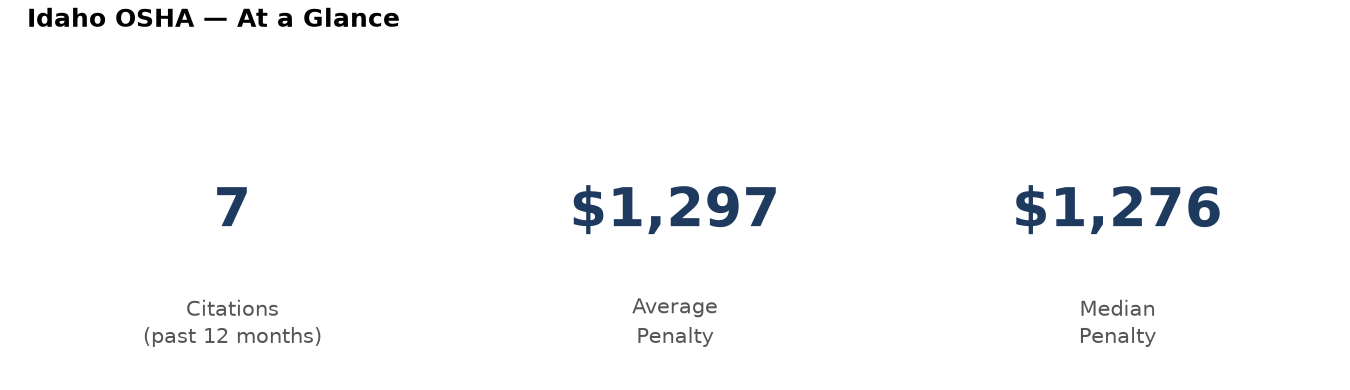
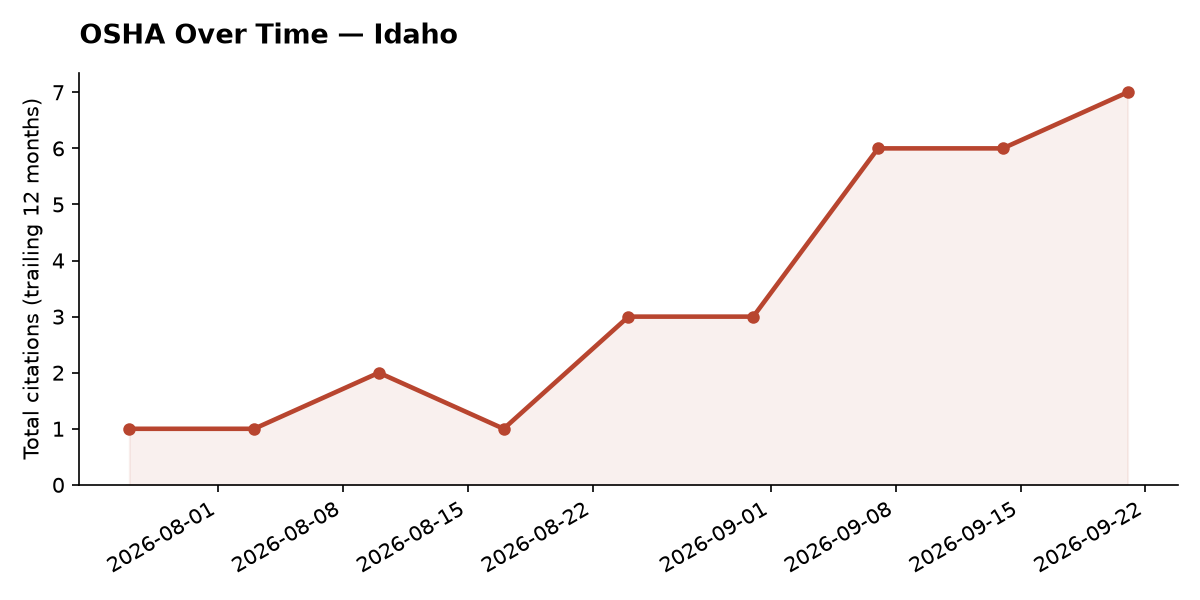
Idaho isn’t a high-volume state for ladder enforcement, but the seven citations issued under 1926.1053 over the past 12 months still add up to real money and real risk. The average penalty was $1,297, the median was $1,276, and five of the seven citations were classified as Serious — meaning OSHA determined the hazard could plausibly have caused death or serious physical harm. Meridian, just outside Boise, saw more of these citations than any other Idaho city.
If you’ve already been handed a citation, the clock is running before you even finish reading this. An Idaho OSHA defense attorney can tell you within a short consultation whether contesting makes financial sense for your situation.
What 1926.1053 Actually Requires on an Idaho Jobsite
The standard governing this category, 1926.1053, sets the baseline rules for portable and fixed ladders on construction sites. It’s not just about whether you own a ladder — it covers how far the ladder must extend past the landing surface, how much weight it has to safely hold, what condition it needs to be in before anyone climbs it, and how workers are supposed to use it once they’re on the job. Inspectors check for damaged rails, missing feet, improper angle, and ladders pressed into service for tasks they weren’t built for. A citation under this standard usually means an inspector saw one of these problems in person, or found it after an incident, and documented it well enough to hold up.
Framing Crews Are Driving Idaho’s Ladder Enforcement
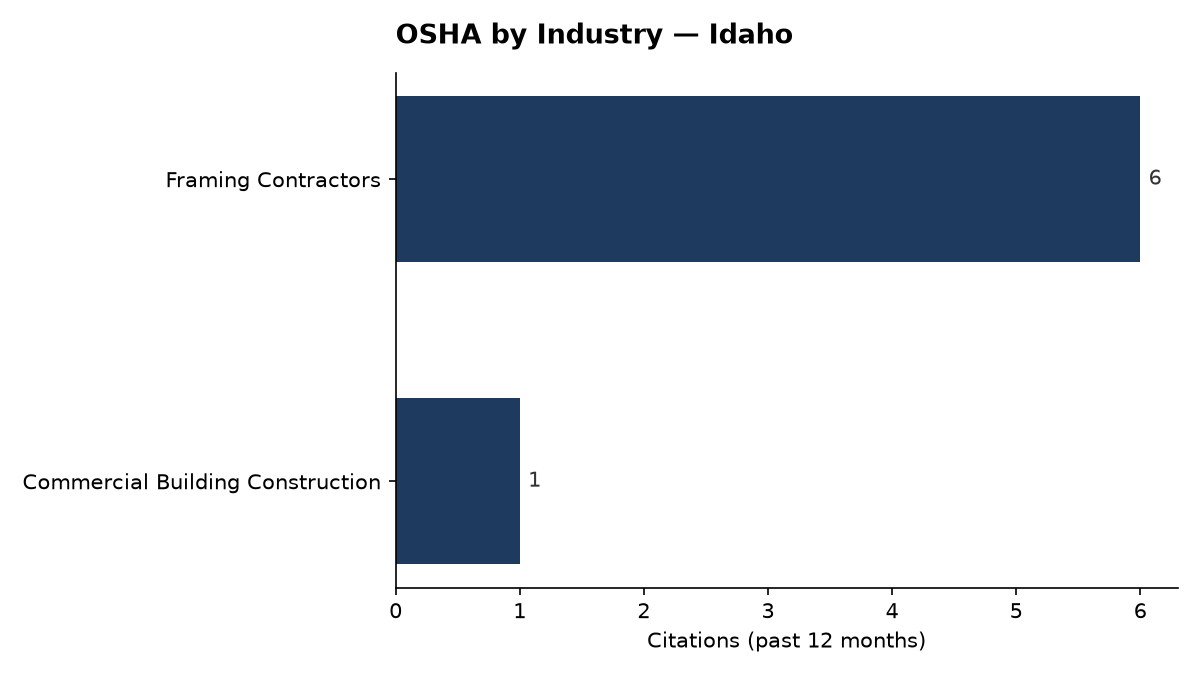
Six of Idaho’s seven citations this year hit framing contractors. That’s not a coincidence. Framing work involves constant ladder use for wall sections, second-story access, and roof transitions, often on sites that change layout daily as the structure goes up. The one remaining citation went to a commercial building construction firm. If you run a framing crew in Idaho, you’re statistically the most likely business in the state to face this exact citation — and the numbers below show it’s not a paperwork slap on the wrist.
Real Idaho Citations From the Past Year
These are actual cases from the public OSHA record, not hypotheticals:
- R.A.C. Construction LLC (Eagle) — $3,405, Serious, cited under 1926.1053(b)(1), issued March 12, 2026
- Alvarado Construction LLC (Meridian) — $2,270, Serious, cited under 1926.1053(b)(1), issued April 7, 2026
- Van Dam Construction, LLC (Middleton) — $2,128, Serious, cited under 1926.1053(b)(4), issued April 7, 2026
- Morales Construction, LLC (Meridian) — $1,276, Serious, cited under 1926.1053(b)(1), issued April 3, 2026
- Dave Evans Construction, LLC (Star) — $0, Other-than-Serious, cited under 1926.1053(b)(16), issued July 9, 2026
Notice that most of these fall under the (b)(1) provision, which deals with ladder length and extension past the landing point — a detail that’s easy to overlook on a fast-moving framing site but carries real weight with inspectors.
What a Citation Like This Actually Costs You in Idaho
On paper, $1,297 doesn’t sound like much next to a six-figure construction contract. But that average masks a wide range — from $0 for a paperwork-level Other-than-Serious finding up to $3,405 for a Serious violation with clear fall-hazard exposure. And a citation is never just the fine. It goes into your OSHA inspection history, it can be cited as an aggravating factor if you’re inspected again, and Repeat or Willful classifications elsewhere in your history can multiply penalties well beyond what a first-time Serious citation costs.
Here’s the number that matters most if you’re deciding whether to fight a citation: employers in Idaho who negotiated or contested their citations saw an average penalty reduction of 13%. That’s not guaranteed for every case, but it shows the initial number OSHA sends you is often not the final number — if you push back with the right approach. For more on how these amounts are calculated, see this breakdown of OSHA ladder violations penalty amounts.
A 13% reduction on a $3,405 citation is real money, and it’s the kind of outcome that usually requires someone who knows how OSHA’s settlement process actually works. Talking to an Idaho OSHA defense attorney before you respond to the citation is the difference between accepting the number as written and negotiating it down.
You Have 15 Working Days — That’s It
Once you receive a citation, OSHA gives you exactly 15 working days to file a Notice of Contest. Miss that window and the citation becomes a final order automatically, penalty and all, with essentially no path to appeal later. There’s no grace period for being busy on a jobsite or waiting to see if the inspector was serious.
Before that deadline hits, it’s worth understanding how to contest an OSHA citation in Idaho, including what documentation strengthens your position and when an informal conference with the area office might resolve things faster than a formal contest. Some citations are worth fighting outright; others are better handled through negotiation. You won’t know which situation you’re in until someone reviews the specifics.
If you’re staring at a ladder citation with a due date attached, don’t let the 15-day window close while you’re still deciding what to do. Reach out to an Idaho OSHA defense attorney now, while every option — contesting, negotiating, or complying — is still on the table.
Whatever you decide, decide it fast. In Idaho’s ladder-citation cases, the businesses that came out ahead were the ones that moved before the clock ran out, not after.