
Data last updated: September 21, 2026
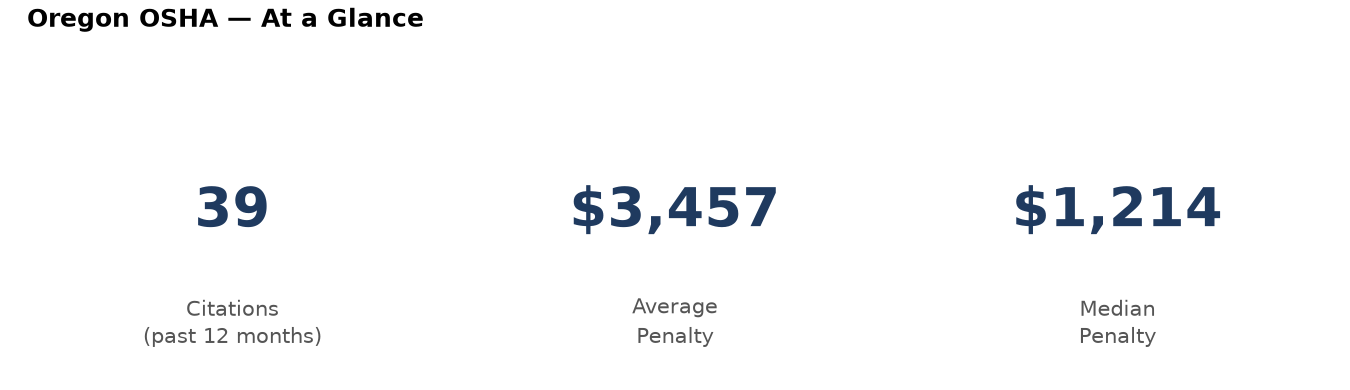
Oregon employers racked up 39 ladder violations under 1926.1053 over the past 12 months. That might sound like a small number next to bigger construction states, but don’t let it fool you into thinking OSHA is going easy here. The average penalty sits at $3,457, the median is $1,214, and a cluster of repeat citations in the Portland metro area have pushed individual fines well into five figures. Portland is the city drawing the most citations of any in the state.
If you’ve just opened a citation letter with a dollar figure you weren’t expecting, don’t wait to figure out your options. Talk to an Oregon OSHA defense attorney before your response window starts closing.
What 1926.1053 Actually Requires on an Oregon Job Site
The standard governing these citations, 1926.1053, is OSHA’s general ladder rule for construction work. It’s not just about whether you own a ladder that meets specs. Inspectors are checking whether the ladder was set up correctly, whether it extended far enough past the landing surface for a worker to step off safely, whether it was rated to hold the weight put on it, and whether damaged or makeshift equipment was pulled from service instead of left out for the next crew to use. A lot of citations come down to something as simple as a ladder that stopped a few inches short of the roof edge, or a straight ladder pressed into service where an extension ladder should have been used.
Roofers and Framers Are Drawing the Most Attention
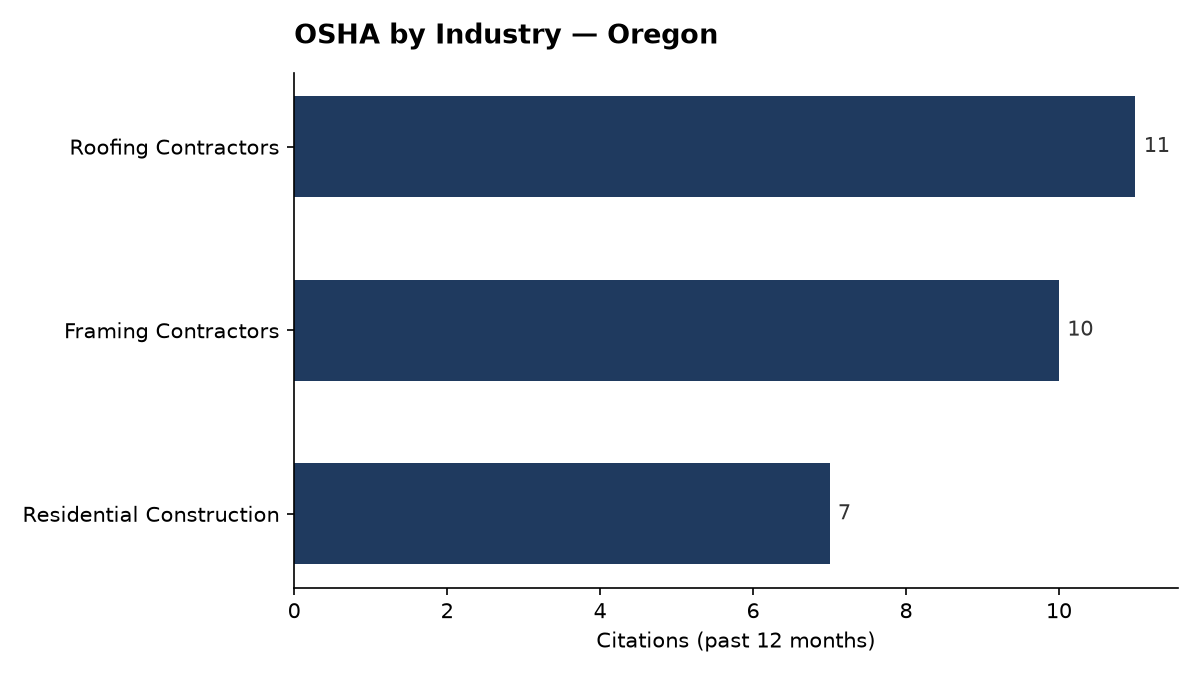
Three trades account for the bulk of Oregon’s ladder citations. Roofing contractors lead with 11 citations, framing contractors follow closely with 10, and residential construction crews picked up 7 more. That pattern isn’t random. Roofers and framers spend entire shifts moving up and down ladders to reach elevated work, often on sites where the ground isn’t level and the ladder gets repositioned dozens of times a day. Every repositioning is another chance for a setup mistake, and OSHA compliance officers know to look for ladder problems specifically when they’re on a roofing contractor job site. If your crew works from ladders daily rather than occasionally, you’re statistically more likely to end up on an inspector’s radar than a shop-based trade would be.
Why the Average Penalty Doesn’t Tell the Whole Story
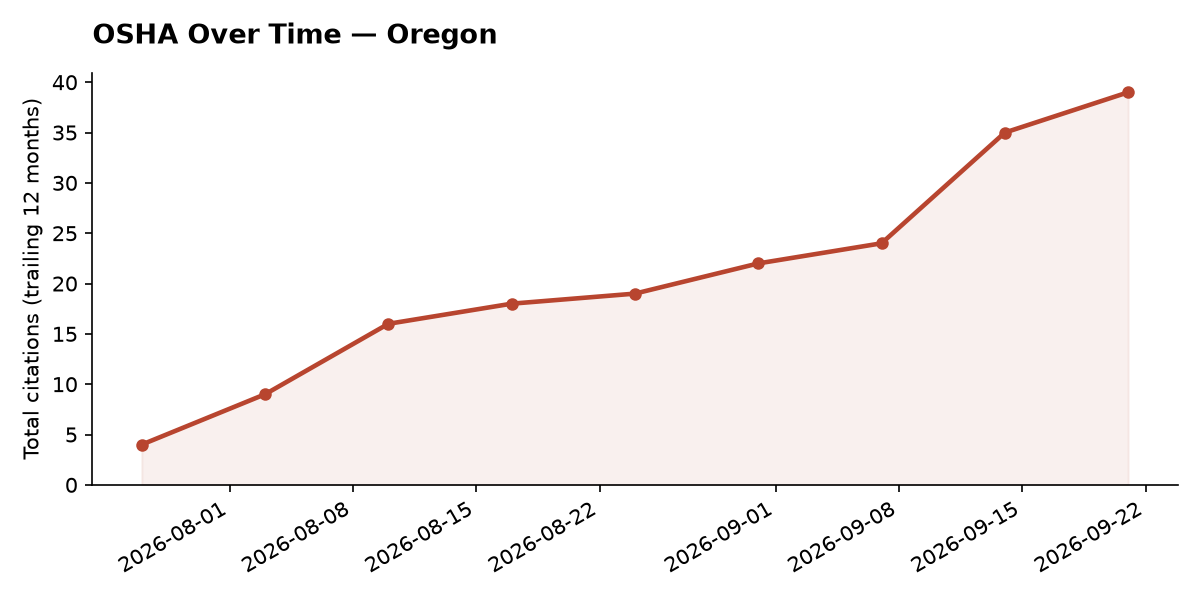
Of the 39 citations issued, 29 were classified Serious, 7 were Repeat, and 3 were Other-than-Serious. That Repeat category matters more than its small share of the total suggests, because repeat violations carry penalties that dwarf a standard first-time Serious citation. You can see it in the actual cases on record. Elements Contracting LLC in Aloha was cited $39,696 for a Repeat violation under 19261053 B01, issued January 22, 2026. Luka’s General Construction LLC was hit twice — $21,530 in Milwaukie in February 2026, and $12,147 in Hillsboro just two months later, both Repeat citations under the same subsection. A&E Builders LLC in Columbia City faced $11,769 for a Repeat violation issued in September 2025, and Nacho’s Roofing LLC in Beaverton drew an identical $11,769 Repeat citation in December 2025.
Those five cases alone show how far a penalty can climb once OSHA has cited a company for the same type of violation before. A first offense might land close to the state’s $1,214 median. A second offense on the same standard can run 10 to 30 times that amount. Worth noting too: the average penalty reduction between initial and final assessment in Oregon is only 2%. That means most employers who don’t formally push back are paying close to the full amount OSHA originally proposed. For the exact math behind how these figures are calculated by violation type, see this breakdown of OSHA ladder violations penalty amounts.
A 2% average reduction is a strong signal that informal conversations with the area office rarely move the needle much on their own. If you want a real reduction, you generally need someone who knows how to challenge the classification or the underlying facts. That’s exactly the kind of leverage an Oregon OSHA defense attorney can bring to the table, particularly if your citation carries a Repeat designation that’s inflating the number well past what a first-time violation would cost.
The Clock Starts the Day You Receive the Citation
Once OSHA issues a citation, you have exactly 15 working days to file a Notice of Contest. Miss that window and the citation becomes a final order automatically — no exceptions, no extensions, regardless of whether you had a good defense. That’s true whether your fine is $1,214 or $39,696.
Before that clock runs out, you need to know whether the setup or use allegations actually hold up, whether the Repeat classification is fair given your company’s history, and whether the proposed penalty was calculated correctly. Those are exactly the questions a lawyer walks through with you, and the process for how to actually file is covered in detail in this guide on how to contest an OSHA citation. Given how little movement Oregon’s numbers show from informal negotiation alone, getting a formal contest on record early often matters more than employers expect.
Don’t sit on a citation waiting to see what happens. Pull your paperwork, check the date it was issued, count backward from your 15 working days, and get an Oregon OSHA defense attorney reviewing your case while there’s still time to act on it.