
Data last updated: September 14, 2026
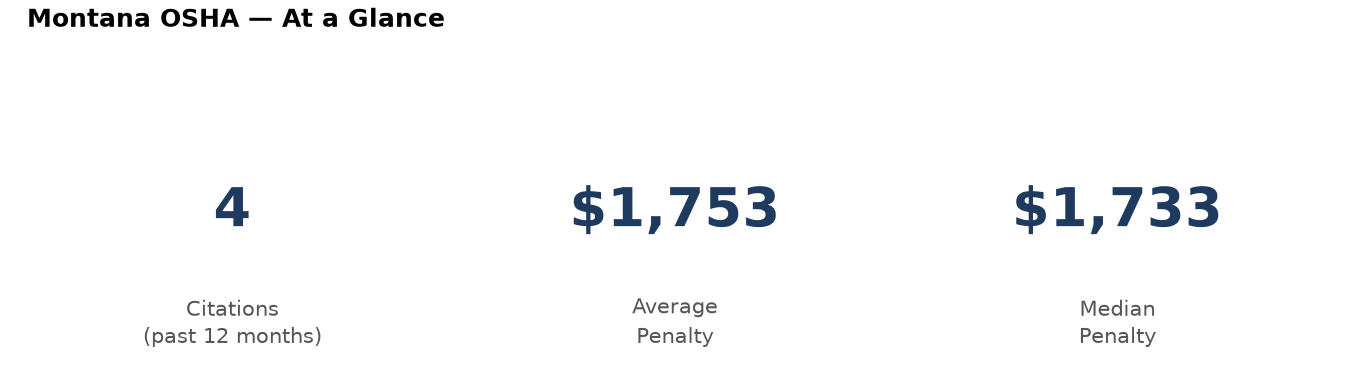
Montana issued just four fall protection citations under 1926.501 in the past 12 months, but do not mistake a small number for low risk. The average penalty was $1,753, the median was $1,733, and three of the four citations were classified as Serious. Kalispell was the epicenter, with two of the four citations traced to roofing and construction work there.
If you have already received a citation letter, the clock is running. Talk to a Montana OSHA defense attorney now, before you decide how to respond.
What OSHA Expects Once Your Crew Is Working at Height
The standard behind every one of these Montana citations is 1926.501, the core fall protection rule for construction. In plain terms, it requires employers to protect workers once they are exposed to a fall of six feet or more to a lower level. That protection has to come in one of three forms: guardrails, safety nets, or a personal fall arrest system such as a harness tied off to an anchor point. There is no gray area for waiting until a worker is close to the edge — the obligation kicks in as soon as the exposure exists. You can read the full breakdown of how this rule works on our 1926.501 fall protection hub.
What often trips up employers is not disagreement with the rule itself, but a gap between what was planned on paper and what actually happened on the roof or the scaffold that day. Inspectors do not care what your safety manual says if the worker they observed had no tie-off point available.
Roofing Work Is Driving Montana’s Enforcement Numbers
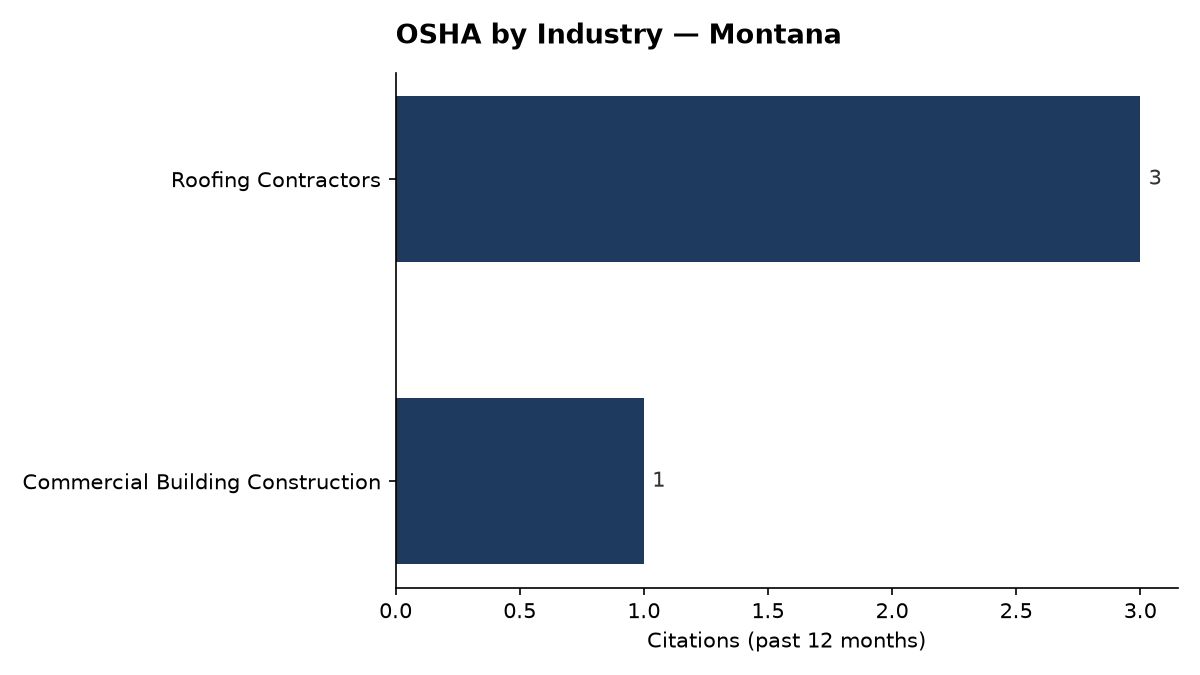
Of the four citations issued statewide, three went to roofing contractors and one to a commercial building construction firm. That is not a coincidence. Roofing work puts people at height on unstable, sloped, sometimes wet surfaces, often with tight deadlines that push crews to move fast. It is one of the most closely watched trades in the country for exactly this reason, and Montana’s numbers track the national pattern. If you run a roofing crew, it is worth reviewing our guide to fall protection rules for roofing contractors before your next job, not after an inspector shows up.
The named cases from the past year illustrate the range of exposure. King Roofing LLC in Kalispell was cited $3,547 for a Serious violation under 19260501 B13, issued September 24, 2025. Hpo Construction LLC, also in Kalispell, faced a $1,929 Serious citation under the same subsection and issue date. 3 Brothers Roofing LLC in Columbus was cited $1,537, also Serious under 19260501 B13, with an issuance date of June 29, 2026. Copper Creek Construction in Fairfield received an Other-than-Serious citation under 19260501 B10, issued May 18, 2026, with no monetary penalty attached. That last case shows OSHA does not always reach for a fine — but it still puts a citation on your record, which can matter if a follow-up inspection ever happens.
What These Citations Actually Cost in Montana
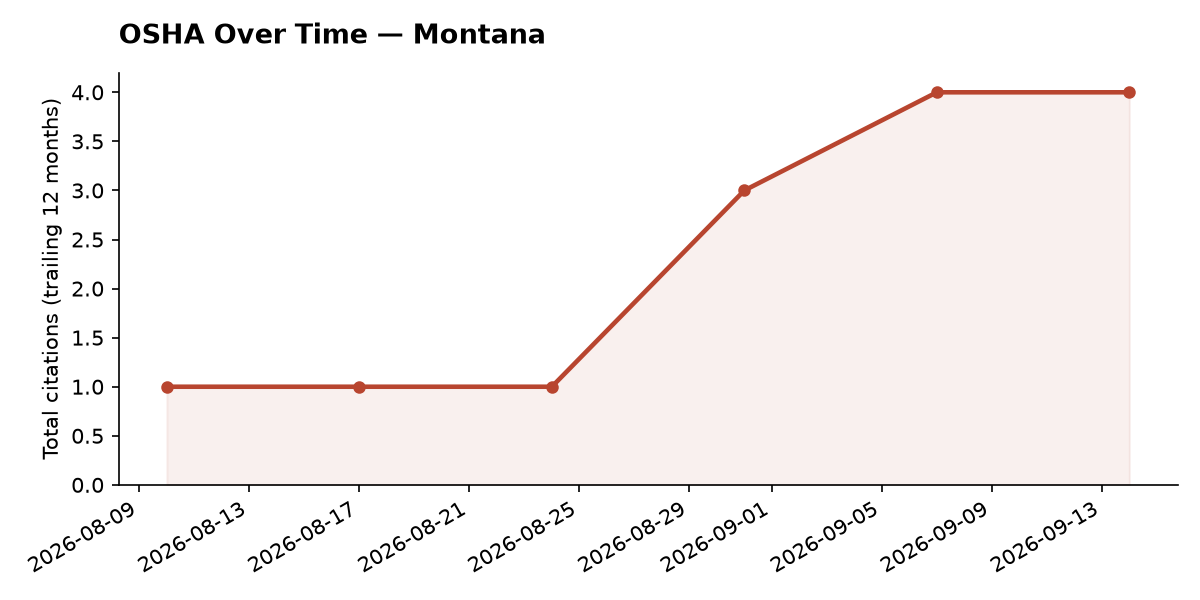
With only four citations in the sample, the dollar figures do not swing wildly the way they might in a bigger state, but the spread still tells a story. Penalties ranged from $0 up to $3,547, and three out of four citations carried the Serious label rather than a lesser or higher classification like Willful or Repeat. Serious means OSHA determined there was a real probability of death or serious physical harm tied to the hazard, which is the baseline classification that already carries meaningful fines. A Willful or Repeat finding would push the exposure much higher, since those categories are reserved for cases where the employer knew about the hazard or had been cited before for the same issue.
One number worth flagging: the average penalty reduction between initial and final citation amounts in this dataset was 0%. In other words, the penalties that were issued in Montana over this period stuck as issued, at least in the public record reviewed here. That does not mean negotiation or contest never works — it means you should not assume a citation will quietly shrink on its own if you do nothing. For a deeper look at how these numbers get calculated in the first place, see our page on how OSHA fall protection penalty amounts are set.
A $1,753 average penalty might not sound like a company-ending number, but it comes with legal fees, potential increases on repeat findings, and a citation history that follows your business. Before you decide the amount is not worth fighting, get an opinion from a Montana OSHA defense attorney who can tell you whether this citation is contestable.
If a Citation Just Landed on Your Desk, Here’s the Real Deadline
Federal OSHA rules give employers exactly 15 working days from the date they receive a citation to file a Notice of Contest. That window is not flexible, and it does not pause for weekends beyond the standard weekday count, or wait for you to gather paperwork. Miss it, and the citation and penalty typically become final, with almost no room to argue the facts later.
Inside that window, you have real options: negotiate an informal settlement with the OSHA area office, contest the citation formally, or request more time to correct the hazard. Which path makes sense depends on the specific subsection you were cited under, whether the classification was Serious versus something more severe, and what evidence the inspector actually documented on-site. Our guide to contesting an OSHA fall protection citation walks through the mechanics, but the short version is that the clock starts the moment you sign for the citation, not when you get around to reading it carefully.
If you are inside that 15-working-day window right now, do not spend it guessing. Reach out to a Montana OSHA defense attorney and get a clear read on your options before the deadline passes.
Whether your citation came with a $1,537 price tag like the Columbus case or nothing at all like the Fairfield one, the paperwork trail it leaves behind is worth taking seriously now, while you still have time to act on it.