
Data last updated: September 28, 2026
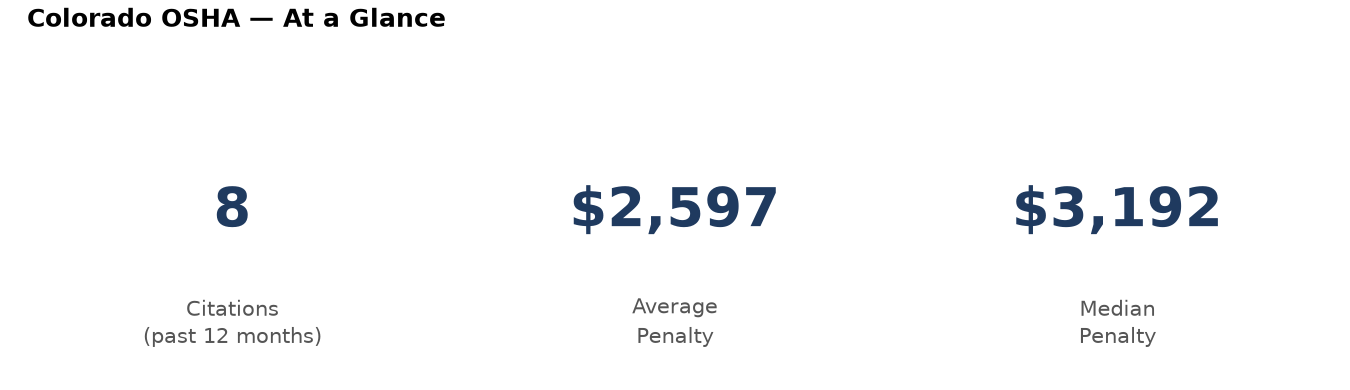
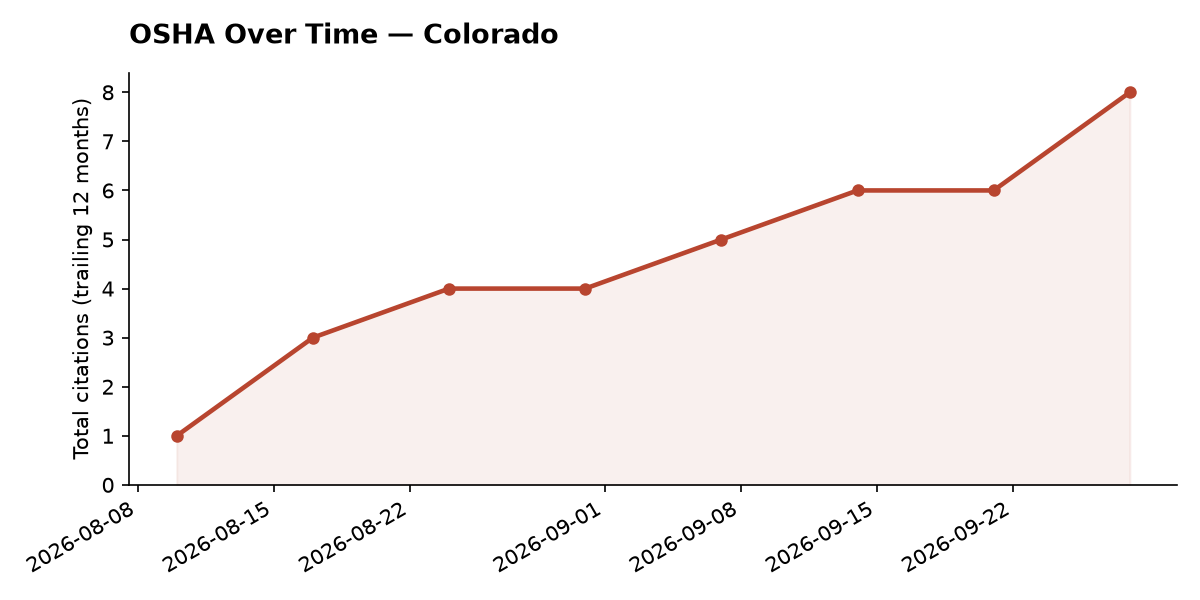
Colorado employers picked up 8 ladder violation citations under 1926.1053 over the past 12 months. Every single one was classified as Serious. The average penalty landed at $2,597, the median came in higher at $3,192, and Arvada was the city where inspectors handed out the most citations of this type in the state.
If you or your company just received one of these citations, the clock is already running. Talk to a Colorado OSHA defense attorney before you decide how to respond.
What Inspectors Are Actually Checking Under 1926.1053
The standard behind every one of these Colorado citations, 1926.1053, sets the baseline rules for ladders on a construction site. It is not just about whether a ladder is present. Inspectors are looking at how the ladder is set up, whether it extends far enough past the landing surface workers step onto, whether it can actually hold the load being put on it, and whether the equipment itself is in usable condition rather than cracked, bent, or missing rungs. They also look at how workers are using the ladder in the moment, since misuse during a task counts just as much as a defective piece of equipment sitting unused.
All 8 Colorado citations in this period were coded Serious rather than Willful or Repeat. That distinction matters. Serious means OSHA determined there was a real chance of death or significant injury connected to the violation, which is why these citations still carry meaningful penalties even without any finding of intentional disregard. A Willful or Repeat classification would have pushed the dollar figures much higher, since those categories are reserved for employers who knew about a hazard and ignored it, or who have been cited for the same problem before.
Roofing Crews Account for Most of the Citations
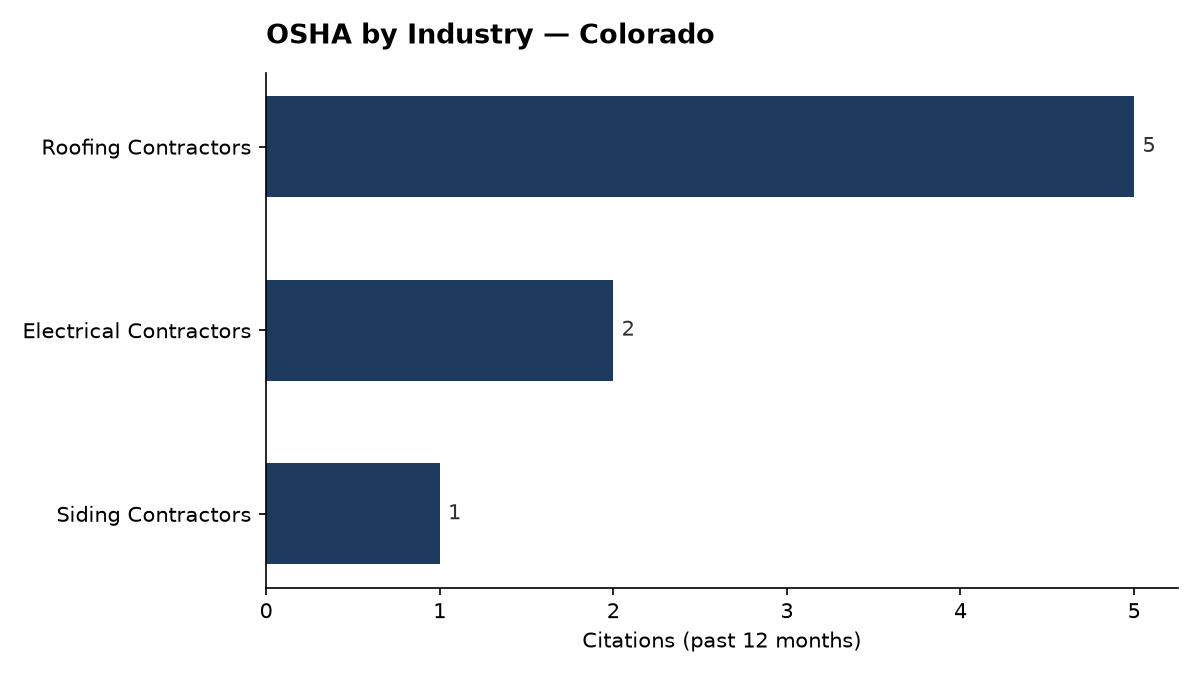
Of the 8 citations issued statewide, 5 went to roofing contractors. Electrical contractors picked up 2, and siding contractors accounted for 1. That concentration in roofing is not surprising. Roof work in Colorado depends heavily on extension ladders to reach steep pitches and multi-story eaves, and the combination of elevation, weather, and repetitive up-and-down movement creates exactly the conditions 1926.1053 is designed to address. Electrical contractors show up here too, usually tied to ladder setup near overhead lines or panels rather than the ladder itself being defective. Siding work carries similar exposure to roofing, since it also relies on extension ladders against exterior walls for extended stretches.
What These Citations Actually Cost in Colorado
The dollar figures from this period give a real sense of the range. Black Lotus Restoration LLC in Arvada was cited $4,965 for a Serious violation issued November 25, 2025. Harper Development LLC, also in Arvada, was cited $4,171 the same day. K&J Construction LLC in Eaton picked up a $4,256 Serious citation on November 19, 2025. Rhm Framing, LLC in Monument was cited $3,547, and J And A Construction LLC in Colorado Springs was cited $2,837. All five were cited under the same B01 provision of 1926.1053.
Worth noting: the average initial penalty in Colorado dropped by about 16% by the time cases were finalized. That gap between the first number on the citation and the final settled amount is not automatic. It usually reflects negotiation, corrected documentation, or a formal contest process. For a breakdown of how these numbers are calculated in the first place, see this explanation of OSHA ladder violations penalty amounts.
A $2,500 to $5,000 citation might look manageable on paper, but it rarely stays isolated. It affects your OSHA history, your bid competitiveness on future contracts, and your insurance profile. Before you pay it or ignore it, get a Colorado OSHA defense attorney to look at the specific citation language.
The 15-Day Window You Cannot Afford to Miss
Once a citation arrives, you have exactly 15 working days to file a Notice of Contest. Not 15 calendar days, not a rough guideline. Miss that window and the citation becomes a final order, penalty and all, with almost no path back to challenge it later. Given that the average penalty reduction across Colorado ladder cases was 16%, that window is often the only real opportunity to negotiate the amount down or push back on the classification entirely.
The process for filing is detailed in this guide on how to contest an OSHA citation, but the short version is that you need to act fast, document your position, and ideally have someone who has handled OSHA contests before reviewing the specific subsection you were cited under, whether that is B01 or another provision of 1926.1053.
If the clock is already running on your 15 working days, do not wait to see what happens. Reach out to a Colorado OSHA defense attorney now so someone can review the citation before that deadline closes.
Whether you run a roofing crew in Arvada, an electrical outfit near Denver, or a framing company anywhere else in the state, the pattern in this data is consistent: ladder citations in Colorado are Serious-level, they average in the low thousands, and the window to push back is short. Get the citation in front of someone who handles these cases before that window closes.