
Data last updated: September 21, 2026
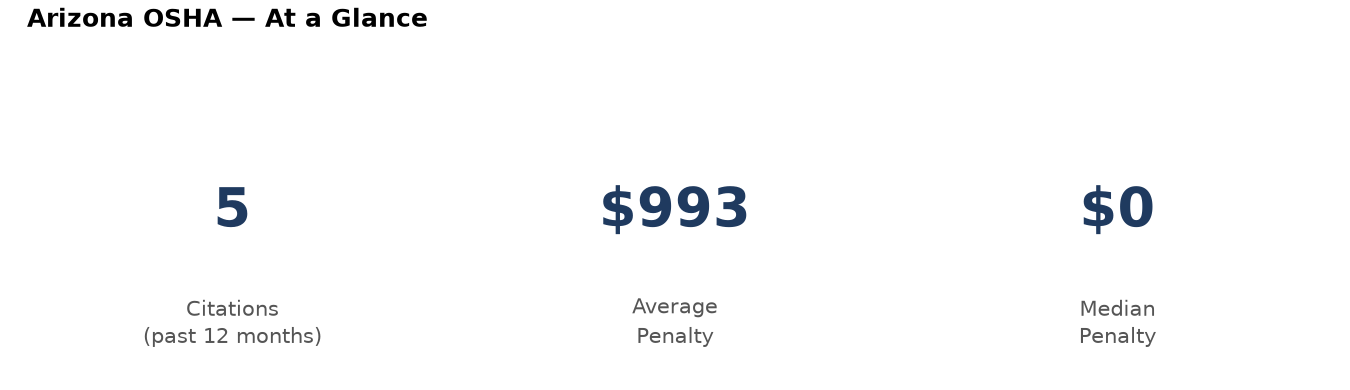
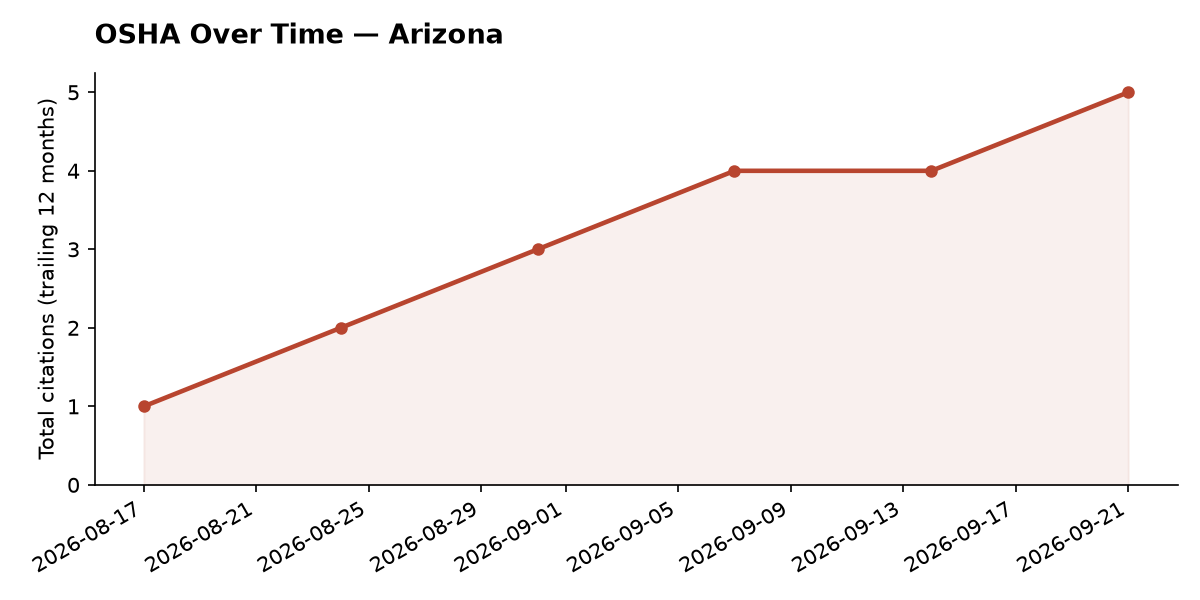
Arizona employers picked up 5 ladder citations under OSHA standard 1926.1053 over the past 12 months. That might sound like a small number compared to bigger states, but the penalties tell a different story: one company in Peoria was hit with a $4,965 fine, while the average penalty across all five cases sits at $993. Mesa saw more of these citations than any other city in the state.
If you’ve received a ladder citation in Arizona, or you suspect one is coming, the clock is already running. Talk to an Arizona OSHA defense attorney before you respond to OSHA in writing.
What 1926.1053 Actually Requires on an Arizona Job Site
Standard 1926.1053 is the rulebook for portable and fixed ladders on construction sites. It’s not just about whether you own a ladder — it covers how far the ladder has to extend past the landing surface, how much weight it needs to hold, whether damaged rungs or split rails get pulled from service, and how workers are supposed to climb, position, and secure the thing while they’re on it. Inspectors look at all of this when they walk a site, and a single missing extension or a ladder propped at the wrong angle is enough to trigger a citation.
Most violations in Arizona aren’t about employers ignoring ladder safety altogether. They’re about setup details getting overlooked in the rush of a job — a ladder that’s a few inches short of the required extension, or one that’s been damaged but stayed in the rotation because nobody flagged it.
Roofing Crews Are Driving Arizona’s Ladder Citation Numbers
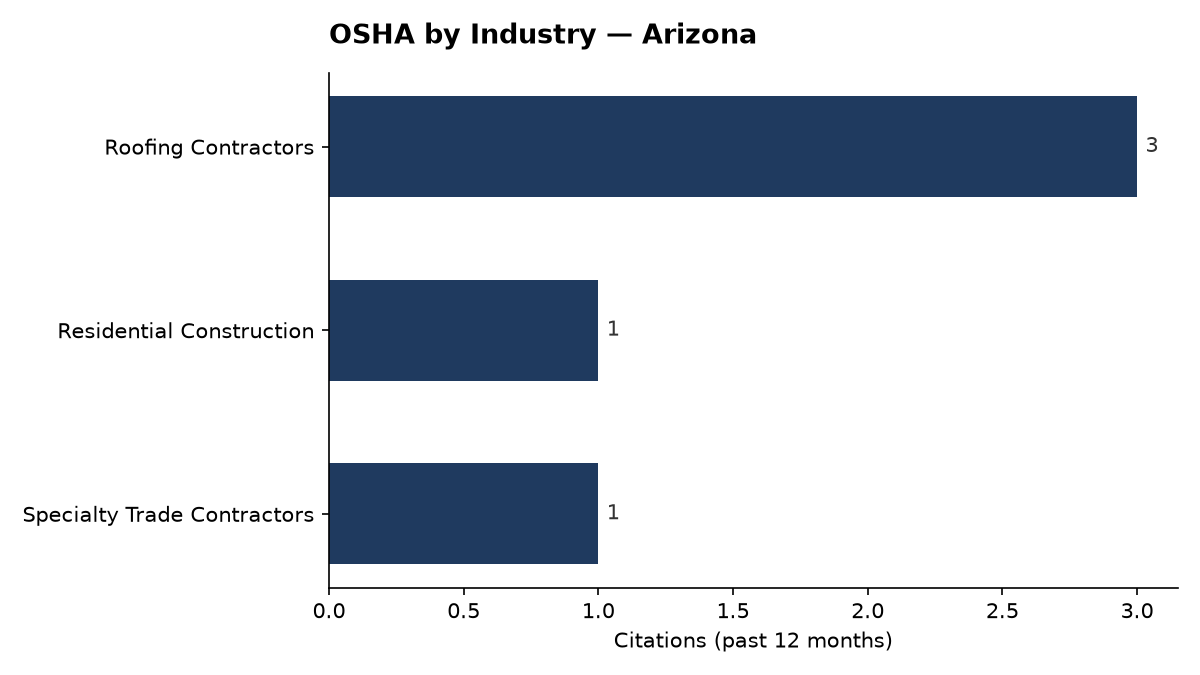
Of the five citations issued statewide, three went to roofing contractors. That’s not a coincidence. Roofing work in Arizona depends on ladder access to almost every job, often on steep pitches, in heat, and on tight schedules that push crews to skip the extra minute it takes to check ladder placement or condition. The remaining two citations split between residential construction and specialty trade contractors, industries where ladders show up constantly but get less scrutiny than scaffolding or fall-protection gear.
If your business falls into any of these categories, you’re operating in the segment of Arizona’s construction economy that OSHA is watching closest for exactly this kind of violation.
What These Citations Actually Cost in Arizona
The breakdown here matters. Of the five citations, three were classified as Other-than-Serious and two as Serious — Arizona hasn’t seen a Willful or Repeat ladder citation in this data set, which is a meaningful distinction, since those two categories can carry penalties several times higher than a standard Serious violation. The average penalty reduction between initial and final citation amounts was 0%, meaning the fines that got issued generally stuck as issued, at least in the cases on record.
The real named examples show how wide the range can be. Five Guys Roofing, LLC in Peoria was cited February 5, 2026 under 19261053 B08 and fined $4,965 for a Serious violation — by far the largest penalty in this group. On the other end, Top Woofer LLC dba M&M Roofing in Mesa, Foster’s Construction, L.L.C. in Pinetop, 3Qo, LLC dba 3Qo Plumbing in Glendale, and All Storm Roofing LLC in Mesa were each cited under 19261053 B01 with $0 penalties, spanning both Other-than-Serious and Serious classifications. That spread — from zero dollars to nearly $5,000 for citations under the same standard — shows how much the specific facts of each case, and how the employer responds, shape the final number. For a fuller breakdown of how OSHA calculates these figures, see this guide to OSHA ladder violations penalty amounts.
Even a $0 or low-dollar citation stays on your OSHA record and can affect how future inspections and penalties are handled if your company gets cited again. The dollar amount isn’t the whole story.
A citation with your company’s name on it is worth a real conversation before you decide how to respond. An Arizona OSHA defense attorney can review the specific violation code and evidence in your case and tell you whether it’s worth contesting.
The 15-Day Window You Can’t Afford to Miss
Once OSHA issues a citation, you have exactly 15 working days to file a Notice of Contest. Miss that window and the citation becomes a final order — no appeal, no negotiation, just a fixed penalty and a permanent mark on your compliance history. Given how quickly that deadline arrives, and how much variation there is in how these ladder cases get penalized, it’s worth understanding how to contest an OSHA citation as soon as the paperwork lands on your desk, not after you’ve already missed your shot.
Contesting doesn’t automatically mean a fight. It often opens the door to a negotiated settlement, a reduced classification, or a payment plan — options that disappear once the 15 working days run out.
Don’t wait until day 14 to figure out your options. An Arizona OSHA defense attorney can review your citation, check the deadline on your specific notice, and help you decide whether to contest, negotiate, or pay — while you still have a choice.
Pull out the citation you received, check the issue date, and count forward 15 working days. That’s the real deadline that matters right now, and getting a lawyer’s eyes on the case before it passes is the single most useful thing you can do today.