

Data last updated: September 21, 2026
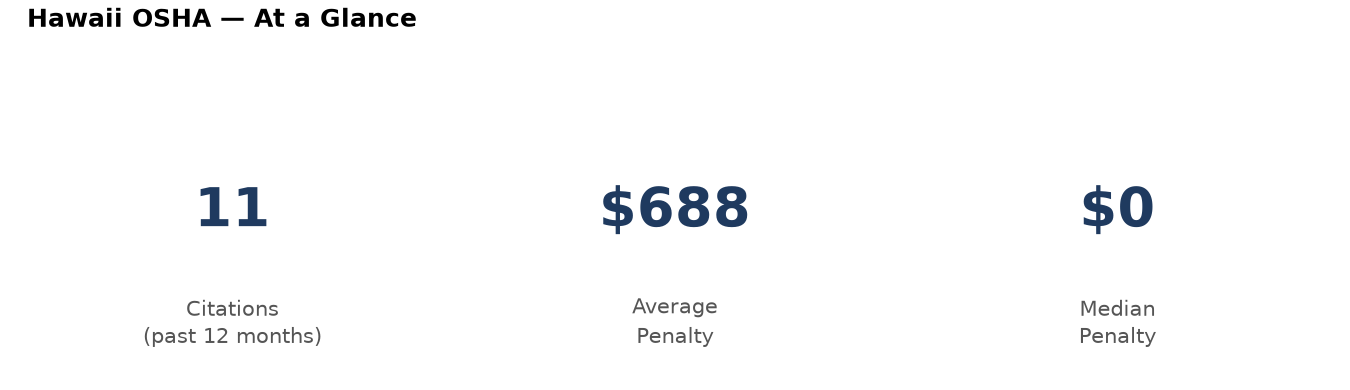
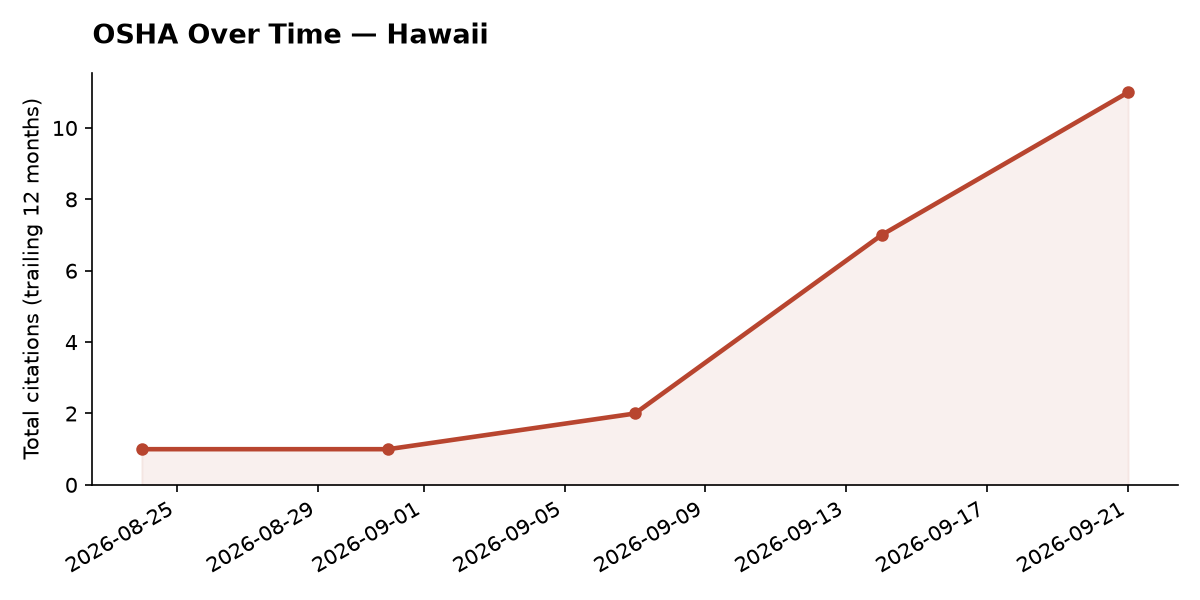
Hawaii employers received 11 scaffolding violations under 1926.451 over the past 12 months. The average penalty came in at $688, but the median was $0 — a sign that many cases settle down to nothing once challenged. Kamuela had more of these citations than any other city in the state, and 10 of the 11 cases were classified as Serious, meaning OSHA determined the hazard could realistically cause death or serious physical harm.
If you have a citation in hand right now, the clock is already running. Talk to a Hawaii OSHA defense attorney before you decide how to respond — waiting rarely improves your position.
What OSHA Actually Expects From a Scaffold on a Hawaii Job Site
The standard behind every one of these citations, 1926.451, is the general rulebook for scaffold safety in construction. It is not a single rule but a set of baseline requirements: the scaffold has to be built to hold its intended load with a margin of safety, workers need a safe way to get on and off it, fall protection has to be in place once someone is working at height on the platform, and the planking and guardrails have to meet specific spacing and strength requirements.
In practice, inspectors show up and check the obvious things first — is there a guardrail where one is required, is the platform fully planked, is there a safe climbing point instead of workers scrambling up cross braces. A gap in any one of those areas is enough to trigger a citation, even if nothing has gone wrong yet. That is exactly what happened in several of the recent Hawaii cases, where the citation was issued for a condition observed during a routine or complaint-driven inspection, not after an injury.
Framing and Residential Crews Are Carrying Nearly All the Risk Here
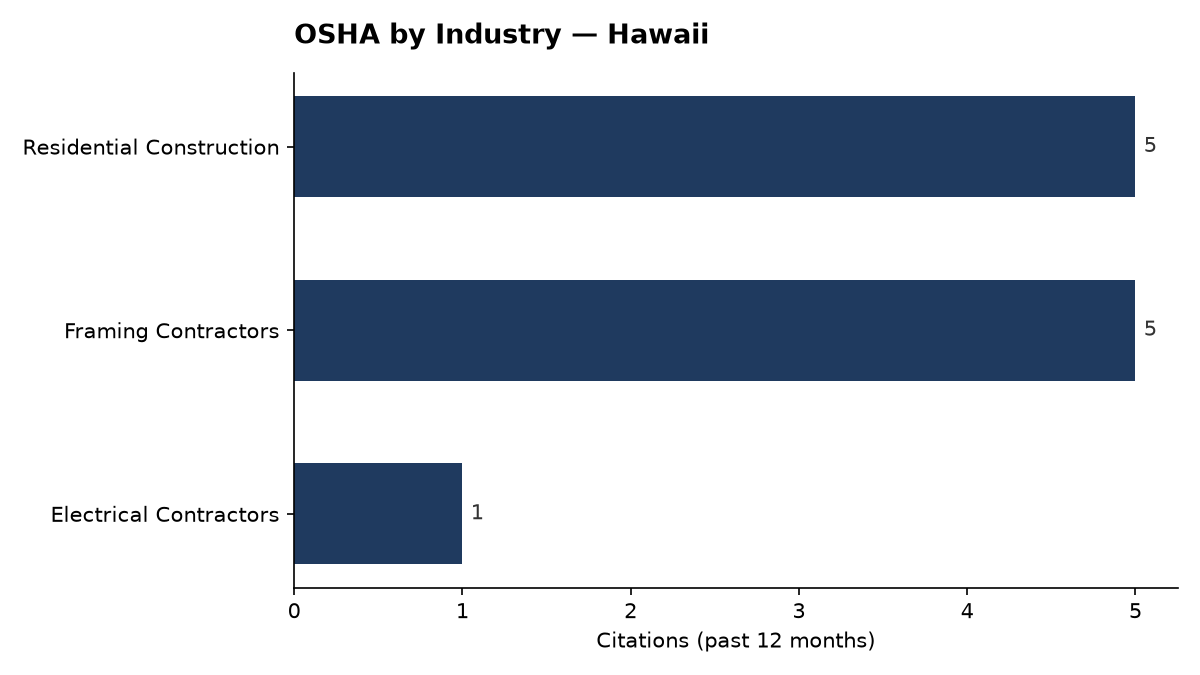
Look at where these 11 citations landed and a clear pattern shows up. Residential construction accounts for 5 citations, framing contractors account for another 5, and electrical contractors round out the list with 1. Between them, residential and framing work make up roughly 91% of all scaffolding enforcement in Hawaii over the period.
That concentration makes sense given how much of Hawaii’s construction activity involves multi-story residential builds and renovation work where scaffolds go up and come down quickly, sometimes for just a day or two of exterior work. Crews moving fast on tight timelines are the ones most likely to skip a guardrail step or leave a platform partially planked. If your business falls into residential construction, this is the exact enforcement pattern your safety program needs to be built around.
What These Citations Actually Cost, in Real Dollars
The $688 average penalty across Hawaii’s 11 cases sounds manageable, but that number hides a lot of variation. On the higher end, A One Electric Llc in Honolulu was cited for $2,814 under section 19260451 F15, issued July 29, 2026. Grace Construction Inc. in Waianae was cited $1,986 under section 19260451 B01, issued October 3, 2025. Jake Penny Contracting, Llc in Kamuela drew a $1,383 penalty under section 19260451 B02, issued August 3, 2026. On the other end, Kahala Construction Llc in Aiea received an Other-than-Serious citation under section 19260451 C02, issued June 3, 2026, with a $0 penalty.
That spread across just four examples tells you the classification matters as much as the dollar figure. Ten of the eleven Hawaii citations were Serious, which carries a much higher starting penalty than an Other-than-Serious finding. And the data shows something else worth paying attention to: the average penalty reduction between the initial citation and the final resolved amount was 33% statewide. That is not a coincidence — it reflects how often penalties get negotiated down or contested successfully once an employer pushes back with documentation, a corrected hazard, or a legal argument about the classification. For a fuller breakdown of how these numbers get set and adjusted, see this explanation of OSHA scaffolding violations penalty amounts.
A 33% reduction on paper is one thing. Getting that reduction in your specific case is another, and it usually depends on how the response is handled in the first few weeks. Get a Hawaii OSHA defense attorney involved before you agree to anything with the compliance officer.
The 15-Day Window That Decides Your Options
Once a citation is issued, you have 15 working days to file a Notice of Contest. Miss that window and the citation — along with the penalty as written — becomes a final order. There is no appeal process after that point, no matter how strong your argument might have been.
Within those 15 days, you have real choices: you can request an informal conference with the OSHA area office, negotiate the classification or penalty amount, or file a formal contest that puts the case in front of an administrative law judge. Each path has different tradeoffs, and the right one depends on the specifics of what was cited, what section of 1926.451 it falls under, and whether the hazard has already been fixed. This guide on how to contest an OSHA citation walks through the mechanics in more detail.
The math is simple: with 10 of 11 recent Hawaii citations landing as Serious, and the statewide average reduction sitting at 33%, doing nothing is the most expensive option available to you. Speak with a Hawaii OSHA defense attorney now, while the 15-working-day deadline is still open, not after it closes.
Whatever section of 1926.451 your citation cites, pull the paperwork, note the issuance date, and get it in front of someone who handles these cases before you respond to OSHA in writing.