
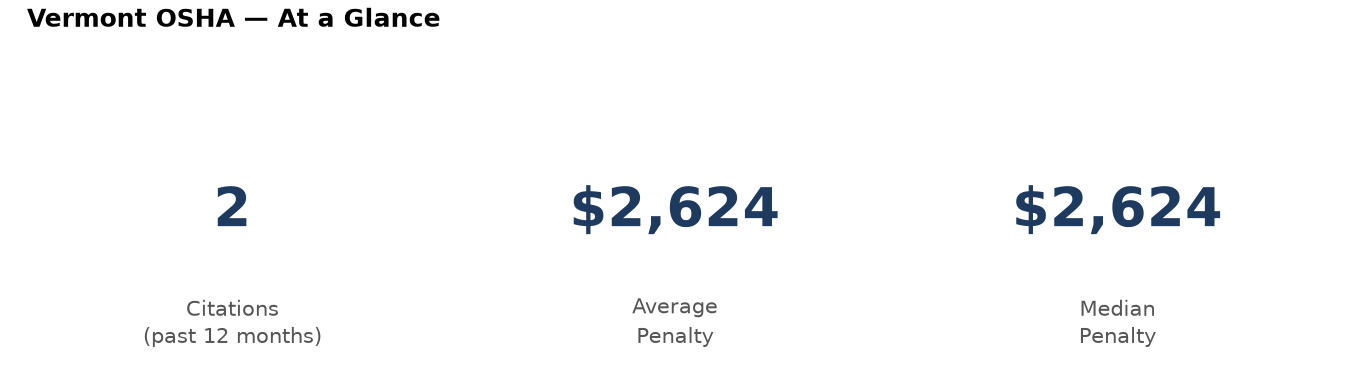
Vermont issued just two fall protection citations under 1926.501 over the past 12 months, but small numbers don’t mean small stakes. Both citations were classified as Serious, and the average penalty landed at $2,624 — with the median identical, since there were only two cases to average. If you’re a Vermont contractor holding a citation like this right now, the low statewide count won’t help you; what matters is the paperwork in front of you and the clock that started running the day you received it.
A citation this specific, tied to a standard as heavily enforced as 1926.501, deserves a real second opinion before you decide how to respond. Talking to a Vermont OSHA defense attorney costs you nothing but a conversation, and it can change the outcome.
What 1926.501 Actually Requires on a Vermont Job Site
The standard behind both of Vermont’s recent citations, 1926.501, is the backbone of OSHA’s fall protection program. It requires employers to protect workers once they’re exposed to a fall of six feet or more in construction work. That protection has to come in one of a few accepted forms: guardrail systems, safety nets, or a personal fall arrest system — a harness, lanyard, and anchor point set up correctly, not just handed to a worker and left unchecked.
Inspectors don’t need to see someone actually fall to write a citation. They just need to observe a worker exposed at height without one of these systems in place, or with a system that’s improperly rigged. That’s exactly the pattern behind both Vermont cases on record: workers at height, no adequate protection documented, and a Serious violation issued as a result.
Where Vermont’s Fall Protection Citations Are Concentrated
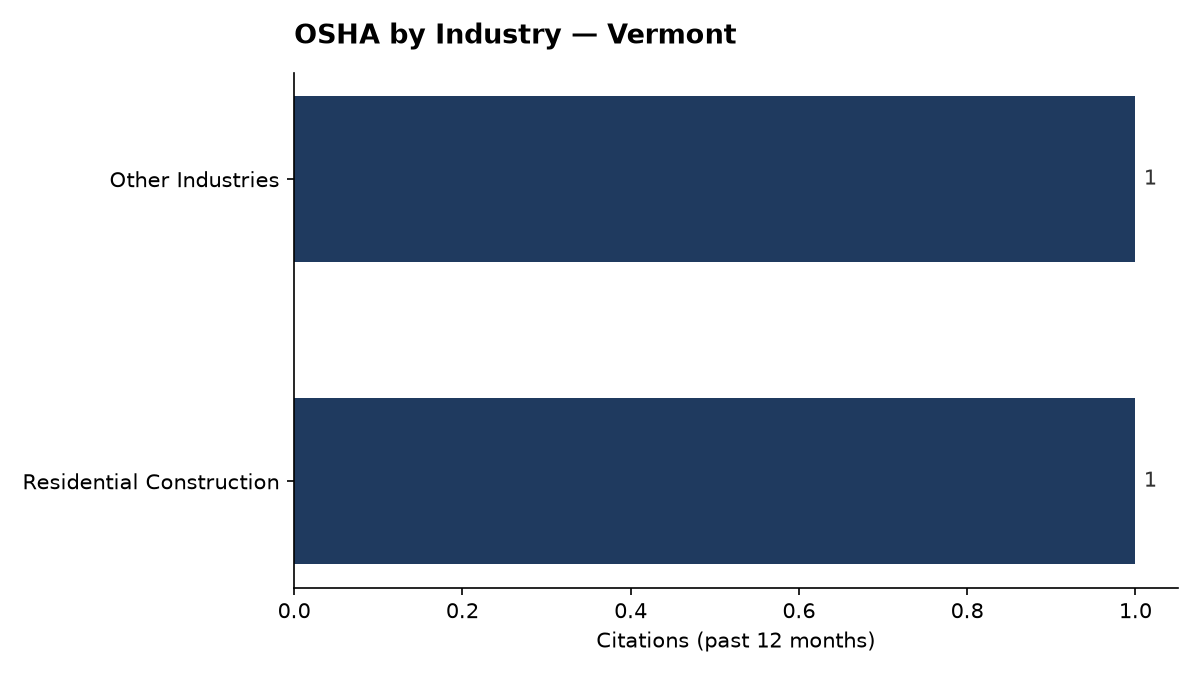
With only two citations statewide, Vermont’s enforcement picture is thin compared to larger states, but the split still tells you something. One citation came from the other industries category, and one came from residential construction — one citation apiece. Bristol stands out as the city with the most activity, driven by a residential roofing case.
This lines up with what shows up nationally: roofing and residential construction crews spend most of their working hours at height, often on steep or unstable surfaces, which makes them a natural focus for OSHA inspectors doing site visits or responding to complaints. In a state with Vermont’s mix of small residential builders and general contractors, a single job without guardrails or tied-off workers is enough to trigger a citation, even in a state that doesn’t see high enforcement volume overall.
What These Citations Actually Cost
Both real examples on record show how this plays out in dollars. Bedder Construction LLC, based in Essex Junction, was cited on October 9, 2025 for a Serious violation under 19260501 B13, with a penalty of $3,547. Justin G Roofing LLC, in Bristol, was cited on September 29, 2025 under the same subsection, with a penalty of $1,702. Both are Serious classifications — Vermont hasn’t recorded any Willful or Repeat fall protection citations in this period, which matters because those categories carry penalties that can run several times higher and signal to OSHA that a business ignored a known hazard rather than simply missed it.
The statewide average penalty reduction between initial and final citation is 20%, which tells you something concrete: employers who push back, negotiate, or contest these citations are regularly getting the number reduced rather than accepting the first figure OSHA lists. That reduction doesn’t happen automatically. It happens through the contest and negotiation process, and it happens more often when someone experienced in OSHA procedure is involved from the start. You can see how penalty calculations work in more depth on the OSHA fall protection violations penalty amounts page.
A $2,624 average penalty might sound manageable next to headline-grabbing six-figure OSHA cases elsewhere, but it’s still real money for a small Vermont contractor, and it’s rarely the only cost. Abatement requirements, higher insurance premiums, and the risk of a future Repeat classification if you’re cited again all add up. Before you decide this is a bill to just pay and move past, it’s worth getting a Vermont OSHA defense attorney to look at whether the citation holds up and whether the penalty can be reduced.
The 15-Day Window You Can’t Afford to Miss
Whatever you decide to do, you need to move fast. Once you receive an OSHA citation, you have exactly 15 working days to file a Notice of Contest. Miss that window and the citation becomes a final order automatically, no matter how strong your defense might have been. There’s no extension for being busy running your business or waiting to see if OSHA follows up.
Filing a contest doesn’t mean you’re picking a fight with OSHA for the sake of it. It preserves your options — to negotiate a lower penalty, challenge the classification, or dispute the facts of the inspection — while you and your attorney sort out the strongest path forward. Details on the process are laid out on the how to contest an OSHA citation page, but the short version is: don’t wait until day 14 to start thinking about it.
If you’ve been cited, or you’re worried a recent site inspection is about to turn into one, don’t sit on it. Get a Vermont OSHA defense attorney on the phone before the 15-day clock runs out, and find out exactly what your options actually are.