

Data last updated: September 21, 2026
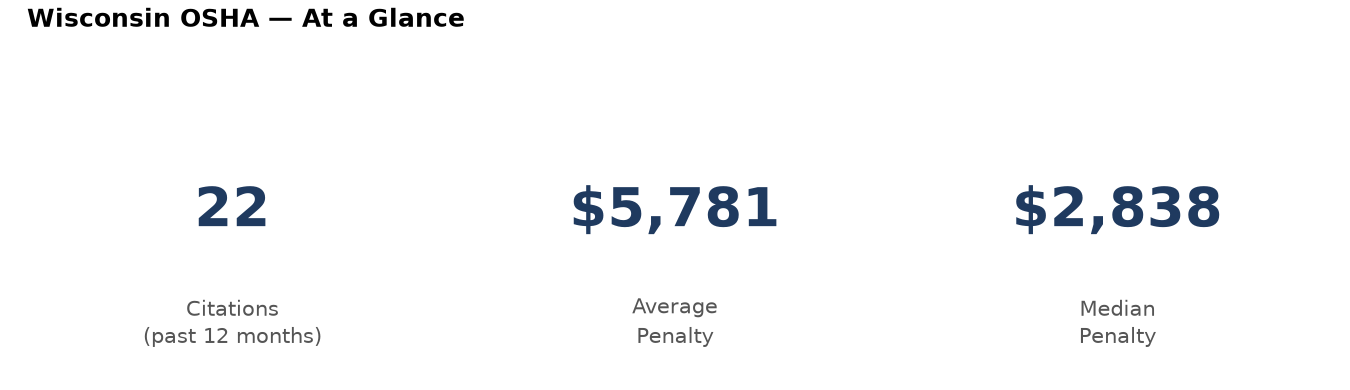
Wisconsin OSHA inspectors issued 22 ladder violation citations over the past 12 months, with an average penalty of $5,781 and a median of $2,838. That gap between average and median matters: a handful of large, high-dollar cases are pulling the average up, while most employers land closer to the middle figure — but if you’re one of the ones facing a Repeat citation, you’re likely looking at a number far above either average.
If you’ve just opened an envelope from OSHA, the clock is already running. You get 15 working days from the date you receive the citation to file a Notice of Contest, and once that window closes, the penalty and violation findings are generally locked in. Before you decide whether to pay, negotiate, or fight it, it’s worth a conversation with a Wisconsin OSHA defense attorney who handles these cases regularly.
What OSHA Actually Expects Under the Ladder Standard
Nearly every one of Wisconsin’s 22 ladder citations traces back to a single rule: the 1926.1053 standard. This regulation lays out the basics of ladder use on construction sites — how far an extension ladder needs to stick above the landing surface, what load it has to be rated to hold, when a damaged or modified ladder has to be pulled from service, and how workers are supposed to climb and position themselves on it. None of this is exotic engineering. It’s the kind of thing most crews know intuitively, which is exactly why inspectors treat lapses here as easy-to-prove, easy-to-cite violations. A ladder set up two feet short of the roofline, or one with a cracked rail still in rotation, is a violation an OSHA officer can document with a tape measure and a camera.
Roofing Crews Are Carrying Most of the Weight
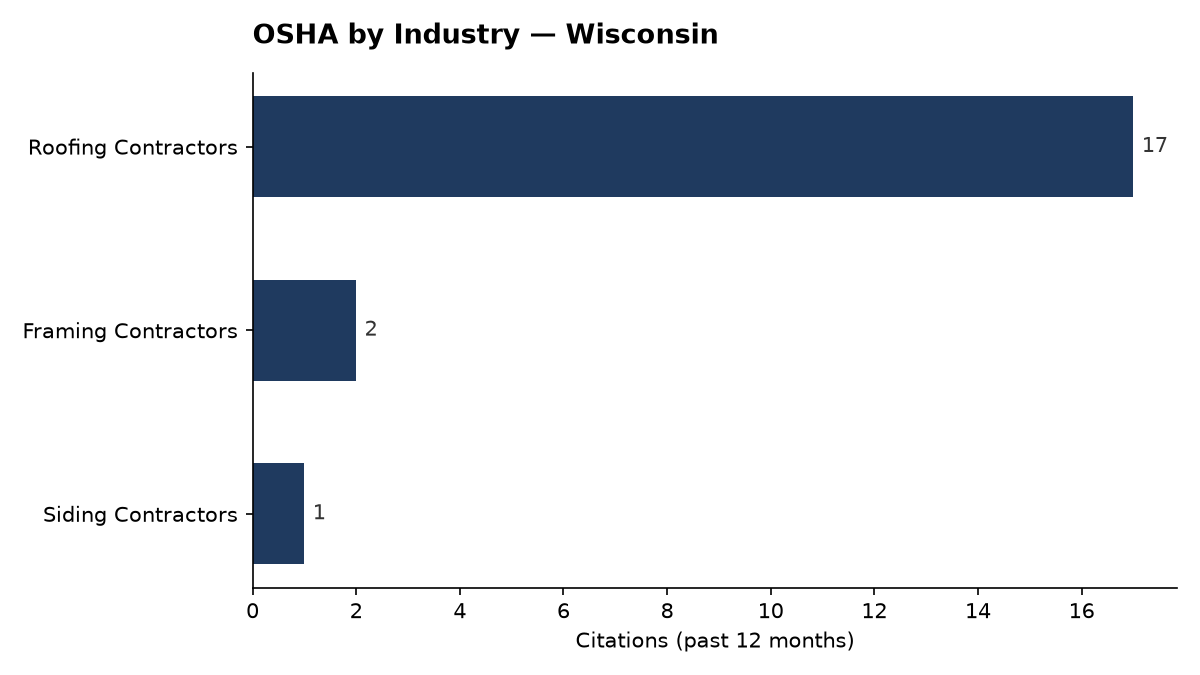
Of the 22 citations statewide, 17 — more than three out of every four — went to roofing contractors. Framing contractors picked up two, and siding contractors accounted for one. That concentration isn’t a coincidence. Roofing work depends on ladders for nearly every phase of a job, from initial access to material staging, and crews often move ladders multiple times a day under time pressure. Oak Creek turned up as the city with the most citations in the state, and several of the named cases below come out of that area.
What These Citations Actually Cost in Wisconsin
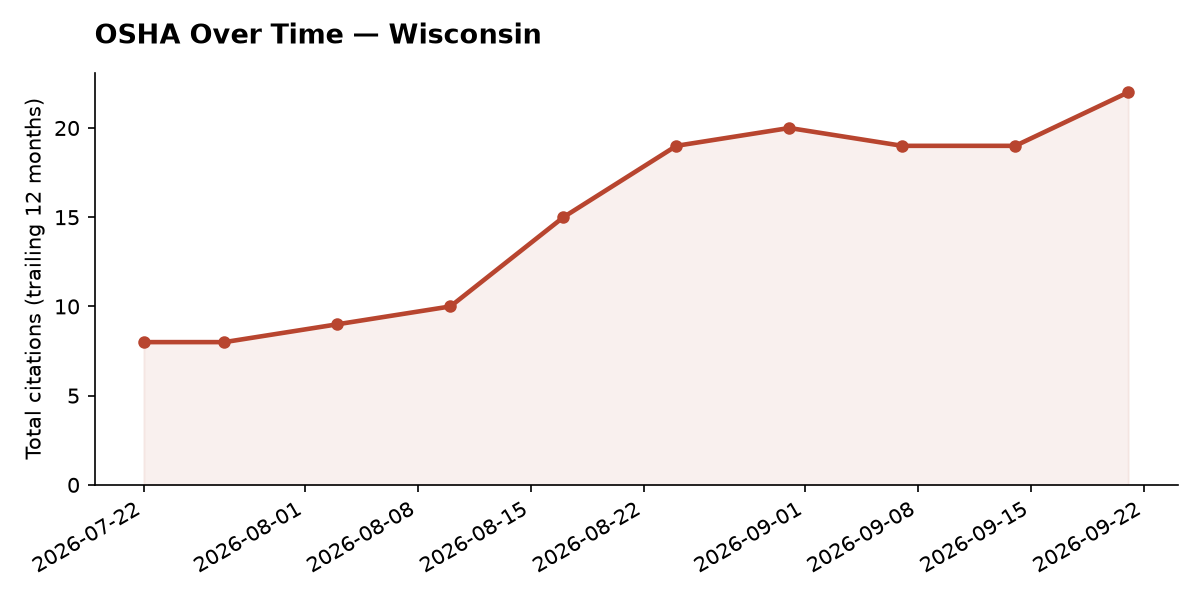
The severity split tells its own story: of the 22 violations, 16 were classified as Serious and 6 as Repeat. A Repeat citation means OSHA found that the same company (or a substantially similar operation) was cited for a similar hazard before — and Repeat penalties climb fast, sometimes into five figures for a single item. That’s exactly what shows up in Wisconsin’s recent record. OSHA ladder violations penalty amounts vary by classification, but here are five real cases from the state:
- Edd Services LLC (Hartford) — $21,281, Repeat, cited under 1926.1053(b)(1), issued June 1, 2026
- Alexander Hernandez (West Bend) — $21,281, Repeat, cited under 1926.1053(b)(1), issued June 12, 2026
- Residential Roofing LLC (Oak Creek) — $17,023, Repeat, cited under 1926.1053(b)(1), issued September 29, 2025
- Daniel Castro (Oak Creek) — $12,767, Repeat, cited under 1926.1053(b)(1), issued September 24, 2025
- Vanessa Morales (Menasha) — $6,809, Repeat, cited under 1926.1053(b)(1), issued January 26, 2026
Notice that every one of these examples is a Repeat classification, not a first-time Serious finding. That’s the pattern worth paying attention to: Wisconsin employers who get flagged for the same ladder issue twice are the ones absorbing the biggest hits, not first-time offenders. On the other hand, the average penalty reduction in the state over this period was 15%, which tells you that outcomes aren’t fixed once a citation is issued. Employers who push back — through negotiation, an informal conference, or a formal contest — routinely see the number come down from what’s on the initial notice.
Facing a citation with a Repeat classification and a five-figure price tag is not something to sort out alone at the kitchen table. Talk to a Wisconsin OSHA defense attorney before you respond to OSHA in writing or agree to any penalty figure.
Your Options Once the Citation Arrives
Once a Wisconsin employer receives a ladder citation, there are really three paths: pay it as issued, request an informal conference with the OSHA area office to negotiate the classification or amount, or file a formal Notice of Contest. All three have to happen within that same 15-working-day window from receipt — there’s no extension for thinking it over. Missing the deadline generally means you’ve accepted the citation exactly as written, including any Repeat classification and its penalty. If you believe the violation was misclassified, if the underlying facts are disputed, or if you simply think the penalty is out of line with what happened on site, the contest process is how you preserve that argument. The mechanics of how to contest an OSHA citation are procedural but time-sensitive, and getting them wrong can cost you the right to challenge anything later.
With 6 of Wisconsin’s 22 recent ladder citations landing in the Repeat category and average penalties reduced by 15% for employers who pushed back, the smartest move after receiving a citation is a fast, informed one. Reach out to a Wisconsin OSHA defense attorney now, while your 15 working days are still on the clock.