
Data last updated: September 28, 2026
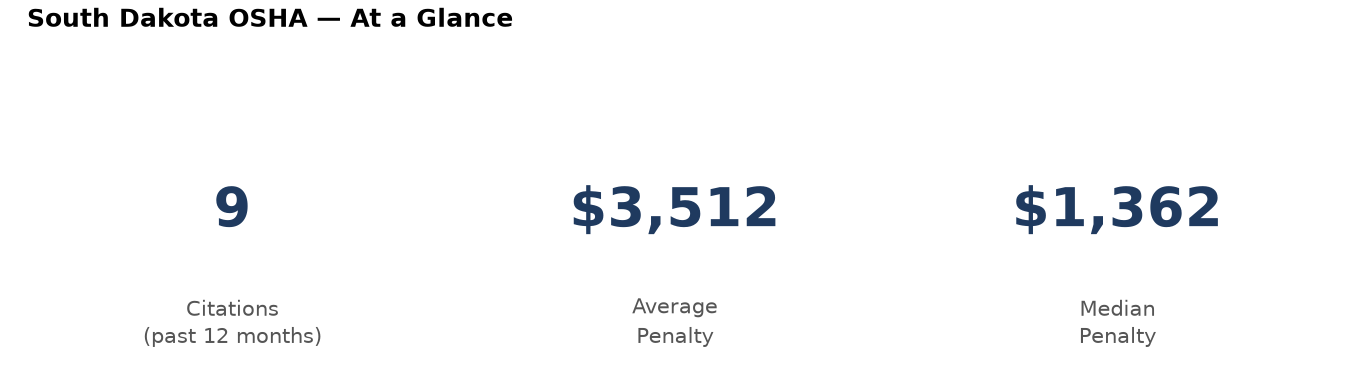
South Dakota regulators handed out just nine ladder violation citations under 1926.1053 over the past 12 months, but do not read that small number as low risk. The average penalty was $3,512, the median was $1,362, and two of the nine citations were classified as Repeat violations, which OSHA reserves for employers who have been cited for the same problem before and which carry substantially steeper fines than a first-time Serious violation.
If you are holding a citation right now, the math on this page will feel personal rather than statistical. Before you decide how to respond, it is worth a short conversation with a South Dakota OSHA defense attorney who handles these cases regularly and can tell you within minutes whether your citation is worth contesting.
What 1926.1053 Actually Demands on a Jobsite
Every one of these nine cases traces back to the same rule: the 1926.1053 standard, which sets the baseline for ladder safety on construction sites. It is not a vague suggestion. It spells out specific, checkable requirements: a portable ladder used to reach a roof or upper landing must extend at least three feet above that surface, the ladder has to be rated for the actual combined weight of the worker and any tools or materials being carried, damaged rungs or split rails take the ladder out of service immediately, and workers need a clear, unobstructed path to climb on and off.
OSHA compliance officers do not need to see an accident happen to write a citation. A ladder that is too short for the landing, a cracked side rail still in use, or a worker climbing with materials that exceed the ladder’s rated capacity is enough on its own. That is exactly why several of South Dakota’s citations this year were classified as Other-than-Serious or Serious even without any reported injury.
Why Roofers Show Up So Often in the South Dakota Numbers
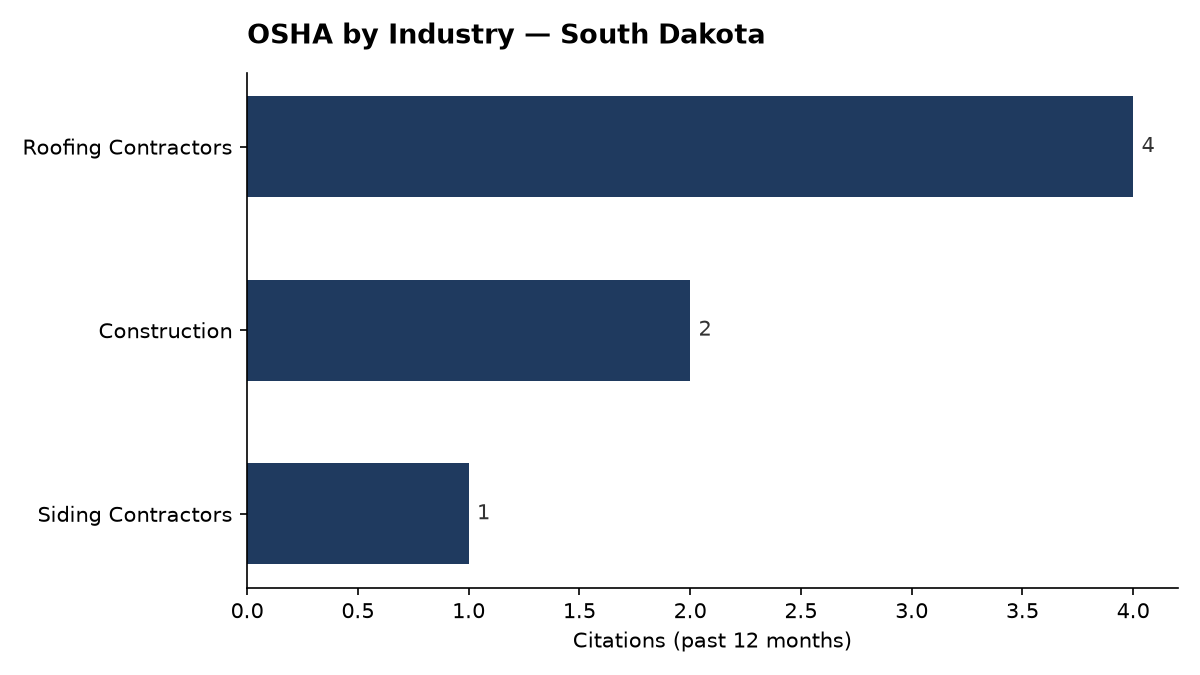
Four of the nine citations, nearly half, went to roofing contractors. That tracks with what shows up nationally: roofing work depends on ladders for nearly every access point, crews move fast between jobs, and a ladder that gets away with an inch too little extension on one house often gets flagged on the next. General construction firms picked up two citations, and a siding contractor accounted for one more. Sioux Falls was the city with the most activity by a wide margin, reflecting both the volume of residential and commercial building happening there and the fact that OSHA’s regional inspectors are naturally more active in the state’s largest construction market.
What These Citations Actually Cost in South Dakota
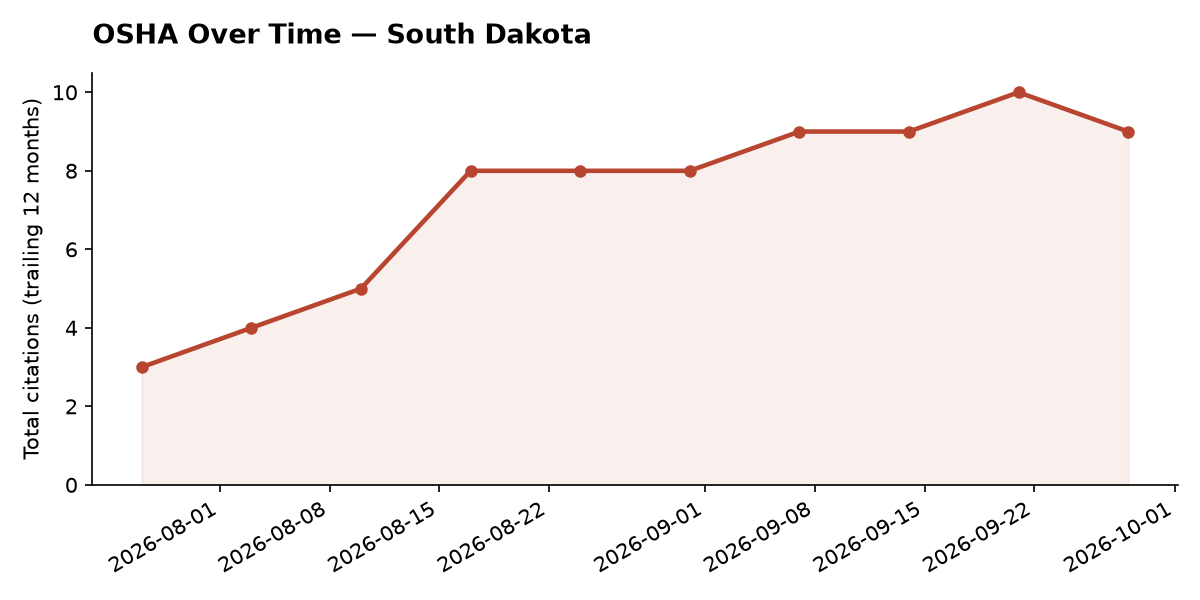
The gap between the average penalty ($3,512) and the median ($1,362) tells its own story. A handful of higher-dollar Repeat citations pull the average up, while most individual citations land closer to the lower median. Here is how that played out in real cases from the past year:
- Cardona Construction (Sioux Falls) — $17,023, Repeat violation under 19261053 B01, issued February 9, 2026
- Guerra Framing, LLC (Sioux Falls) — $5,000, Repeat violation under 19261053 B13, issued May 6, 2026
- Orellana Construction, Inc. (Sioux Falls) — $4,256, Serious violation under 19261053 B01, issued January 13, 2026
- Kea Constructors, LLC (Hartford) — $2,000, Other-than-Serious violation under 19261053 B01, issued June 29, 2026
- A&A Roofing Solutions, LLC (Box Elder) — $1,362, Serious violation under 19261053 B01, issued June 11, 2026
Notice the spread: a Repeat citation like Cardona Construction’s runs more than ten times the amount of a first-offense Serious citation like A&A Roofing’s. That is the whole point of the Repeat category, it is designed to punish employers who did not fix the problem the first time. For a full breakdown of how OSHA calculates these numbers, see this explanation of OSHA ladder violations penalty amounts.
There is also real room to negotiate. Statewide, initial penalties in ladder cases were reduced by an average of 30% by the time they were finalized. That is not automatic, though. It typically happens because an employer or their attorney pushed back on the classification, the abatement timeline, or the calculation itself.
A 30% average reduction is not guaranteed for every case, but it shows negotiation works often enough to matter. Talk to a South Dakota OSHA defense attorney before you pay a citation at face value.
The Clock Is Already Running Once the Citation Arrives
Whatever you decide to do, do it fast. Federal OSHA rules give you exactly 15 working days from the date you receive a citation to file a Notice of Contest. Miss that window and the citation, including the penalty amount and any Repeat classification attached to it, becomes final. There is no appeal process after that point, no matter how strong your argument would have been.
Fifteen working days is not a lot of time to gather your ladder inspection logs, training records, and photos, let alone decide whether the classification OSHA assigned actually fits what happened on site. That is the reason so many contractors bring in help early rather than trying to sort it out alone in the final days. If you are unsure how the process works, this guide on how to contest an OSHA citation walks through the mechanics step by step.
If the clock is already running on your citation, do not wait until it is down to a few days. Reach out to a South Dakota OSHA defense attorney now so you have options instead of a deadline you cannot undo.
Whether your citation looks more like A&A Roofing’s $1,362 Serious violation or Cardona Construction’s $17,023 Repeat case, the facts of your specific inspection, your abatement history, and the exact subsection cited will determine what you can realistically do next. Get a professional read on your paperwork before the 15-day window closes.