
Data last updated: September 14, 2026
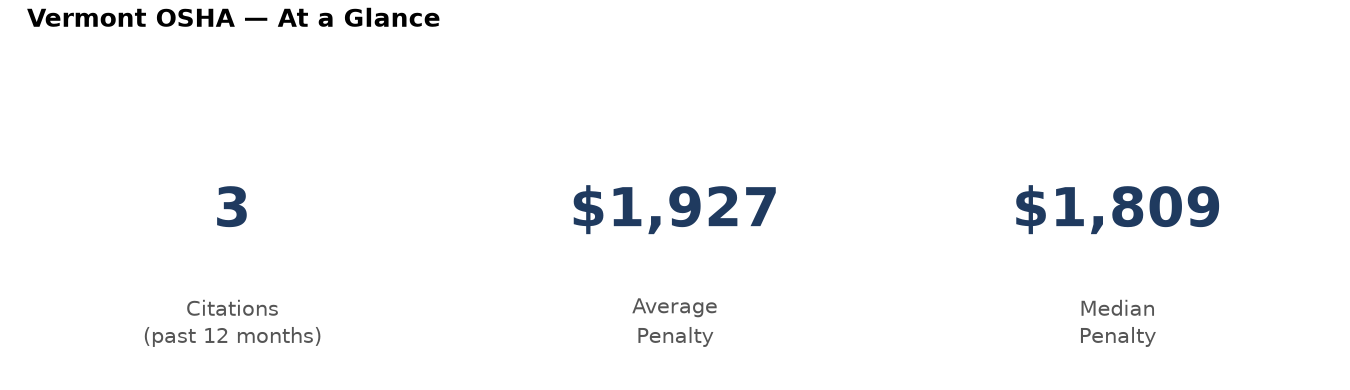
Vermont only issued three ladder-related OSHA citations over the past 12 months, but don’t let that small number fool you. All three were classified as Serious, the average penalty came in at $1,927, and the median sat at $1,809. Bristol was the city with the most activity in this category. In a state where enforcement is this infrequent, every citation tends to get real scrutiny from OSHA area offices, and the penalties reflect it.
If you’ve just been handed a ladder citation in Vermont, the clock is already running. Talk to a Vermont OSHA defense attorney before you decide how to respond — the filing window is shorter than most employers expect.
What 1926.1053 Actually Requires on a Jobsite
The standard behind every one of these Vermont citations is 29 CFR 1926.1053, OSHA’s general rulebook for ladders on construction sites. In plain terms, it covers how a ladder has to be set up and footed so it won’t slip or shift, how far it needs to extend past a landing point when workers are climbing on and off a roof or platform, how much weight it’s rated to hold, and what condition it has to be in before anyone uses it. A ladder with a cracked rail, a missing rung, or one that’s simply too short to extend the required distance above a roofline is a textbook violation under this rule. So is a worker using a ladder rated for less weight than the load it’s actually carrying, including tools and materials.
Inspectors don’t need to see an injury to write this up. If a compliance officer walks a site and sees a ladder set at the wrong angle, damaged, or not extending far enough past the landing surface, that’s enough to trigger a citation on the spot.
Where the Citations Are Landing: Roofing, Commercial Building, and Beyond
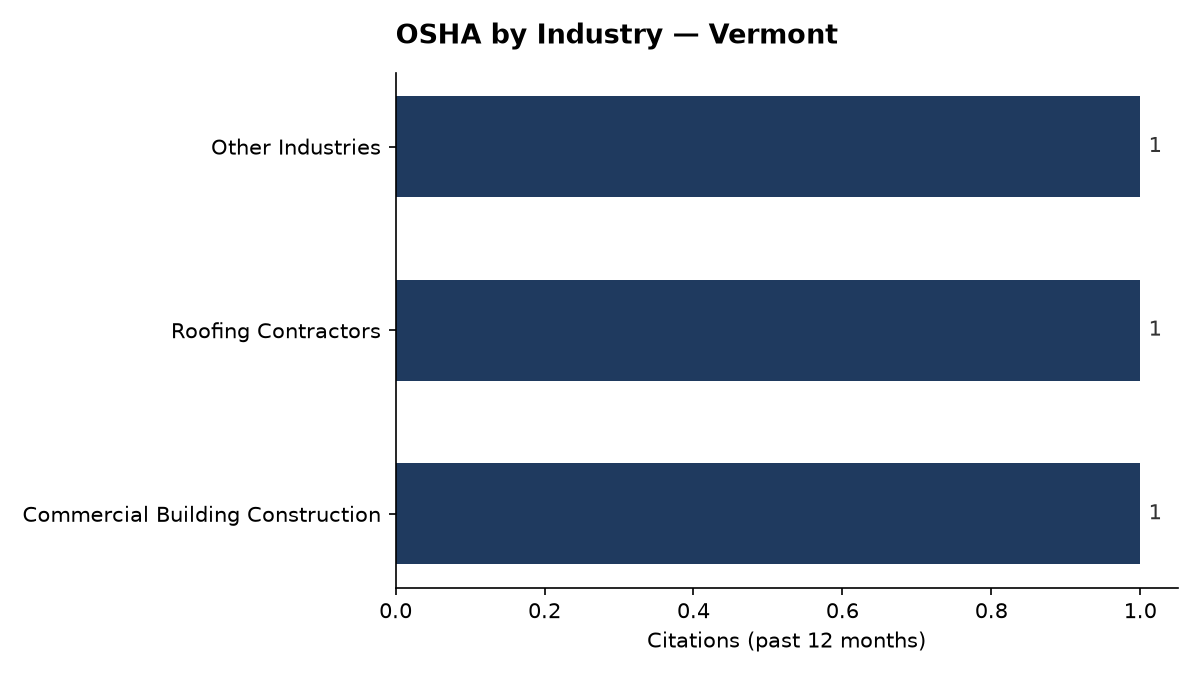
With only three citations statewide, Vermont’s numbers don’t point to one dominant industry the way busier states do. The load is split almost evenly: one citation in other industries, one in roofing contracting, and one in commercial building construction. That spread tells you something useful — ladder violations in Vermont aren’t confined to a single trade. Roofers face obvious ladder exposure because of constant roof access, but general commercial builders and contractors outside the usual construction categories are getting cited too, often for the same basic setup and maintenance issues.
The takeaway for any Vermont employer: this isn’t a roofing-only problem. If your crews use ladders at all — for siding, gutters, HVAC access, or general building work — you’re in the same enforcement pool.
What These Citations Actually Cost
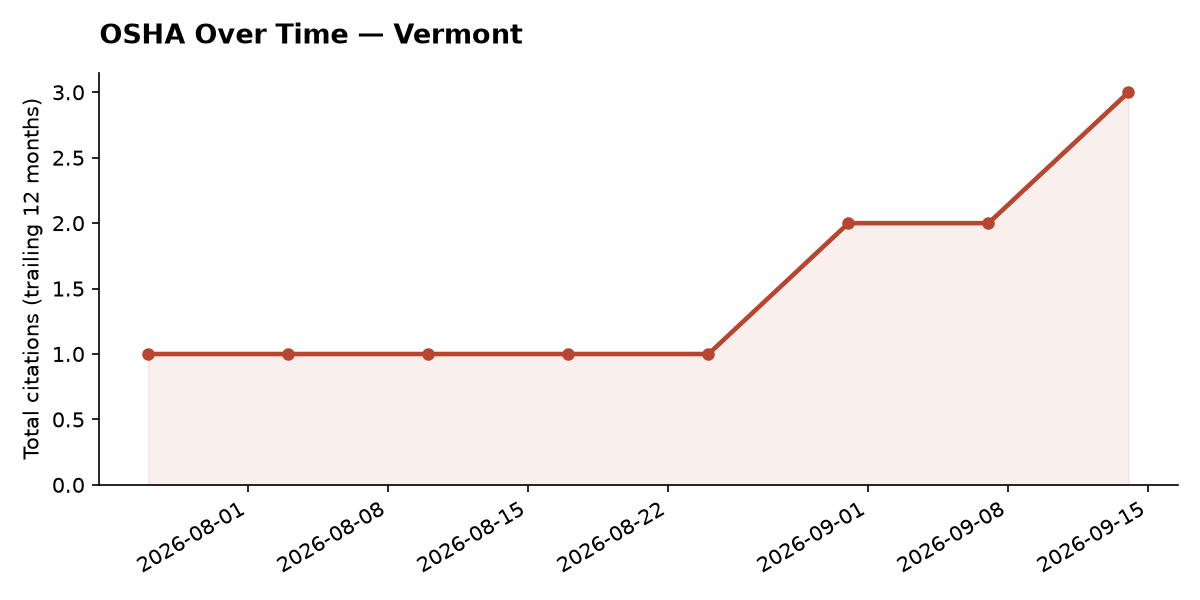
Vermont’s average ladder penalty of $1,927 might sound modest next to industrial-state numbers, but it’s not trivial for a small contracting operation, especially if OSHA finds more than one ladder issue during the same inspection. The real cases on record show the range clearly. Phoenix Roofing LLC in Brattleboro was cited under 1926.1053(b)(1) and penalized $3,972 for a Serious violation issued December 23, 2025. Wright Construction Company, Inc. in Woodstock was cited under the same subsection, 1926.1053(b)(1), for $1,809, issued April 9, 2026. Justin G Roofing LLC in Bristol was also cited under 1926.1053(b)(1), issued September 29, 2025, though that citation carried no monetary penalty.
Notice that all three cases cite the exact same subsection — the ladder extension and setup requirement under (b)(1). That’s not a coincidence; it’s the single most commonly cited piece of the ladder standard nationwide, and Vermont is no exception.
One more number worth knowing: penalties in this category get reduced by an average of 22% between the initial citation and final resolution. That gap usually comes from negotiation, corrected documentation, or a formal contest process — not from OSHA simply changing its mind. Understanding how OSHA ladder violation penalty amounts are calculated is the first step toward knowing whether your citation is actually negotiable.
A 22% reduction on a citation with a five-figure exposure is real money. Before you pay a proposed penalty or accept it as final, it’s worth getting a Vermont OSHA defense attorney to look at the specific violation language and inspection notes.
If a Citation Just Landed on Your Desk
The most important fact in this entire article is the deadline. Once you receive an OSHA citation, you have exactly 15 working days to file a Notice of Contest. Miss that window and the citation — penalty, classification, and all — becomes a final order automatically, with no further right to argue the facts. There’s no grace period and no informal extension once that clock runs out.
Fifteen working days sounds like plenty of time until you factor in gathering documentation, reviewing the inspection report, and deciding whether to negotiate an informal settlement conference instead of a formal contest. Both paths exist, and how to contest an OSHA citation walks through the difference, but the decision needs to happen fast.
Given how few ladder citations Vermont issues in a given year, each one tends to get individual attention rather than being processed as part of a bulk enforcement sweep — which can work in your favor if you respond quickly and with the right documentation, or against you if you let the deadline pass unanswered.
Don’t let a 15-working-day clock decide the outcome for you. Reach out to a Vermont OSHA defense attorney now, while you still have options on the table, and get a clear read on whether contesting, negotiating, or paying the citation makes the most sense for your business.