

Data last updated: September 21, 2026
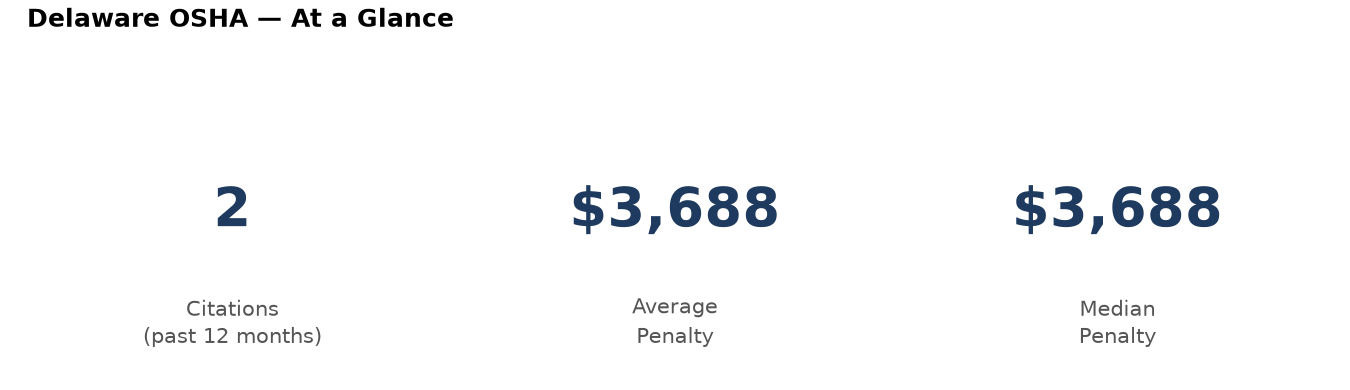
Delaware inspectors issued only two ladder citations under OSHA standard 1926.1053 over the past 12 months, but do not let the small count fool you. Both citations landed on roofing contractors, both were classified Serious, and the average penalty came out to $3,688 — with zero reduction between the initial and final amount. In a state where these citations are uncommon, that low frequency also means each one draws more attention and is less likely to get lost in a pile of routine paperwork.
If you run a roofing crew in Delaware, or you have just opened a citation letter with a ladder violation attached, the clock is already moving. Talking to a Delaware OSHA defense attorney before you respond can change how much you end up paying and what stays on your record.
What OSHA Actually Requires Under the Ladder Standard
The rule behind these citations, 1926.1053, is not complicated on paper, but it trips up a lot of crews on real jobsites. It covers how a ladder has to be set up and used during construction work: the ladder has to extend far enough past the landing surface for a safe handhold, it has to be rated for the load it is actually carrying (including tools and materials, not just body weight), it cannot be damaged or jury-rigged with makeshift repairs, and workers have to use it the way it was designed to be used — no standing on the top rung, no leaning it against unstable surfaces, no skipping the proper angle.
In practice, most citations under this standard come down to something an inspector can see from the ground in five seconds: a ladder set up too steep, too short for the landing, or visibly cracked and still in service. That is exactly the kind of thing that shows up on a roof job where a crew is moving fast and the ladder has been in the truck for three seasons.
Why Roofing Crews Account for Every Citation on the List
Every single ladder citation issued in Delaware over this period went to a roofing contractor, and that is not a coincidence. Roofing work depends on ladder access for nearly every phase of a job, from initial material staging to final cleanup, and crews are often moving between multiple access points on a single house or building in a single day. That repetition creates more chances for a ladder to be set up wrong, for a rung to get damaged and not get pulled from service, or for a worker in a hurry to skip the three-points-of-contact habit inspectors look for.
The two named cases from the public record illustrate this. Top Man Roofing, LLC, based in Wyoming, Delaware, was cited for a Serious violation under section 19261053 B01 and hit with a $5,107 penalty issued January 30, 2026. ESP Business Services LLC, in Magnolia — the city with the most ladder citations in the state — received a Serious citation under the same subsection, with a $2,270 penalty issued November 17, 2025. Magnolia’s status as the top city here reflects just how concentrated this enforcement activity is: with only two citations statewide, one city and one industry account for the entire picture. If you want a fuller sense of how roofing contractors tend to get flagged for ladder issues nationally, that pattern holds up well beyond Delaware’s borders.
What These Citations Actually Cost
Both Delaware citations were classified Serious rather than Willful or Repeat, which matters because the penalty math is very different across those categories. A Willful or Repeat finding can multiply the base penalty several times over, while a Serious citation reflects a violation that could cause real injury but does not carry the same aggravating history or intent behind it. Even so, $3,688 average and $2,270 to $5,107 in real dollar terms is not pocket change for a small roofing outfit, especially when you factor in the ripple effects: higher workers comp premiums down the line, a mark on your OSHA inspection history that raises the odds of a closer look next time, and the time your crew loses answering follow-up questions instead of working.
One number worth sitting with: the average penalty reduction between the initial and final citation amount in Delaware over this period was 0%. That means neither of these two employers negotiated their penalty down, at least not in a way that shows up in the final record. Nationally, a meaningful share of ladder citations get reduced through negotiation or a formal contest, sometimes substantially. A 0% reduction rate in a small sample like this could mean employers accepted the citations as issued, or it could mean they did not pursue the options available to them. Either way, it is a signal that assuming the number in the letter is final, without checking, can leave money on the table. For more detail on how these figures are calculated and what drives them up or down, see this breakdown of OSHA ladder violations penalty amounts.
Before you decide whether to pay, contest, or negotiate, it is worth a short conversation with a Delaware OSHA defense attorney — particularly given that the average penalty here has stuck at full value with no reductions on record.
Your Window to Respond Is Short — Here Is What to Do Now
Once a citation is issued, you have exactly 15 working days to file a Notice of Contest. That deadline is not flexible, and it is not measured in calendar days off a general rule of thumb — it starts running from the date you receive the citation, and missing it generally means the citation and the penalty become final, with no further right to challenge either. Given how tight that window is, the worst move is to sit on the letter while you decide what to do.
The right first steps are straightforward. Read the citation carefully and note the exact subsection cited, the classification (Serious, in both Delaware cases so far), and the abatement date. Pull together your own records on the ladder in question — inspection logs, purchase or rental records, training documentation — because those details shape whether a contest or a negotiated settlement makes more sense. And get a clear explanation of how to contest an OSHA citation before that 15-working-day clock runs out, since the process has specific procedural steps that are easy to get wrong without guidance.
If you have a citation in hand right now, do not wait until day 14 to make a decision. Reach out to a Delaware OSHA defense attorney today and find out what your options actually look like before that window closes.
Whether you run a roofing crew in Magnolia, Wyoming, or anywhere else in Delaware, the smartest move after a ladder citation is to get a professional read on your specific situation rather than guessing at what the penalty letter means for your business.