
Data last updated: September 28, 2026
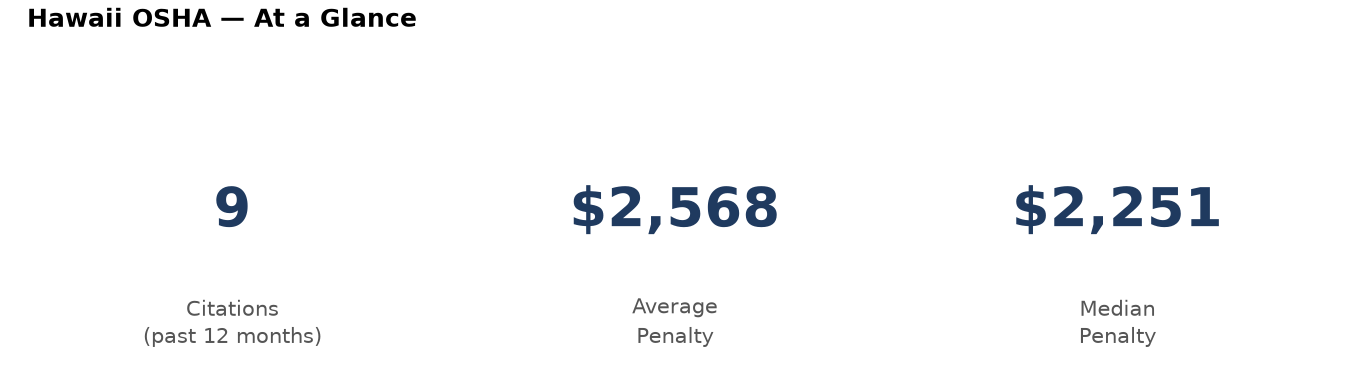
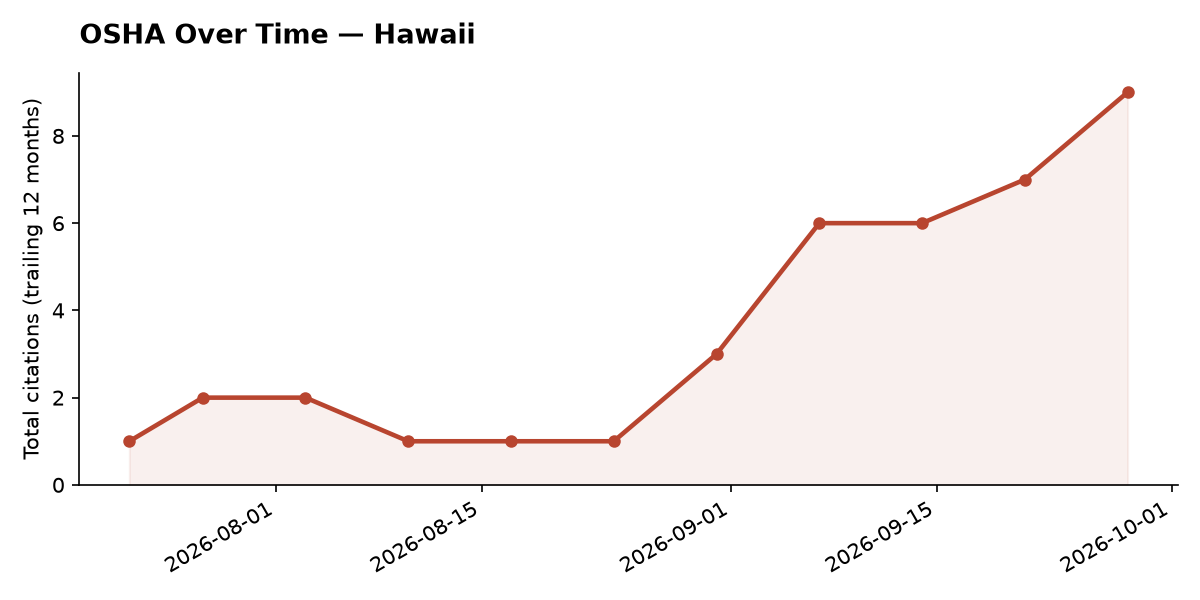
Nine ladder citations were issued to Hawaii employers over the past 12 months under OSHA standard 1926.1053, with penalties averaging $2,568 and a median of $2,251. That’s a small number of cases compared to mainland construction states, but seven of the nine were classified as Serious, and Lahaina alone accounted for more citations than any other city in the islands. If you build, roof, or frame on Hawaiian job sites, this standard is clearly on inspectors’ radar.
If you’ve already received a citation, the clock is running. You have 15 working days from the date you receive it to file a Notice of Contest, and after that window closes, the penalty is generally locked in. Talking to a Hawaii OSHA defense attorney before that deadline passes is the single most useful thing you can do right now.
What the ladder standard actually demands on a Hawaii job site
The governing rule, 1926.1053, isn’t just about owning a ladder that’s rated correctly. It covers how ladders get set up on uneven or sloped ground (common on Hawaiian sites cut into hillsides or lava rock), how far an extension ladder must reach past a landing point, what load the equipment can safely hold, and whether damaged rungs or side rails have been pulled from service. Inspectors also look at how ladders are actually being used in the field — not just what’s sitting in the truck. A ladder that’s technically compliant but positioned wrong, missing its top extension, or propped against an unstable surface can still generate a citation.
Two of Hawaii’s nine citations this year were coded as Other-than-Serious, meaning the hazard existed but wasn’t judged likely to cause death or serious injury. The remaining seven — nearly 78% of all cases — were Serious, the category OSHA reserves for conditions that could plausibly result in a serious fall or injury. That ratio matters, because Serious citations carry meaningfully higher penalties and go on the employer’s compliance history.
Residential builders and framers are drawing most of the attention
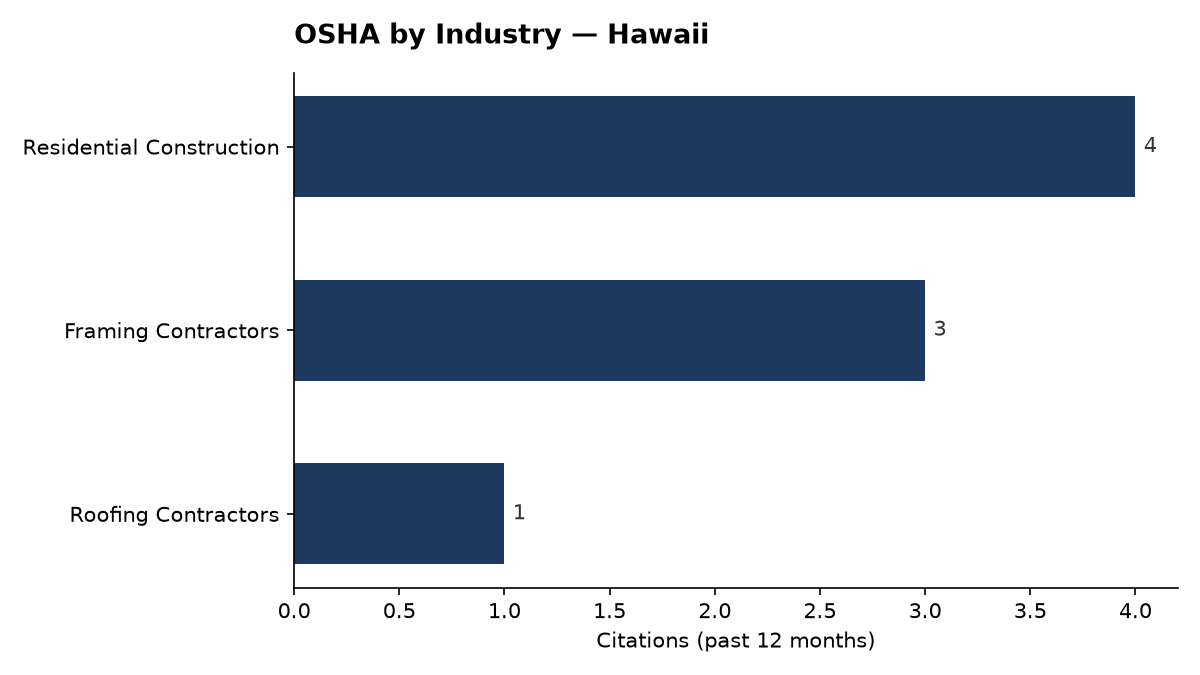
Of the nine citations, four went to residential construction companies, three to framing contractors, and one to a roofing contractor. That split makes sense given how much of Hawaii’s active construction volume is single-family and multi-unit residential work, often involving repeated ladder use for roof access, second-story framing, and exterior finishing. Framing crews in particular tend to move ladders constantly throughout a shift, which raises the odds that one gets set up in a hurry, on soft ground, or without someone checking that it’s still in good repair.
Lahaina stands out as the city with the most citations in this data set, which is worth noting for any contractor working recovery, rebuild, or new construction projects on Maui’s west side. Increased building activity in an area typically brings increased OSHA presence, and ladder violations are among the easiest hazards for an inspector to spot during a routine walk-through.
What these citations actually cost Hawaii employers
The nine cases here ranged widely. A.P. Construction LLC in Kailua Kona was cited $10,924 for a Serious violation under 19261053 B06, issued June 10, 2026 — by far the largest penalty in this group. Cajudoy Construction LLC in Lahaina was cited $3,215 (Serious, 19261053 B01, January 22, 2026). Unlimited Inc in Honolulu received a $2,483 Serious citation under the same subsection on June 25, 2026. Wmc Built LLC in Lahaina was fined $2,251 (Serious, 19261053 B01, November 25, 2025), and A One Electric LLC in Honolulu was cited $2,251 under 19261053 B13 on July 29, 2026.
Those five examples alone show how much penalty amounts can swing based on the specific subsection cited and the circumstances OSHA found on-site — even within the same standard. For a full breakdown of how OSHA calculates these figures, see this guide to OSHA ladder violations penalty amounts. It also helps to know that the average penalty reduction in Hawaii over this period was 20%, meaning a meaningful share of initial penalty amounts were later negotiated down or adjusted. That reduction doesn’t happen automatically — it typically comes from an employer formally contesting or negotiating the citation, not from waiting it out.
Before you decide whether to pay, contest, or negotiate, it’s worth getting an honest read on your exposure. Speak with a Hawaii OSHA defense attorney about your specific citation and subsection before you commit to a path.
Your options once a citation lands, and why the 15-day window matters
Once OSHA issues a citation, the abatement date and penalty amount are treated as final unless you formally file a Notice of Contest within 15 working days of receipt. That’s a hard deadline — not a suggestion — and it applies regardless of whether you plan to negotiate an informal settlement, dispute the classification, or fight the citation outright. Miss it, and you generally lose the right to challenge the penalty later.
The process for contesting isn’t complicated, but it does require getting the paperwork right and understanding what you’re actually disputing — the violation itself, the classification (Serious versus Other-than-Serious), or just the penalty amount. This walkthrough on how to contest an OSHA citation covers the mechanics in plain language. Given how much penalties can move (again, Hawaii saw a 20% average reduction), it’s rarely a bad idea to at least explore your options before the window closes.
If you’re a Hawaii contractor holding a ladder citation right now, don’t let the 15 working days slip by while you decide what to do. Talk to a Hawaii OSHA defense attorney about your specific case, get a clear read on your options, and make your decision with the deadline — and the real numbers — in front of you.