

Data last updated: September 14, 2026
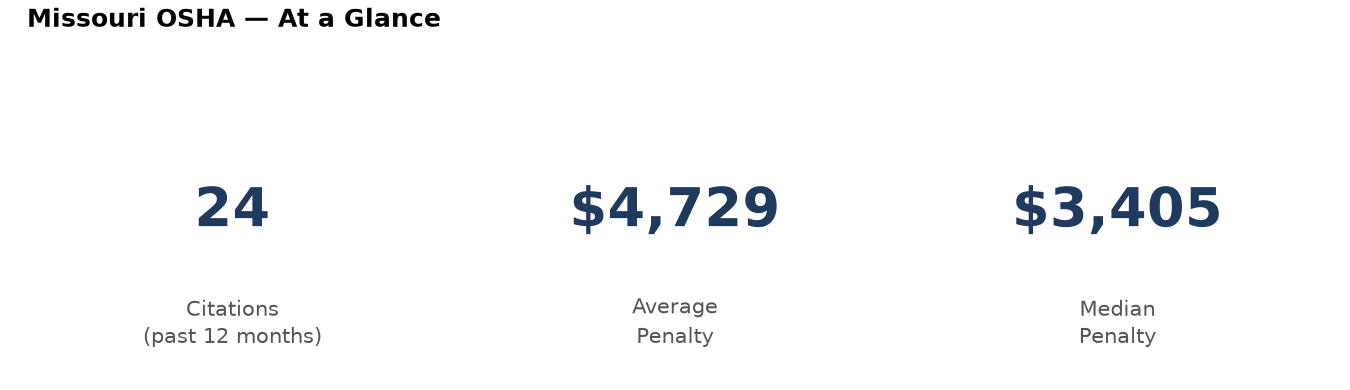
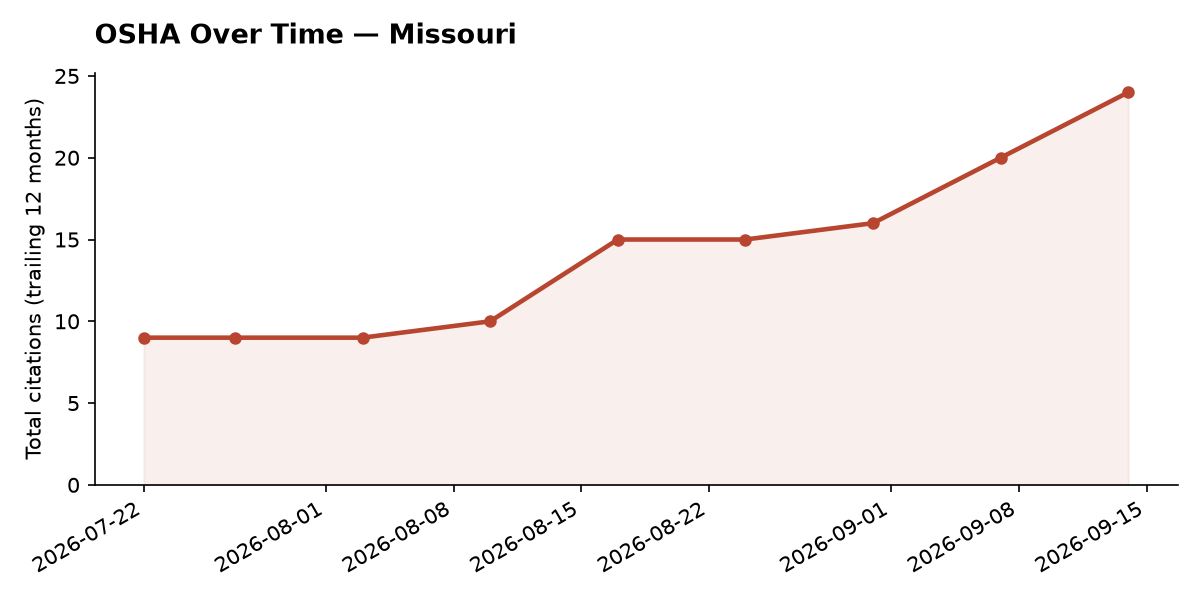
Missouri employers picked up 24 ladder violations under OSHA standard 1926.1053 in the past 12 months, with an average penalty of $4,729 and a median of $3,405. Kansas City generated more of these citations than any other city in the state. Twenty of the 24 were classified as Serious, three came back as Repeat violations, and one was Other-than-Serious — a mix that tells you Missouri inspectors are not just writing paperwork, they are finding real hazards on real job sites.
If you or your company just received one of these citations, the clock is already running. Talking through your options with a Missouri OSHA defense attorney before you respond can change the outcome, especially if this is a Repeat classification carrying enhanced penalties.
What 1926.1053 Actually Requires on a Missouri Job Site
The standard behind every one of these citations, 1926.1053, is not complicated in theory, which is exactly why so many crews get tripped up in practice. It sets the baseline rules for ladder use on construction sites: the ladder has to extend far enough past the landing surface for a worker to step off safely, it has to be rated for the load it is carrying, damaged or weakened ladders have to be pulled from service rather than patched together and reused, and workers have to actually use the ladder the way it was designed to be used — no straddling, no standing on the top cap, no makeshift extensions with scrap lumber.
Inspectors look for these details because ladder falls are one of the most common ways construction workers get seriously hurt. A missing three feet of extension above a roofline, or a ladder set up on uneven ground without stabilization, is enough to generate a citation even if nobody actually got hurt that day.
Roofers Account for Three-Quarters of Missouri’s Ladder Citations
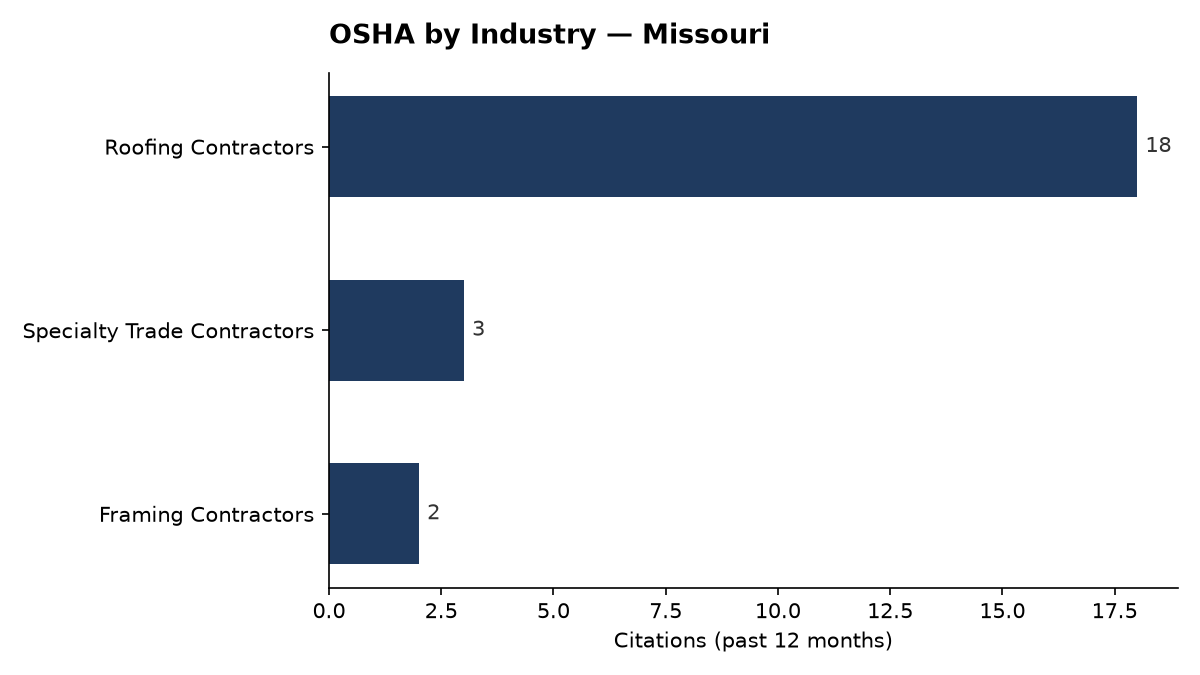
The industry breakdown in Missouri is lopsided. Of the 24 citations, 18 went to roofing contractors, with specialty trade contractors picking up three and framing contractors two. That concentration makes sense given the nature of the work — roofers spend most of their day accessing and leaving elevated surfaces by ladder, often multiple times an hour, which multiplies the chances of a setup mistake or a compliance officer catching one in the moment.
Several real cases from the state show how this plays out. Barrientos Roofing LLC in Pleasant Hill was cited $29,790 as a Repeat violation under 19261053 B01, issued September 26, 2025. San Felipe Builds LLC in Columbia and Styrling Construction in Saint Joseph both faced Repeat citations issued December 19, 2025, for $9,930 and $8,512 respectively. More recently, JJL Construction LLC in Blue Springs and Roberto Flores Roofing LLC in Kearney each received Serious citations of $4,965, both issued January 16, 2026, under the same subsection. The pattern is clear: once an employer has a prior ladder citation on record, a second finding gets classified as Repeat and the penalty jumps sharply.
What These Citations Cost — and Why the Number on the Letter Isn’t Final
A $4,729 average penalty might look manageable next to some of the six-figure OSHA fines that make headlines, but that average hides real spread. Serious violations in Missouri’s ladder cases have run under $5,000, while Repeat findings have climbed into the tens of thousands — Barrientos Roofing’s $29,790 citation is more than six times the state average. For a small roofing or framing outfit, a Repeat classification can mean the difference between a fine you absorb and one that affects payroll or bidding capacity for months.
Here’s the detail worth knowing before you decide how to respond: the average penalty reduction in Missouri, comparing initial citations to final resolved amounts, runs around 10%. That reduction generally does not happen on its own. It comes from employers who push back — negotiating the classification, challenging the abatement date, or contesting the citation outright — rather than simply paying what’s on the first letter. Understanding how OSHA ladder violations penalty amounts are calculated, including the gravity-based adjustments and size-of-business factors, is usually the first step toward figuring out whether your citation has room to move.
Before you write a check or assume the number is fixed, it’s worth having a Missouri OSHA defense attorney review the citation language and the inspector’s findings. Many employers pay more than they needed to simply because they didn’t know a reduction was on the table.
The 15-Working-Day Window You Cannot Afford to Miss
Whatever you decide to do about a ladder citation in Missouri, you need to decide fast. OSHA gives employers exactly 15 working days from receipt of the citation to file a Notice of Contest. Miss that window and the citation becomes a final order — no appeal, no negotiation, no second look, regardless of whether the classification was fair or the penalty was calculated correctly.
Fifteen working days sounds like enough time, but it goes quickly once you factor in gathering documentation, talking to your insurance carrier, and figuring out whether the classification (Serious versus Repeat, in particular) was even applied correctly in your case. The process for how to contest an OSHA citation involves specific procedural steps, and getting them wrong can forfeit your right to challenge the citation even if you filed on time.
Given how little room there is to correct a late filing, the smart move is to get a Notice of Contest evaluation started now rather than after the deadline passes. a Missouri OSHA defense attorney can tell you within a short consultation whether contesting makes sense for your situation, and can make sure the paperwork is filed correctly and on time.
If you’re holding a ladder citation right now, or you think an inspection is coming based on a recent incident or complaint, don’t wait to see how the classification lands on paper. Twenty-four citations in a single reporting period is not a lot of enforcement activity statewide, but if your company is one of them, the details of your specific citation — the classification, the subsection cited, the penalty math — matter more than the statewide average ever will.