

Data last updated: September 28, 2026
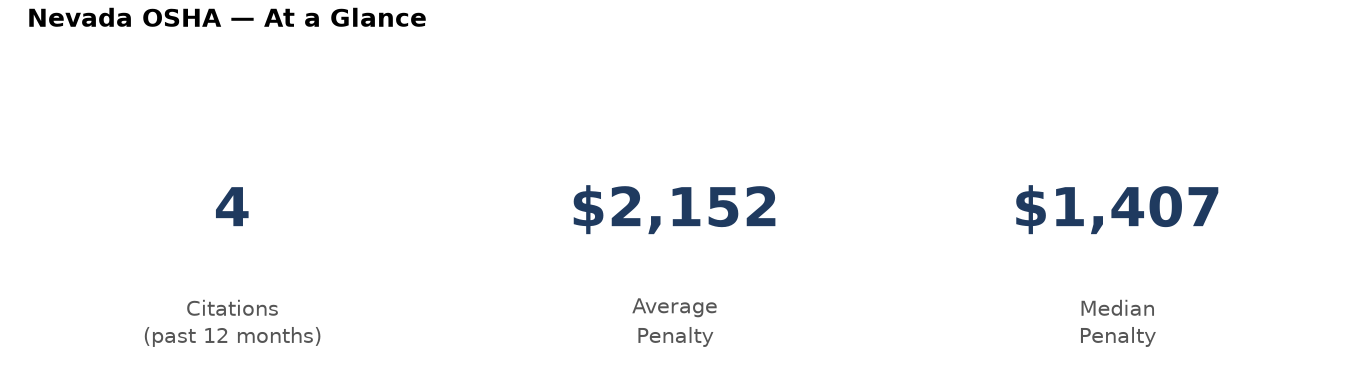
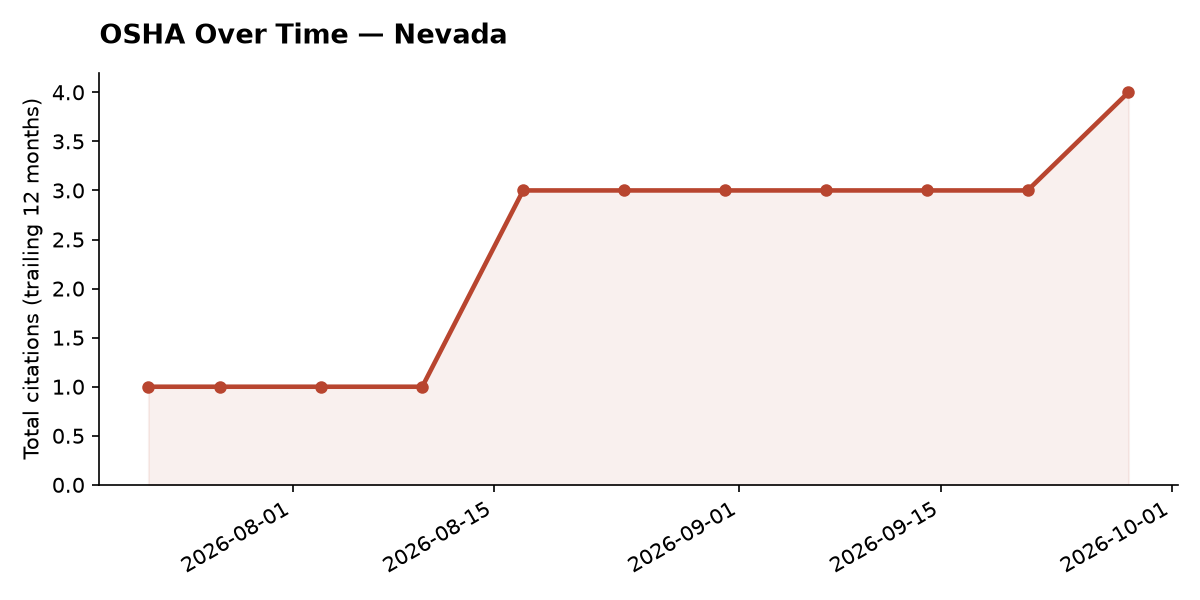
Nevada regulators issued four ladder-related citations under 1926.1053 over the past 12 months, with an average penalty of $2,152 and a median of $1,407. That might sound like a small number statewide, but if your company is one of the four, the number that matters is the one on your citation letter. Incline Village had more of these cases than any other city in the state during this period.
If you have already received a citation, the clock is running now. Talk to a Nevada OSHA defense attorney before you respond to OSHA in writing.
What the ladder standard actually demands on a Nevada jobsite
The rule behind every one of these citations, 1926.1053, is not complicated in theory but gets violated constantly in practice. It covers how ladders must be set up and secured, how far an extension ladder needs to stick out above a landing surface, how much weight a ladder is rated to carry, and the requirement to pull damaged ladders out of service immediately rather than keep using them until someone gets hurt. It also addresses proper use during active construction work, meaning things like facing the ladder, keeping three points of contact, and not using the top rungs as a step.
None of this is exotic engineering. Inspectors find violations because crews are moving fast, ladders get borrowed between crews and abused, and nobody owns the job of checking equipment before it goes up. That is exactly the pattern reflected in Nevada’s numbers this year.
Where these citations are landing: specialty trades carry the weight
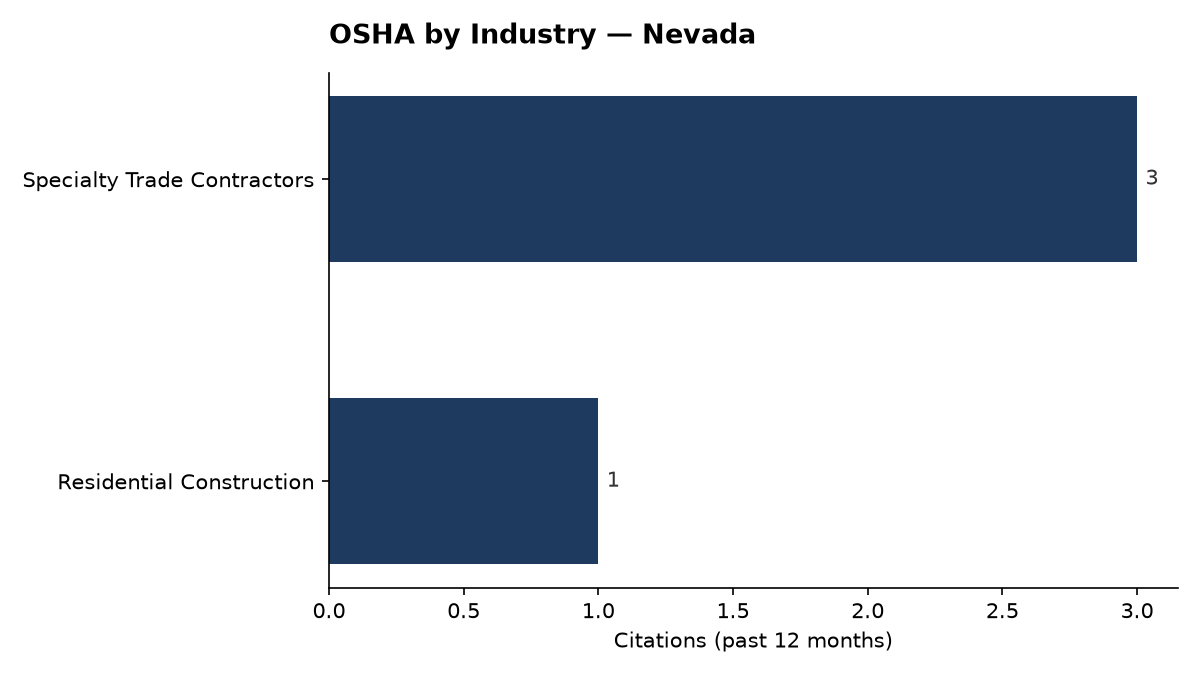
Of the four Nevada citations in this period, three went to specialty trade contractors and one to a residential construction employer. That split lines up with how these jobs actually run. Specialty trade crews, electricians, HVAC techs, framers, and similar subcontractors, are in and out of multiple sites in a single day, often setting up borrowed or company-owned ladders on uneven ground with little supervision. Residential builders face a similar exposure but usually have fewer separate ladder setups per project, which is likely why they show up less often in the count.
If your business falls into either category and you run crews that use ladders daily, this is the enforcement pattern you should expect to be measured against, not a hypothetical.
What these Nevada citations actually cost, name by name
Three of the four Nevada cases were classified as Serious, and one was Other-than-Serious. That split matters because Serious citations carry real financial weight, while Other-than-Serious violations can still land on your record even with no dollar penalty attached. Nevada’s own numbers show the range clearly:
- Kp Construction, Inc. (Incline Village) was cited February 11, 2026 under 1926.1053(b)(1), classified Serious, with a penalty of $5,793.
- Braemar Construction LLC (Winnemucca) was cited April 20, 2026 under 1926.1053(b)(13), classified Serious, with a penalty of $2,814.
- Refrigeration Unlimited LLC (Reno) was cited February 26, 2026 under 1926.1053(b)(16), classified Other-than-Serious, with no monetary penalty.
Notice the spread: one employer paid nearly six thousand dollars, another paid under three thousand, and a third paid nothing but still carries a citation on file. Classification and the specific subsection cited drive that gap far more than the raw fact of a ladder being involved. It also helps explain why Nevada’s average penalty ended up being reduced by 40% between the initial citation and the final settled amount, employers who push back or negotiate, often with legal help, routinely see real movement on the number. For more detail on how these figures get calculated, see this breakdown of OSHA ladder violations penalty amounts.
A 40% average reduction is not a rounding error, it is the difference between a citation that hurts and one that barely registers. That kind of movement rarely happens by accident. Before you write a check or accept the first number OSHA sends you, get a Nevada OSHA defense attorney to look at the specifics of your case.
The 15-day window that decides whether you have any leverage at all
Once a citation arrives, you have exactly 15 working days to file a Notice of Contest. Miss that window and the citation becomes a final order automatically, no matter how strong your defense might have been. There is no extension for being busy running your business, and there is no do-over once the deadline passes.
This is the single most time-sensitive decision point in the entire process. Filing a Notice of Contest does not commit you to a drawn-out legal fight, it preserves your options while you and your attorney evaluate the classification, the subsection cited, and whether the penalty reflects the actual conditions on your site. For a plain-English walkthrough of the process, see this guide on how to contest an OSHA citation.
Given that Nevada’s own penalty data shows a 40% average reduction between initial and final amounts, and that the contest window closes in just 15 working days, the smart move is to get a Nevada OSHA defense attorney reviewing your citation before that deadline passes, not after.
If you run crews on ladders anywhere in Nevada, the fix starts before the next inspection: pull damaged ladders from service today, retrain crews on proper extension and load limits, and document it. And if a citation has already landed on your desk, treat the 15-day clock as real, because it is.