
Data last updated: September 28, 2026
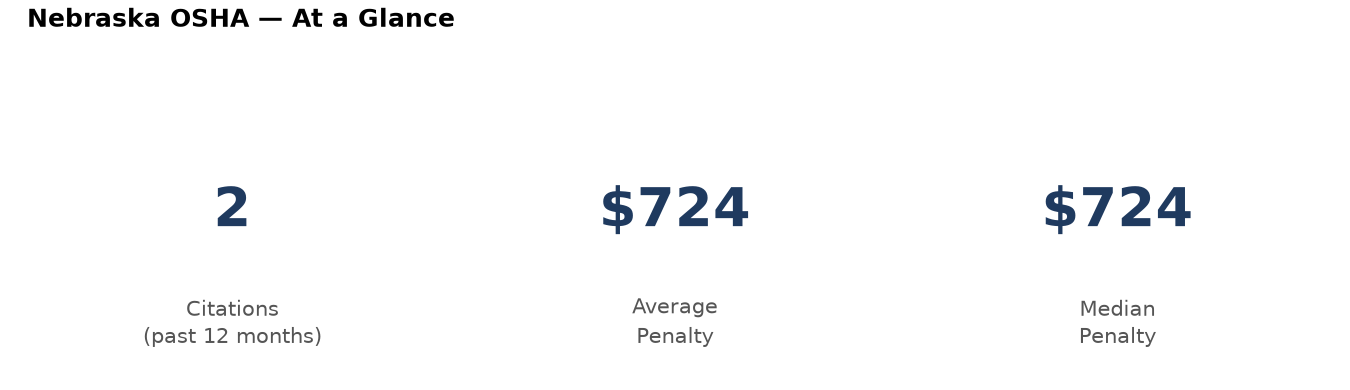
Nebraska OSHA offices logged just two scaffolding citations under 1926.451 in the past 12 months, both classified as Serious, both handed to framing contractors, and both tied to work in or near Omaha. The average penalty came in at $724, with a 40% average gap between what inspectors initially proposed and what employers actually paid after negotiation or contest. Small numbers statewide do not mean small stakes for the two companies involved.
If you run a framing crew or any construction operation in Nebraska and you have just been handed a scaffolding citation, the clock is already running. Talk to a Nebraska OSHA defense attorney before you sign anything or make assumptions about what you owe.
What OSHA Actually Expects Under the Scaffolding Standard
Every one of these Nebraska citations was issued under the 1926.451 standard, the general rulebook covering how scaffolds must be built, loaded, accessed, and guarded on any construction site. It is not a single narrow rule. It spans platform capacity limits, required guardrails and planking, safe means of getting on and off the structure, and fall protection for workers standing at height on scaffold decking.
Inspectors do not need to find a worker mid-fall to write a citation. A missing guardrail, an overloaded platform, planking with the wrong dimensions, or a ladder access point that does not meet spec is enough on its own. Both Nebraska citations this period cite the same sub-code, C02 V, which points to a fall-protection-related deficiency on the scaffold itself rather than a paperwork or training gap.
Why Framing Contractors Are the Ones Getting Cited
Every scaffolding citation recorded in Nebraska over the past year went to a framing contractor. That is not a coincidence. Framing work puts crews on elevated platforms constantly, often on fast-moving residential jobs where scaffolds get assembled and reassembled multiple times a week as the structure rises. Every rebuild is a new chance for a guardrail to go back up wrong or a plank to get skipped because the crew is racing weather or a schedule.
With only two citations on the books statewide, Nebraska is not a high-volume enforcement state for scaffolding. But that low count also means each inspection carries more weight per incident, and framing crews working multi-story builds in the Omaha area are clearly the segment drawing the closest look.
What These Citations Actually Cost in Nebraska
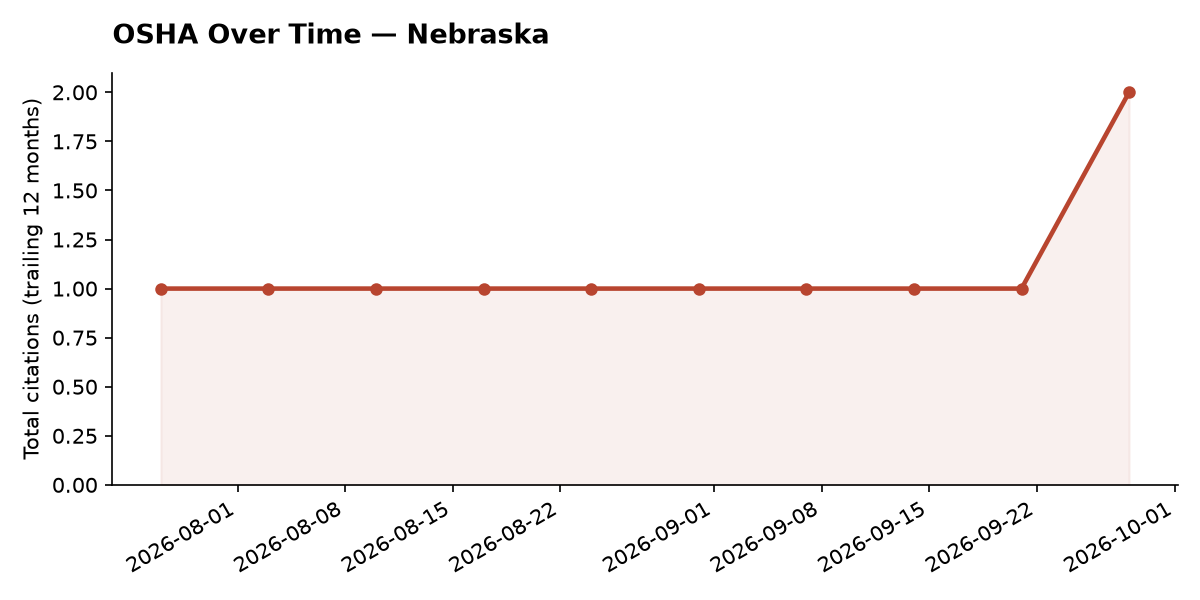
The two real cases on record show how differently the same violation type can shake out. Priority Enterprises, LLC, based in Omaha, was cited for a Serious violation on December 17, 2025, and assessed $1,447. Christopher Diaz, cited in Columbus, received a Serious citation under the identical sub-code, 19260451 C02 V, but the assessed penalty on record shows $0, an outcome that can reflect a small-employer adjustment, an abatement agreement, or a negotiated result reached before the case closed.
That spread, from $1,447 down to nothing, lines up with the statewide pattern: initial penalties in Nebraska get reduced by an average of 40% between the first notice and the final resolution. That is not a guarantee your number will drop, but it does mean the number on your citation letter is very often a starting point, not a final bill. For a full breakdown of how OSHA calculates these figures and where the room to negotiate typically sits, see this guide to OSHA scaffolding violations penalty amounts.
Whether your citation looks more like the Omaha case or the Columbus one often comes down to how the response is handled in the first few weeks, not just the facts of the inspection itself.
A 40% average swing on a citation is real money and real leverage. Before you decide whether to pay, negotiate, or fight, get a Nebraska OSHA defense attorney to review the specific code you were cited under.
Your 15-Day Window After the Citation Arrives
OSHA does not leave the timeline open-ended. Once you receive a citation, you have 15 working days to file a Notice of Contest. Miss that window and the citation becomes a final order automatically, penalty and all, with no further chance to argue the classification, the abatement date, or the amount. Weekends and federal holidays do not count toward the 15 days, so the real deadline arrives faster than it looks on a calendar.
Both Serious classifications in Nebraska’s recent record involved the same fall-protection sub-code, which suggests inspectors are looking closely at scaffold guardrails and decking specifics rather than broad compliance paperwork. If your citation cites a similar provision, the details of exactly how the scaffold was configured on the day of inspection matter a great deal to your defense. For a step-by-step look at the contest process itself, review this explanation of how to contest an OSHA citation.
Do not let the 15-day clock run out while you are still deciding what to do. Reach out to a Nebraska OSHA defense attorney as soon as the citation lands, even if you are still gathering job-site records or talking to your insurance carrier.
Two citations in a year is a small sample, but it is not a reason to treat a scaffolding citation lightly if yours is one of them. Pull your inspection paperwork, confirm the exact sub-code and issuance date on your notice, and get a lawyer looking at it before the contest window closes.