
Data last updated: September 28, 2026
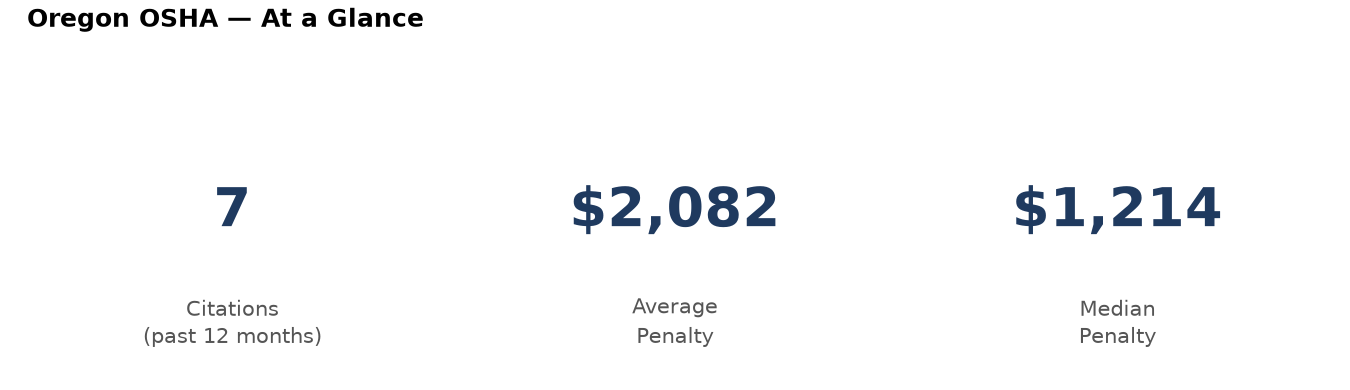
Oregon employers racked up 7 scaffolding violations under 1926.451 in the past 12 months. That number sounds small until you look closer: every single one was classified as Serious, none were downgraded, and the average penalty of $2,082 didn’t budge from initial to final assessment — a 0% reduction rate. The median citation, $1,214, landed hardest on companies in Corvallis, which saw more scaffolding enforcement activity than any other city in the state.
If you’ve just received a scaffolding citation in Oregon, the clock is already running. Talk to an Oregon OSHA defense attorney before you respond to anything OSHA sends you.
What the scaffolding rule actually demands on an Oregon jobsite
All seven of these citations trace back to the 1926.451 standard, which is the general rulebook for any scaffold used on a construction project. It’s not one narrow requirement — it’s a bundle of rules covering how scaffolds get built, how much weight they’re rated to hold, how workers get on and off them safely, and when fall protection and guardrails are required. Inspectors check planking, footing, capacity calculations, and access points, and a single missed detail — a gap in a guardrail, an undersized platform, an access ladder that isn’t there — is enough to trigger a citation. Because the standard is so broad, it’s also one of the easiest ways for an otherwise careful crew to end up cited without realizing a specific subsection applied to their setup.
Why specialty trade crews carry almost all of Oregon’s scaffolding risk
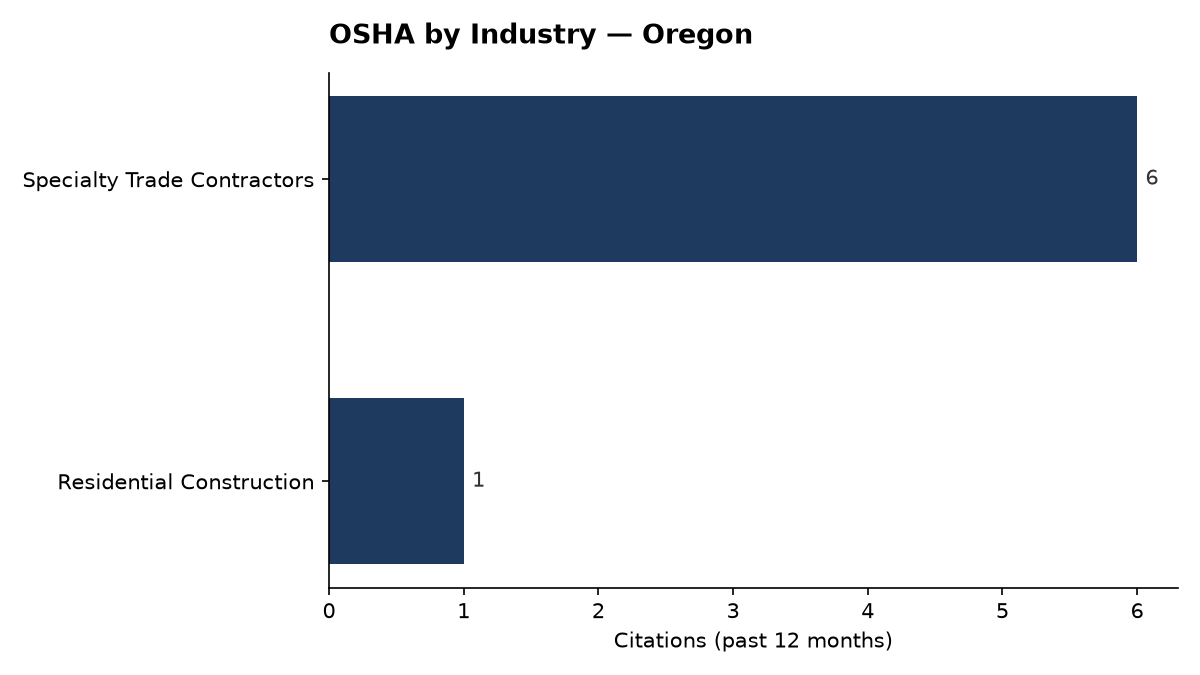
Six of the seven citations issued in Oregon over the past year went to specialty trade contractors — the framers, siding crews, painters, and other subcontractors who work at height on scaffolds as a routine part of the job, often on someone else’s general contract. The remaining citation went to a residential construction company. This split isn’t surprising. Specialty trades are the ones physically erecting and climbing scaffolds day after day, on tighter schedules and often with less in-house safety staff than a large general contractor. That combination — frequent scaffold use plus thinner compliance infrastructure — is exactly where OSHA inspectors tend to find problems.
What these citations actually cost Oregon businesses
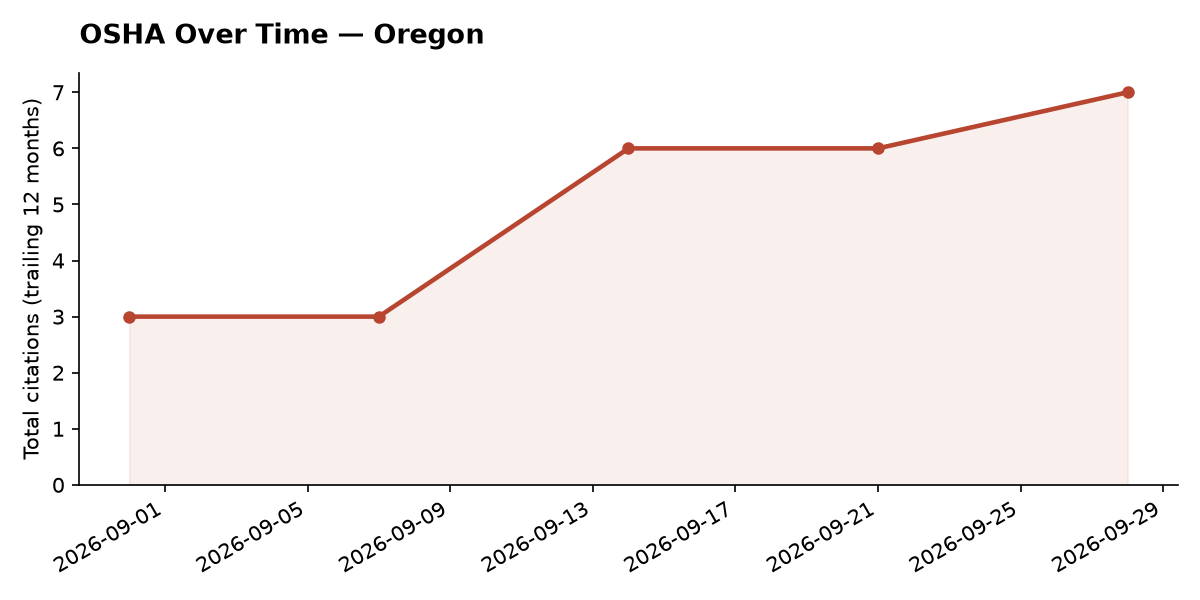
The dollar figures in Oregon’s recent cases show how quickly a Serious citation adds up, even without a Willful or Repeat classification attached. Look at the actual record:
- Inproduction Inc (Corvallis) — $3,644, Serious, cited under 1926.451(g)(2), issued June 5, 2026
- Desert Sands Mfd Home Contractors Inc (La Grande) — $2,429, Serious, cited under 1926.451(g)(1)(i), issued July 10, 2026
- Mad Contractors Inc (Gearhart) — $1,214, Serious, cited under 1926.451(b)(3), issued April 22, 2026
- Bigley Construction Llc (Saint Helens) — $1,214, Serious, cited under 1926.451(a)(6), issued May 20, 2026
Notice that none of these penalties dropped between the initial citation and the final resolution — Oregon’s 0% average reduction rate over this period means employers who didn’t push back paid exactly what they were billed. That’s a meaningful data point. In many states, employers who engage counsel and negotiate or contest end up with lower final numbers. Oregon’s flat 0% suggests that either very few employers contested, or those who did weren’t getting favorable outcomes without the right approach. Either way, understanding how OSHA scaffolding violations penalty amounts are calculated — and where there’s room to argue them down — matters more here than in states where reductions are routine.
A penalty in the $1,200 to $3,600 range might not sound catastrophic on its own, but a second scaffolding citation on your record shifts your risk profile for every future inspection, and repeat findings can escalate quickly. Before you pay a citation at face value, get an Oregon OSHA defense attorney to review it. It costs you a conversation; ignoring it could cost you the full assessed amount plus a mark against your inspection history.
Your window to push back is shorter than most contractors think
Every one of these citations came with a countdown attached. Once OSHA delivers a citation, the employer has exactly 15 working days to file a Notice of Contest — not 15 calendar days, and not a soft guideline. Miss that window and the citation becomes a final order automatically, with no further right to challenge the classification, the cited subsection, or the penalty amount. That’s true whether the citation is for a $1,214 guardrail issue or a much larger Willful finding.
The process for challenging a citation is detailed and has its own procedural traps — from how the contest notice must be worded to what happens at an informal conference with the area OSHA office. If you’re weighing whether to contest, negotiate, or simply pay, read through how to contest an OSHA citation before you decide, and do it early. Fifteen working days moves fast once you factor in mail time, internal review, and getting a professional opinion.
This is the point where waiting costs you options. If you’re inside that 15-day window right now, an Oregon OSHA defense attorney can tell you within a short conversation whether contesting makes sense for your specific citation, before the deadline closes it off for good.
Whatever stage you’re at — a citation just arrived, or you’re bracing for an inspection after a near-miss on scaffolding — the smart move is the same: get the paperwork in front of someone who handles these cases regularly, and do it before the 15-working-day clock runs out.