
Data last updated: August 31, 2026
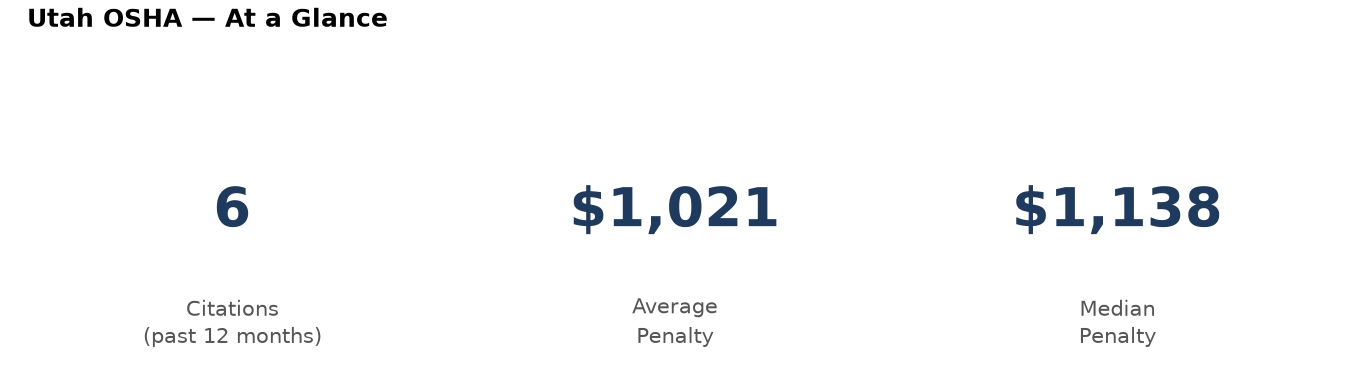
Utah regulators issued just six ladder violation citations under 1926.1053 over the past 12 months — a small number compared to bigger construction states, but every single one of those six was classified as Serious. The average penalty landed at $1,021, with a median of $1,138, and Heber City turned up more than any other city in the state’s recent enforcement record. Small caseload does not mean small stakes for the employers who actually get cited.
If you’ve received a citation, the clock is already running. You have 15 working days from the date you receive it to file a Notice of Contest, and missing that window generally locks in the penalty. Before that deadline passes, it’s worth talking to an Utah OSHA defense attorney about your options.
What 1926.1053 Actually Requires on a Jobsite
The standard behind every one of these six citations, 1926.1053, covers the basic mechanics of ladder use on construction sites: how a ladder must be set up, how far it needs to extend past a landing surface, how much weight it’s rated to hold, when damaged equipment has to be pulled from service, and how workers are expected to use ladders while performing their jobs. It sounds simple, but compliance officers routinely find violations tied to improperly secured ladders, extension ladders that don’t clear the landing by the required distance, or ladders pressed into service after visible damage. You can review the broader framework governing these requirements at the 1926.1053 standard hub.
Where Utah Inspectors Are Finding These Problems
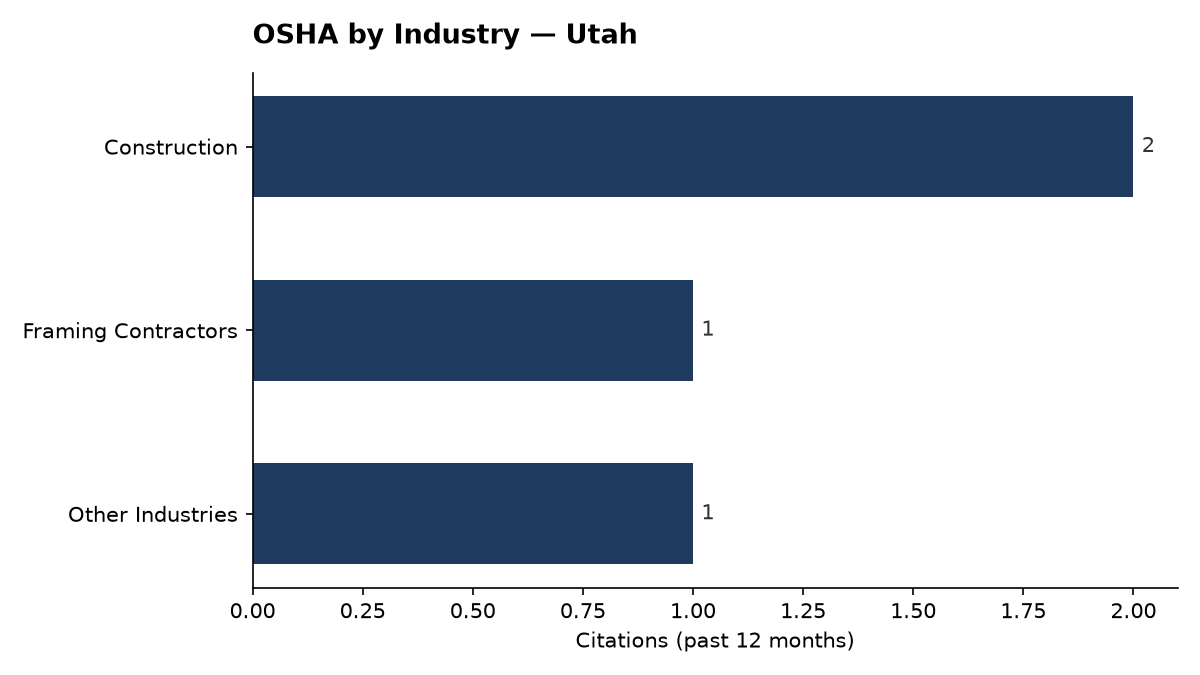
The industry breakdown for this reporting period is thin but telling. General construction firms accounted for two of the six citations, framing contractors picked up one, and the remainder came from an unrelated industry outside the usual construction categories. That spread lines up with what shows up in the actual citation record. Pizano Roofing Co Llc in American Fork was cited $2,100 for a Serious violation under subsection B01, issued June 17, 2026. Cortes Company in Lehi drew a $1,750 Serious citation under B22 on September 18, 2025. Mvc Construction Company, Inc., based in Heber City — the city with the most activity in this dataset — was cited $1,750 under B01 in May 2026. Cross Construction in Garden City received a smaller $525 Serious citation under B01 in March 2026, and Box Elder County in Brigham City was cited under B16 in December 2025 with a penalty listed at $0. These five cases span roofing, general contracting, and even a municipal entity, which shows that ladder enforcement in Utah isn’t confined to one narrow corner of the trades.
What a Ladder Citation Actually Costs Once the Dust Settles
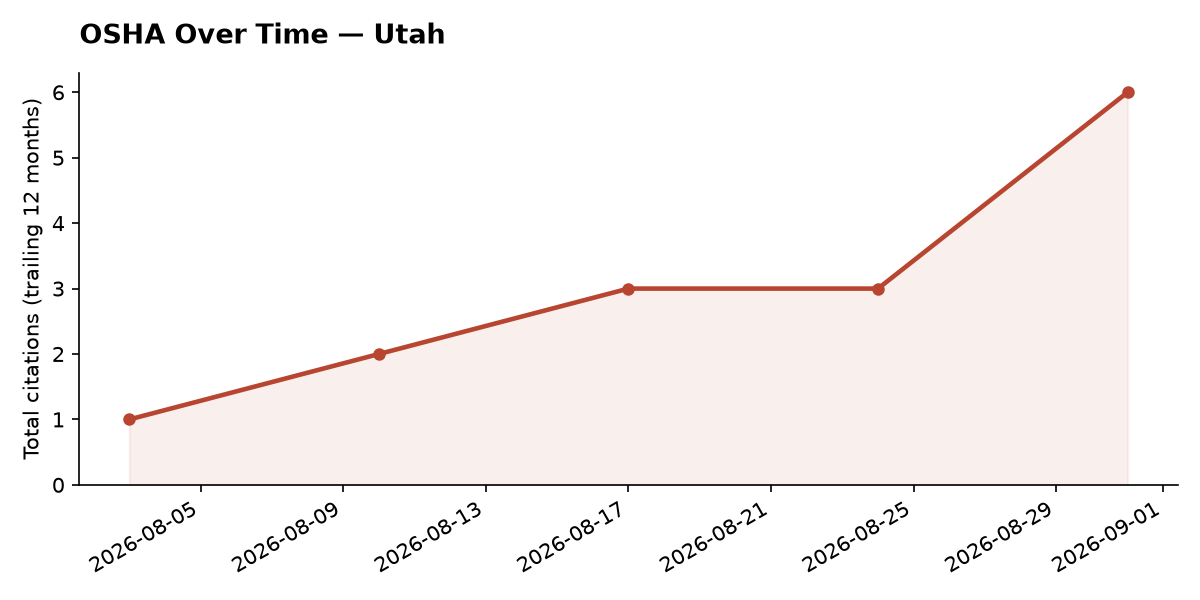
On paper, an average penalty just over $1,000 might not sound like the kind of number that keeps a contractor up at night. But that average masks real variation — from a $0 outcome in Brigham City to a $2,100 hit in American Fork — and the classification matters as much as the dollar figure. All six citations in this period were coded Serious rather than Other, which means OSHA determined each one involved a realistic chance of death or significant physical harm. That classification affects how the case is viewed if a company is cited again down the road, since a second violation of the same type can escalate to Repeat status with sharply higher penalties.
There’s also a negotiation angle worth understanding. Utah’s data shows an average penalty reduction of 38% between the initial citation amount and the final settled figure. That gap didn’t happen by accident — it reflects the outcome of employers contesting facts, negotiating abatement terms, or presenting evidence that changed OSHA’s initial assessment. For a detailed look at how these numbers are calculated and adjusted, see this breakdown of OSHA ladder violation penalty amounts.
A reduction of that size on a $2,100 citation is meaningful, but it rarely happens without someone pushing back through the proper channels. Given what’s at stake, it makes sense to get an Utah OSHA defense attorney involved early rather than after the contest window has already closed.
Your Move If a Citation Just Landed on Your Desk
The 15-working-day Notice of Contest deadline is not a soft guideline — it’s a hard cutoff measured from the day you receive the citation, not the day it was issued. Once that window closes, you typically lose the ability to formally dispute the classification, the penalty amount, or even the underlying facts OSHA used to build the case. Given that Utah’s own data shows over a third of penalty value gets negotiated down on average, letting that deadline pass without a fight can mean paying more than necessary.
Before you decide whether to pay, contest, or negotiate, it helps to understand the actual mechanics of the process — what a Notice of Contest does, what happens after you file one, and how informal settlement conferences typically play out. This guide on how to contest an OSHA citation walks through those steps in plain terms.
Given how tight that 15-day window is, and how much movement there can be in the final penalty, don’t sit on a citation hoping it resolves itself. Reach out to an Utah OSHA defense attorney now, while you still have time to actually change the outcome.
Whether your citation looks more like the $525 case out of Garden City or the $2,100 case in American Fork, the facts of your specific situation — the exact subsection cited, your prior history, and how the ladder was actually being used at the time — will drive what happens next. Get that record in front of someone who handles these cases before your response window closes.