Data last updated: September 21, 2026
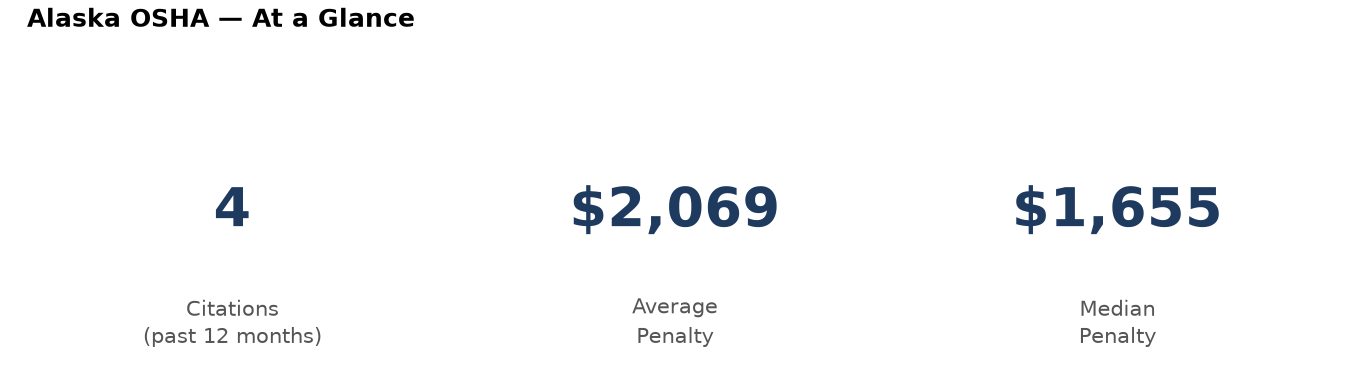
Alaska issued just 4 fall protection citations under 29 CFR 1926.501 over the past 12 months. That is a small number compared to lower-48 construction states, but do not read it as a sign the agency has looked away. Every single one of those four citations was classified Serious, the average penalty came in at $2,069, and the median sat at $1,655. Anchorage was the city where inspectors showed up most.
If you run a crew in Alaska and you just opened a citation letter, the clock is already running. Talk to an Alaska OSHA defense attorney before you decide how to respond — the deadline to challenge a citation is shorter than most business owners expect.
What 1926.501 Actually Requires on an Alaska Jobsite
The standard behind every one of these four citations is 1926.501, the general fall protection rule. In plain terms, once a worker is exposed to a fall of 6 feet or more to a lower level on a construction site, the employer has to do something concrete about it — not just tell the worker to be careful. That means guardrails around the edge, a properly rigged safety net, or a personal fall arrest system with a harness, lanyard, and anchor point rated for the load.
OSHA does not care which of the three you choose. What it does care about is whether the protection was actually in place and used correctly at the moment someone was working at height. A harness sitting unused in a truck, or guardrails that were removed for a task and never put back, is exactly the kind of gap that turns into a Serious citation. All four Alaska cases from this reporting period were coded Serious, which means OSHA determined there was a real probability of death or serious physical harm if a fall had occurred — not just a paperwork technicality.
Framing, Residential Building, and Specialty Trades Split the Citations
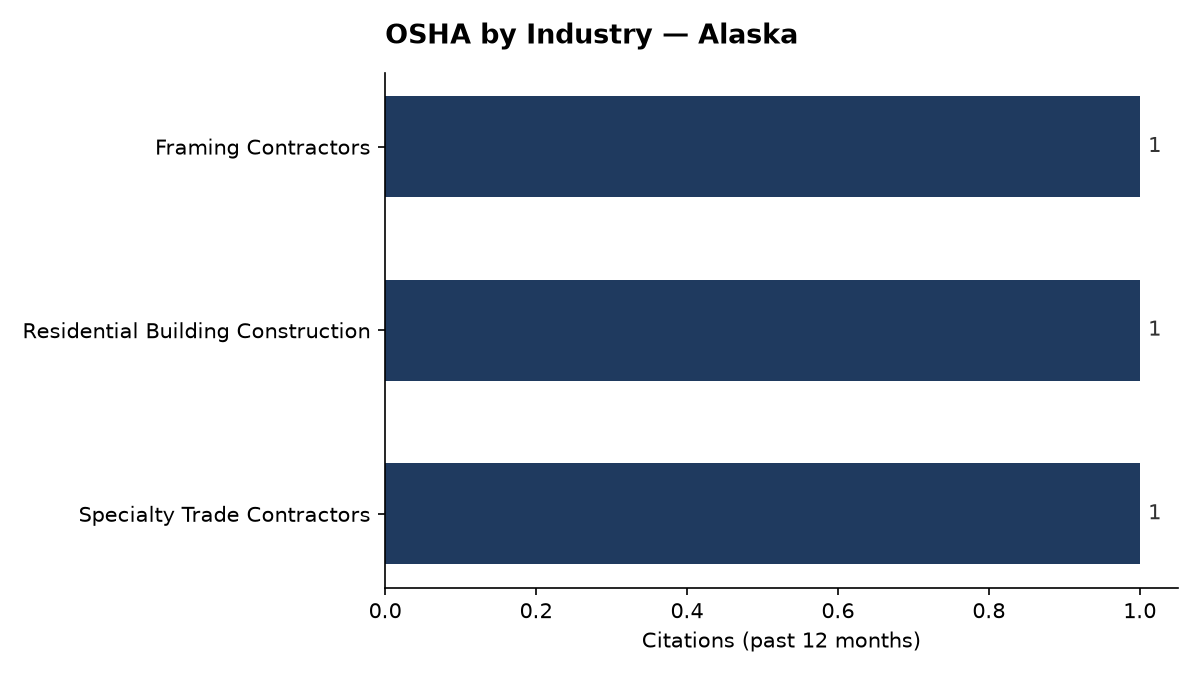
With only four citations statewide, no single Alaska industry dominates the way roofing or framing often does in bigger construction markets. Instead, the citations spread almost evenly: one against a framing contractor, one against a residential building construction company, and one against a specialty trade contractor. That pattern tracks with how Alaska construction actually works — a lot of smaller outfits doing residential framing, remodels, and specialty work on tight seasonal schedules, often on roofs, trusses, or elevated platforms where edge protection gets skipped to save time.
The takeaway for any Alaska contractor: it does not matter whether you are a framer, a residential builder, or a specialty trade shop. If your crew works above 6 feet without guardrails, nets, or a fall arrest system, you are in the exact same enforcement lane as everyone else who has been cited this year.
What These Citations Actually Cost
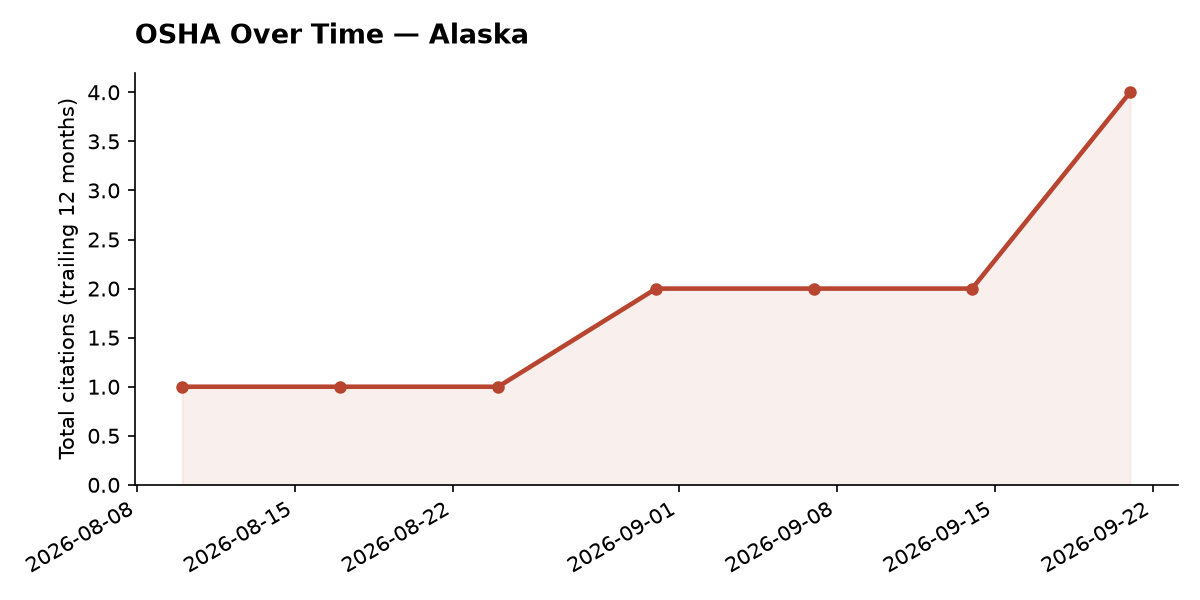
The dollar figures tell their own story. Ascend Roofing And Construction LLC in Anchorage was cited $4,965 for a Serious violation under 19260501 B01, issued May 12, 2026. Marble Island LLC in Ketchikan drew a $3,310 penalty, also Serious, under 19260501 B10, issued May 18, 2026. Day Star Construction LLC in Fairbanks and Burlywood Inc in Anchorage were both cited for Serious violations — under 19260501 B01 and 19260501 B13 respectively — with initial penalties listed at $0, showing how much the final number can shift once a case moves through review or negotiation.
That spread matters. Statewide, the average fall protection penalty in Alaska dropped by 62% between the initial citation and the final settled amount. That is a significant reduction, and it does not happen by accident — it happens because employers push back, provide documentation, or negotiate the classification before the citation becomes final. A citation that starts at several thousand dollars is not automatically the number you end up paying.
A 62% average reduction also means the opposite is true: employers who do nothing and simply pay the initial number are very likely leaving money on the table.
Get an Alaska OSHA defense attorney to look at your citation before you write a check or let the deadline pass. Given how much these penalties can move, a short consultation is worth far more than the cost of skipping it.
The 15-Day Window You Cannot Afford to Miss
Once OSHA mails a citation, the employer has exactly 15 working days to file a Notice of Contest. Miss that window and the citation — along with whatever penalty is attached — becomes a final order automatically. There is no appeals process after that point for most employers. It does not matter whether the citation feels unfair, whether the inspector misread the jobsite, or whether you have since fixed the hazard. The 15-working-day clock does not pause for any of that.
This is why the reduction data above matters so much. A 62% average penalty cut does not happen by accident after the deadline passes — it happens because someone filed a Notice of Contest and then negotiated or argued the case down. If you want to understand the actual mechanics of how to contest an OSHA citation in Alaska, that process starts with the notice, not with a phone call to the area office asking for leniency.
Given how few fall protection cases OSHA brings in Alaska each year, each one gets real scrutiny, and the agency is not likely to walk away from a Serious classification without a documented reason. That reason has to come from you, inside the window, in writing.
If a citation is sitting on your desk right now, do not wait to see what happens. Speak with an Alaska OSHA defense attorney today — the 15-working-day deadline to contest is running whether you act on it or not, and once it closes, so does your best chance to reduce what you owe.