

Data last updated: September 14, 2026
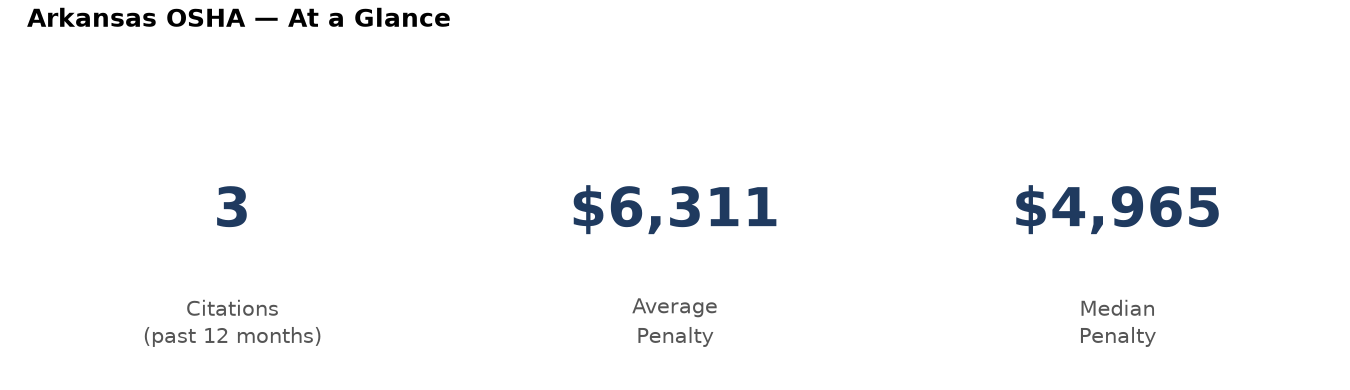
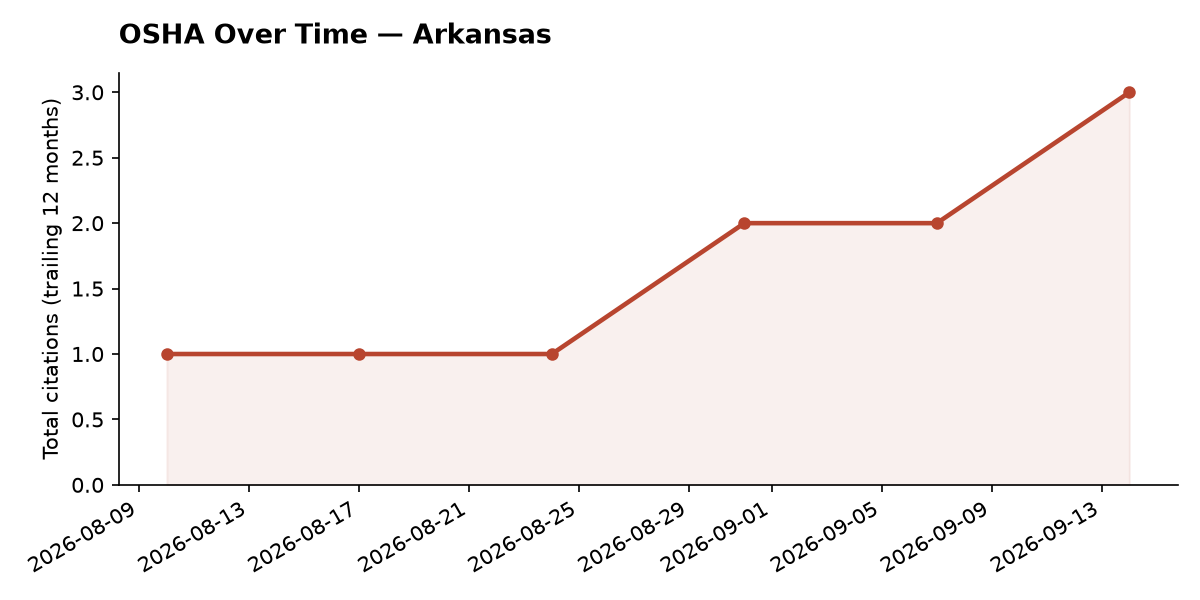
Arkansas regulators handed out only three fall protection citations over the past 12 months, but don’t let the small number fool you. Every single one was classified as Serious, the average penalty came to $6,311, and the biggest single fine hit $11,585. Little Rock was the epicenter, with two of the three citations traced back to job sites there.
If you’re staring down a citation like this, the clock is already running. You have 15 working days from the date you received it to file a Notice of Contest, or the penalty and violation findings become final. Talking to an Arkansas OSHA defense attorney before that window closes is the single most useful thing you can do right now.
Why 1926.501 Keeps Showing Up on Arkansas Citations
Every one of these three cases traces back to the same rule: the 1926.501 standard, OSHA’s core fall protection requirement for construction work. In plain terms, it says that once a worker is exposed to a fall of six feet or more onto a lower surface, the employer has to do something concrete about it — guardrails, safety nets, or a personal fall arrest system rigged and used correctly. It’s not a suggestion or a best-practice guideline; it’s a baseline that applies the moment someone steps onto a roof edge, a floor opening, or an unprotected leading edge.
What trips up contractors isn’t usually ignorance of the rule. It’s the gap between having fall protection equipment on the truck and actually having it on the worker at the moment an inspector walks the site. OSHA doesn’t care that harnesses were available in the trailer. It cares whether they were being used at height, at that moment, correctly anchored. That’s the distinction behind almost every Serious citation issued under this standard.
Framing and Roofing Crews Are Carrying the Risk in Arkansas
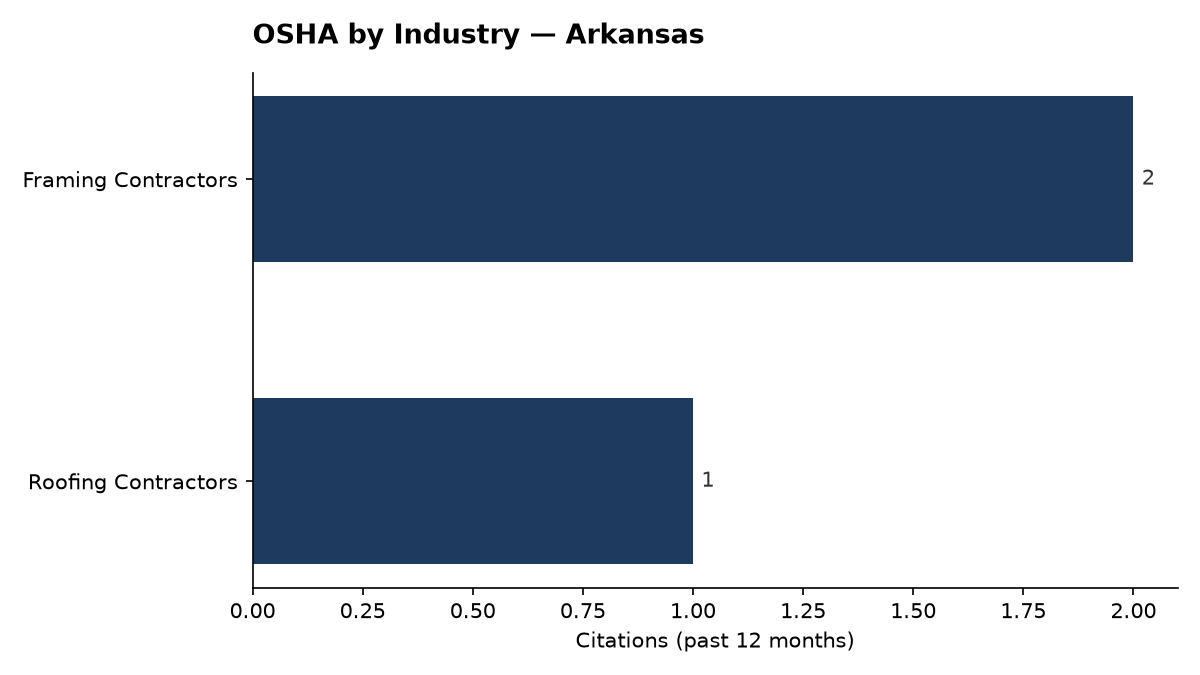
Of the three citations on record, two came from framing contractors and one from a roofing contractor. That split makes sense given how these two trades work. Framing crews spend entire shifts moving across open floor joists, exterior wall sections, and second-story openings before any permanent guardrail system exists. Roofing crews work the edge by definition. Both trades routinely operate above the six-foot trigger height with fall protection equipment that has to be set up, moved, and re-anchored constantly throughout the day — which is exactly the kind of repetitive task where a shortcut gets taken and an inspector happens to be watching.
Eagle Framing LLC, based in Maumelle, picked up a $2,383 Serious citation under subsection 19260501 B13, issued in March 2026 — a useful reminder that even smaller framing outfits working outside the Little Rock metro are squarely on OSHA’s radar.
What These Citations Actually Cost in Arkansas
The dollar figures tell their own story. Solavic Construction Services LLC, in Little Rock, was cited for $11,585 under subsection 19260501 B11 in a citation issued December 4, 2025. Avila Construction LLC, also in Little Rock, was cited under the same subsection for $4,965, issued December 19, 2025 — almost exactly matching the statewide median penalty of $4,965. Eagle Framing LLC’s $2,383 citation rounds out the group. Averaged together, these three cases land at $6,311, but the spread between the smallest and largest fine is nearly five-fold, which tells you the dollar amount depends heavily on specifics: how the violation is documented, whether it’s a first offense, and how the employer responds once the citation lands. For more on how OSHA arrives at these figures, see this breakdown of OSHA fall protection violations penalty amounts.
Here’s the number that matters most if you’re deciding whether to fight a citation: penalties in Arkansas have been reduced by an average of 13% between the initial citation and the final settled amount. That’s not automatic — it happens because employers or their attorneys pushed back, corrected documentation issues, or negotiated the classification down. A 13% reduction on an $11,585 citation is real money, and it doesn’t happen if you just pay the initial bill and move on.
Before you decide whether to pay, contest, or negotiate, it’s worth getting an Arkansas OSHA defense attorney to look at the specific subsection you were cited under and whether the classification actually holds up.
Your Move If You’ve Just Been Cited
The moment a citation arrives, the 15-working-day countdown to file a Notice of Contest starts — not 15 calendar days, 15 working days, which goes faster than people expect once weekends and holidays are stripped out. Miss it, and the citation, the classification, and the penalty amount all become final, with almost no way to reopen them later.
Filing a Notice of Contest doesn’t commit you to a courtroom battle. It preserves your options: you can still negotiate an informal settlement with OSHA’s area office, argue that the violation was misclassified, or challenge whether the underlying facts support a Serious finding at all. If you want the full mechanics of how that process works, this guide on how to contest an OSHA citation walks through the steps. But the deadline math is what should drive your timeline — not the paperwork itself.
Given that all three recent Arkansas cases were Serious classifications with penalties ranging from roughly $2,400 to over $11,500, there’s real money and real compliance history riding on how you respond in the next two weeks. Get an Arkansas OSHA defense attorney on the phone before that window closes, and find out what your options actually look like.
Don’t wait until the contest deadline is one day away to start making calls. Pull your citation paperwork, note the exact date you received it, and get a professional opinion on your options while every avenue is still open.