
Data last updated: September 21, 2026
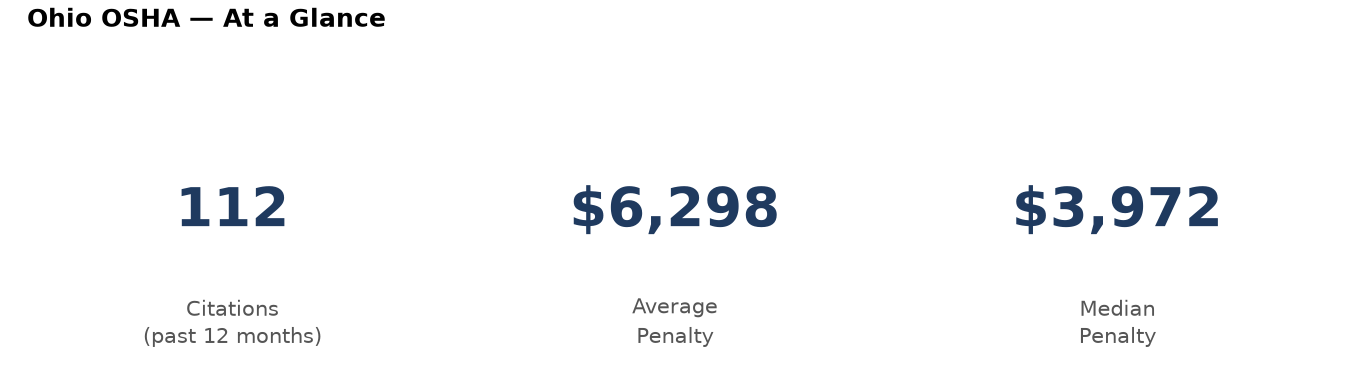
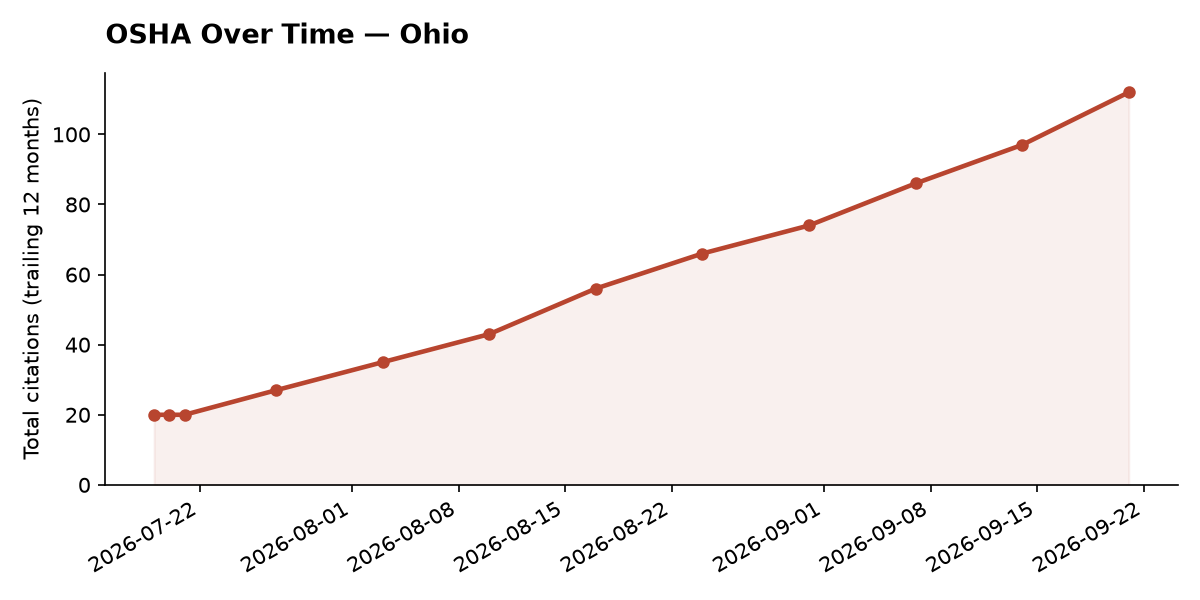
Ohio employers picked up 112 fall protection citations under 1926.501 in the past 12 months, with an average penalty of $6,298 and a median of $3,972. Hamilton logged more of these citations than any other Ohio city, and roofing contractors alone accounted for 85 of the 112 cases. If you run a roofing, framing, or construction crew in Ohio and a citation just landed on your desk, the numbers below show exactly what you’re up against and why the clock matters.
If you’ve been cited, don’t wait to figure out your options. Talk to an Ohio OSHA defense attorney before you respond to OSHA.
What 1926.501 Actually Requires on an Ohio Jobsite
The standard behind nearly every one of these Ohio citations is 1926.501, OSHA’s core fall protection rule for construction. In plain terms, it says that once a worker is exposed to a fall of 6 feet or more to a lower level, the employer has to have a real system in place to stop that fall before it happens — not just a plan for after. That means guardrails, safety nets, or a personal fall arrest system (harness, lanyard, and anchor point set up correctly), depending on the task and the surface.
OSHA doesn’t treat this as a paperwork requirement. Inspectors look for whether the protection was actually rigged, actually used, and actually adequate for the height and edge conditions on site that day. A tied-off harness that’s clipped to the wrong anchor, or a guardrail missing on one open side of a roof, is enough to trigger a citation. You can read the full 1926.501 standard breakdown for the specifics that apply to your trade.
Roofers Are Carrying Almost All of Ohio’s Citation Volume
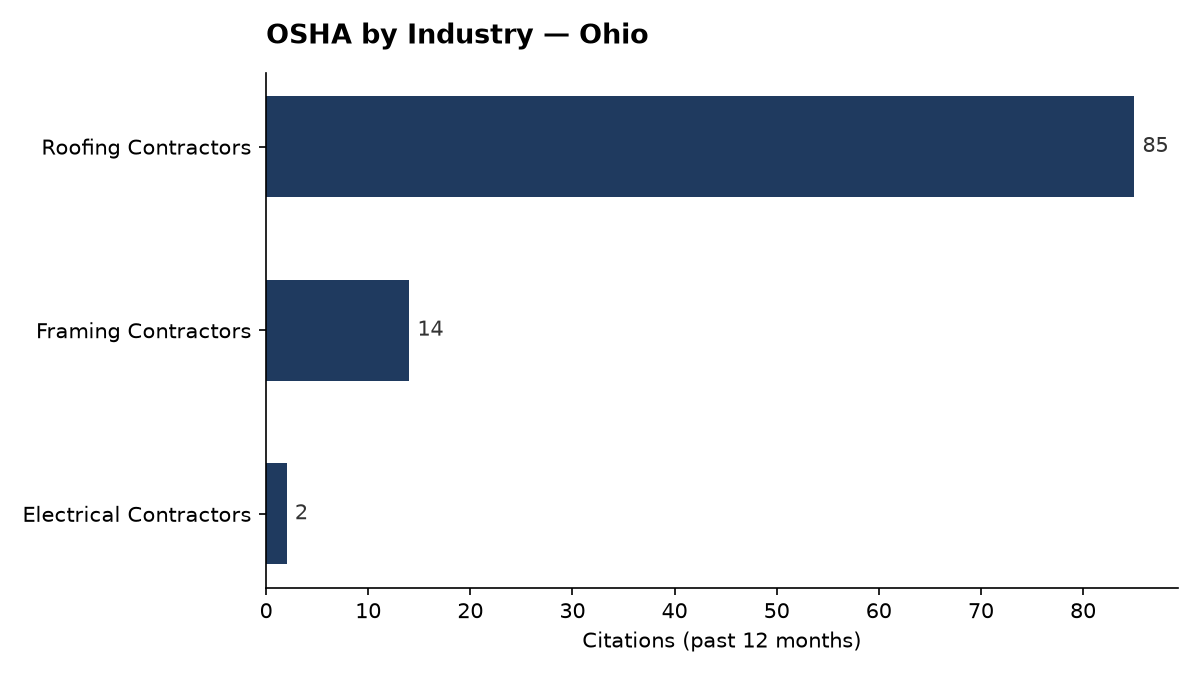
Of the 112 fall protection citations issued in Ohio, 85 went to roofing contractors — that’s roughly three out of every four cases in the state. Framing contractors picked up 14, and electrical contractors trail with just 2. This lopsided split isn’t random. Roofing work puts crews on unprotected edges and steep pitches for hours at a time, and OSHA has made roofing a standing enforcement priority nationwide, not just in Ohio.
If you’re in the roofing trade, the odds of a compliance officer showing up unannounced are meaningfully higher than for almost any other construction specialty. The full picture of how these cases play out for roofing contractors specifically is worth reviewing, since the citation subsections and penalty patterns repeat across cases.
What These Citations Are Actually Costing Ohio Businesses
The breakdown of Ohio’s 112 citations tells its own story: 83 were classified Serious, 25 were Repeat, 2 were Other-than-Serious, and 2 were Willful. That’s a heavy concentration in the Serious and Repeat categories, and Repeat findings carry substantially higher fines than a first-time Serious violation because OSHA treats a second citation for the same hazard as evidence the employer knew about the problem and didn’t fix it.
The Willful cases in Ohio show what the top end of the penalty range looks like. Eua Commercial Construction LLC in Grove City was cited $39,723 for a Willful violation under 19260501 B13, issued December 12, 2025 — the largest penalty in this dataset. Repeat citations in the $29,790 range appear several times: Pedro Sierra Hernandez in Hilliard (19260501 B13, September 23, 2025), Beck Roofing, Inc. in Hamilton (19260501 B10, December 3, 2025), Alpine Valley Construction LLC in Belpre (19260501 B13, December 23, 2025), and Castaneda Carpentry LLC in Grove City (19260501 B13, February 19, 2026). These are the actual figures OSHA assessed, not averages — and they show how quickly a Repeat classification pushes a fine well past the statewide median of $3,972.
Here’s the part that matters most if you’re staring down a citation right now: the average penalty reduction between the initial and final amount in Ohio was 23%. That gap doesn’t close on its own. It closes because employers negotiate, contest, or present evidence that changes how the violation gets classified. For a full explanation of how the penalty math works, see this breakdown of OSHA fall protection violations penalty amounts.
A 23% average reduction is not automatic — it’s the result of someone pushing back on the citation. Before you pay or ignore anything, get an Ohio OSHA defense attorney to look at your specific case.
The 15-Day Window You Can’t Afford to Miss
Once OSHA issues a citation, the employer has exactly 15 working days from the date of receipt to file a Notice of Contest. Miss that window and the citation, including the penalty amount and every classification on it, becomes a final order — there’s no informal do-over after that. This is true whether your citation is a $3,972 median case or a $39,723 Willful finding like the one issued in Grove City.
Within that same window, you generally also have the option to request an informal conference with the OSHA area office, which is often where penalty reductions and classification changes get negotiated before things escalate. But that conversation works best when you walk in with a clear legal strategy already in place, not when you’re improvising. The mechanics of the deadline and your options are laid out in more detail in this guide on how to contest an OSHA citation.
The 15-working-day clock starts the moment you receive the citation, not when you decide to deal with it. If you’re inside that window, contact an Ohio OSHA defense attorney now so your options are still open.
Pull your citation paperwork, check the issuance date against today, and count your remaining working days before you do anything else. Whether you’re dealing with a first Serious finding or a Repeat classification that’s pushing your penalty toward the higher end of Ohio’s range, the difference between a manageable outcome and a costly one usually comes down to how fast you act in these first two weeks.