
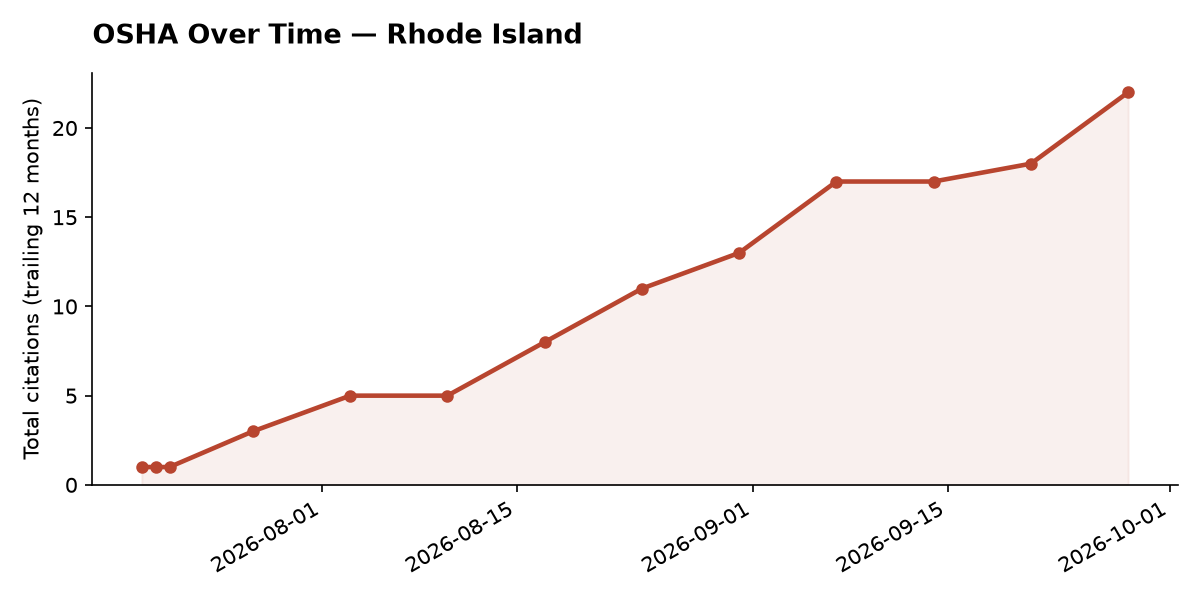
Data last updated: September 28, 2026
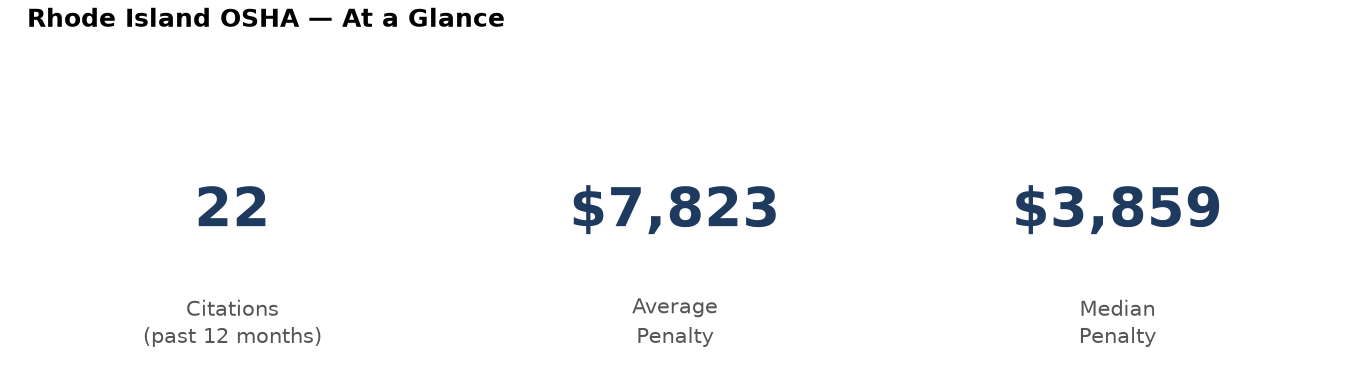
Rhode Island isn’t a high-volume enforcement state, but the past 12 months still produced 22 fall protection citations under 1926.501, with penalties averaging $7,823 and a median of $3,859. Cranston logged more of these citations than any other city in the state, and one case out of Woonsocket topped out at $99,300 after a Repeat classification. If you run a construction crew anywhere in Rhode Island, these numbers are a preview of what a bad inspection day can cost.
If you’ve already been handed a citation, the clock is running. Before you decide how to respond, it’s worth talking to a Rhode Island OSHA defense attorney who handles these cases regularly.
Why 1926.501 Keeps Showing Up on Rhode Island Job Sites
Almost every one of these citations traces back to the same rule: 1926.501, OSHA’s baseline fall protection standard. It’s not complicated in concept. Once a worker is exposed to a fall of six feet or more to a lower level on a construction site, the employer has to do something about it — guardrails, safety nets, or a personal fall arrest system. No exceptions for a quick job, a small roof, or a crew that’s been doing this for twenty years without an incident. Inspectors don’t care how experienced your guys are; they care whether the protection was physically in place at the moment someone was exposed. For the full breakdown of what this standard requires and how OSHA applies it, see this overview of the 1926.501 standard.
Small Residential Jobs Are Where Rhode Island Gets Cited
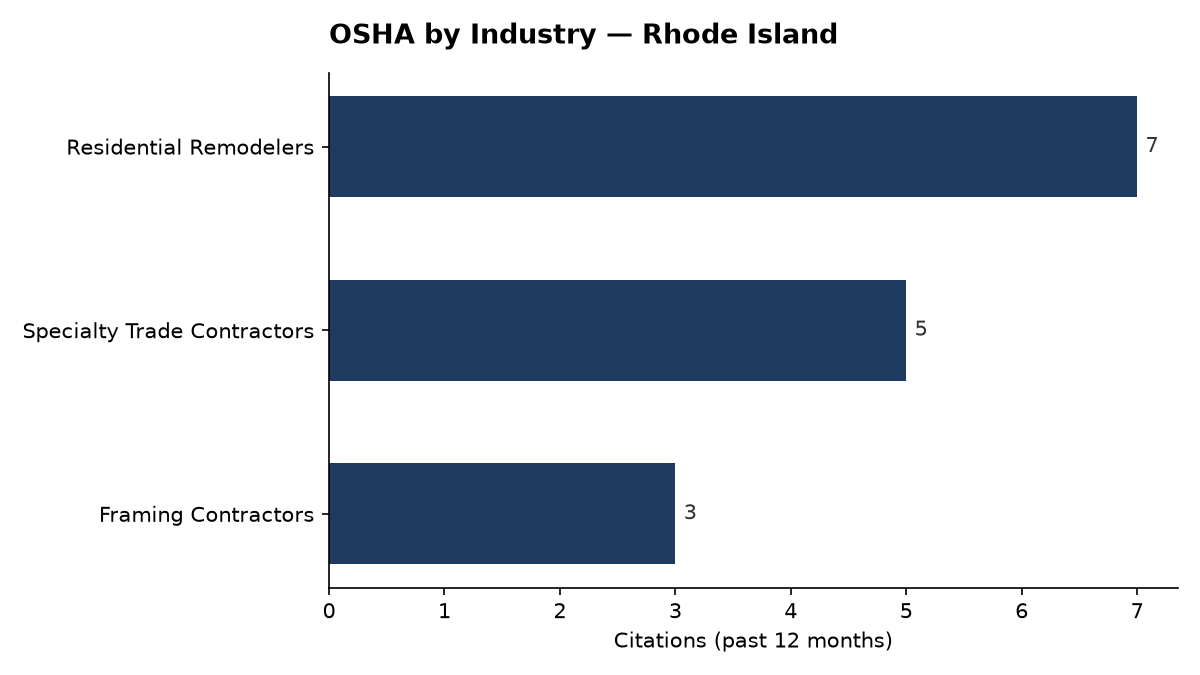
The industry breakdown here tells a clear story. Residential remodelers accounted for 7 of the state’s 22 citations — nearly a third — followed by specialty trade contractors at 5 and framing contractors at 3. That pattern makes sense once you think about how these jobs actually run. Remodeling and framing work often involves short-duration tasks at height: a porch roof, a second-story addition, a quick repair job where nobody wants to spend an hour rigging anchor points for a task that’ll be done in twenty minutes. That’s exactly the mindset OSHA inspectors are trained to catch. If you’re in this trade, it’s worth reading how these citations typically unfold for residential remodelers facing fall protection scrutiny, because the fact patterns repeat themselves across the state.
What These Citations Actually Cost in Rhode Island
Of the 22 citations issued statewide, 19 were classified as Serious, 2 as Repeat, and 1 as Other-than-Serious. That mix matters more than the raw count. A Serious citation reflects a hazard that could realistically cause death or serious injury — the baseline penalty tier under current OSHA guidelines. Repeat citations are a different animal entirely: they apply when an employer has been cited for the same or a substantially similar violation before, and the penalty multiplier reflects that. That’s the difference between a typical $4,965 fall protection citation, like the ones issued to The Professional Handyman in Cranston, Soares Masonry in Jamestown, and V & M Construction in Newport, and the $99,300 penalty American Way G & R Construction Inc. of Woonsocket received in January 2026 for a Repeat violation under the same 1926.501(b)(13) provision. Banner Environmental Services in Bristol, cited under 1926.501(b)(1), landed at $5,793 — closer to the state’s typical range.
Here’s the part most contractors don’t know until they’re in it: the average penalty reduction in Rhode Island over this period was 20%. That’s not automatic — it happens through negotiation, documentation, and sometimes formal contest, not by ignoring the citation and hoping it goes away. For more on how these numbers are calculated and where the leverage points are, see this breakdown of OSHA fall protection penalty amounts.
A 20% reduction on a $99,300 citation is real money — nearly $20,000. On a median $3,859 citation it’s still worth pursuing, especially if it prevents a Repeat designation from following you into your next inspection. Either way, this is not a number to leave on the table. Talk to a Rhode Island OSHA defense attorney before you decide whether to pay, negotiate, or contest.
The 15-Day Window You Can’t Afford to Miss
Once a citation lands, OSHA gives you exactly 15 working days to file a Notice of Contest. Miss that window and the citation becomes a final order — penalty, classification, and all — with almost no path to challenge it afterward. This isn’t a soft deadline with room for interpretation; it’s a hard cutoff, and 15 working days goes by faster than most business owners expect once they factor in weekends, ongoing jobs, and the time it takes to even understand what the citation is alleging. If you’re weighing whether to contest, negotiate an informal settlement, or just pay, this guide on how to contest an OSHA citation walks through the mechanics and the tradeoffs.
The smartest move is figuring out your options before that window closes, not after. A Repeat classification, like the one in the Woonsocket case, can follow a company for years and inflate every future penalty — so even a citation that seems small on paper deserves a second look before you sign off on it.
Get in front of the deadline. Reach out to a Rhode Island OSHA defense attorney now, while you still have options on the table, rather than after the 15 working days have run out.
Whether you’re dealing with a first Serious citation or worried about a Repeat classification stacking penalties, the fastest way to protect your business is to get a professional opinion on your specific citation paperwork before you respond to OSHA in any form.