

Data last updated: September 21, 2026
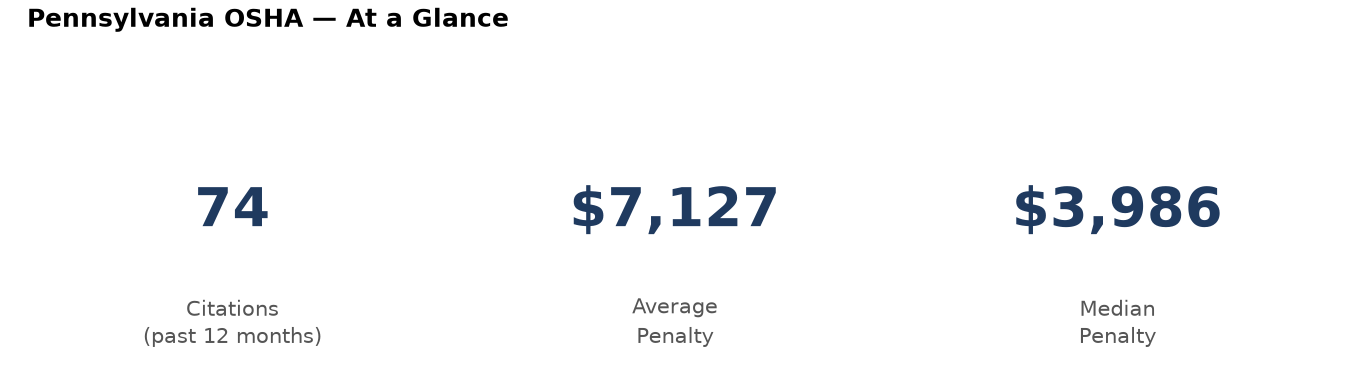
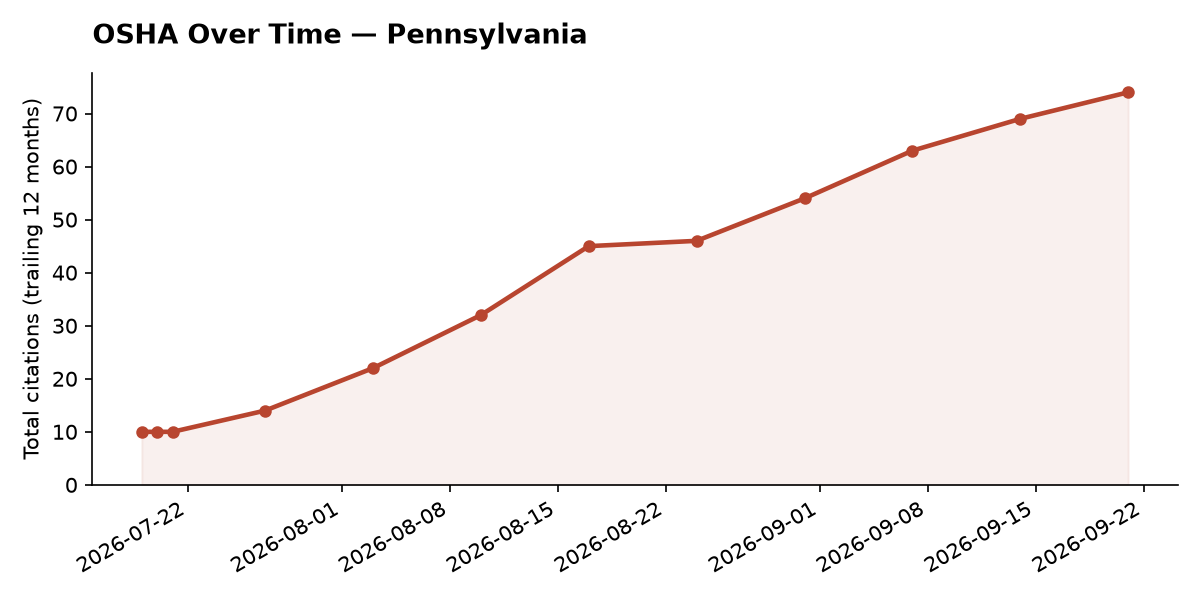
Pennsylvania employers picked up 74 fall protection citations under 1926.501 over the past 12 months, with penalties averaging $7,127 and a median of $3,986. Philadelphia logged more of these citations than any other city in the state. Roofing contractors account for nearly half of all cases, and several of the citations below carried Repeat classifications that pushed penalties into five figures.
If you have already received a citation, the clock is running before you can even ask this question. Talking with a Pennsylvania OSHA defense attorney now, while your options are still open, costs far less than guessing your way through the process alone.
What OSHA Actually Expects Once Your Crew Is Working at Height
The standard behind every one of these 74 cases, 1926.501, is not complicated in theory. Once a construction worker is exposed to a fall of six feet or more to a lower level, the employer has to have a protection system in place before that exposure happens — not after an inspector shows up. That means guardrails, safety nets, or a personal fall arrest system, chosen and installed correctly for the specific task, whether that is roof work, leading-edge framing, or work near an unprotected floor opening.
Where employers get tripped up is not usually ignorance of the rule. It is inconsistent enforcement on their own sites — the harness that is available but not worn, the guardrail that comes down for one afternoon and never goes back up, the anchor point that is not rated for the load. OSHA does not require perfection everywhere on a job site, but it does require that fall protection be in place at the specific moments workers are exposed, and that is exactly the gap inspectors are trained to look for.
Why Roofing Crews Make Up Nearly Half of Pennsylvania’s Cases
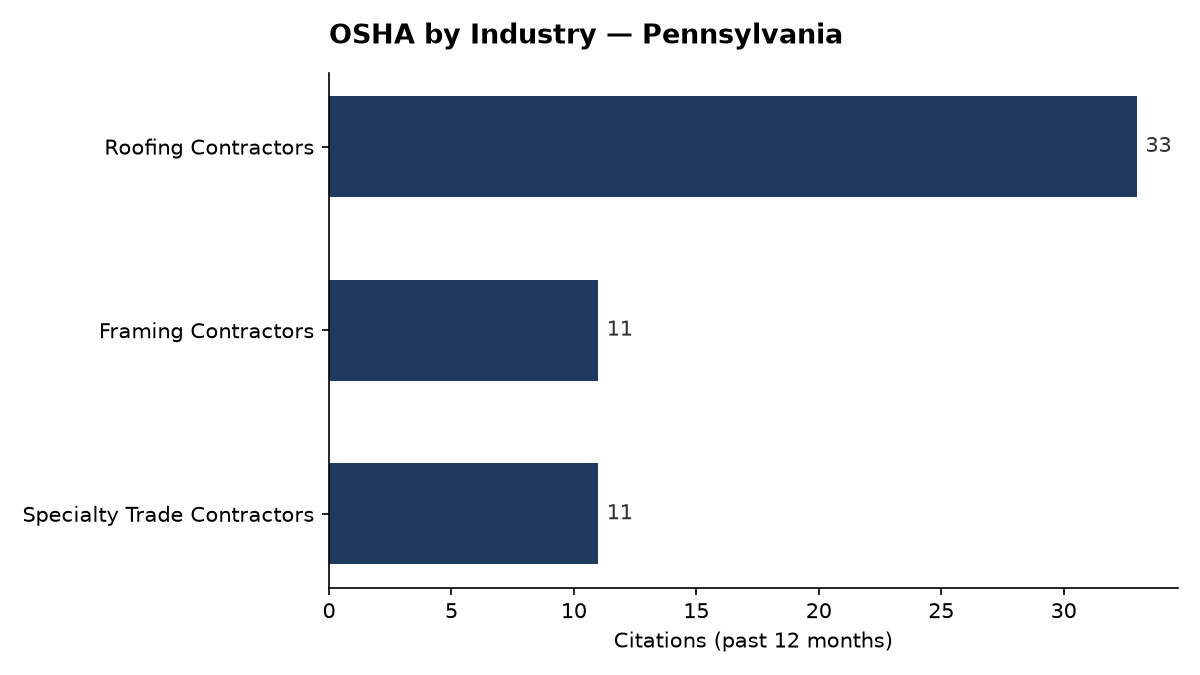
Roofing contractors drew 33 of the 74 citations in this dataset, more than three times the number for either framing contractors or other specialty trade contractors, each of which sits at 11. That split reflects the nature of the work more than anything else. Roofing puts crews at the roof edge or on a sloped surface for hours at a stretch, often on residential jobs where the margin for a quick fall-protection setup gets skipped in the name of speed. Framing crews face similar exposure on open floors and at leading edges before walls and rails go up, and specialty trades — electrical, mechanical, and similar work performed at height on someone else’s job site — round out the picture. If your business falls into any of these three categories, you are working in the exact segment Pennsylvania OSHA is watching most closely right now.
What These Citations Actually Cost — And Which Ones Cost the Most
Of the 74 citations, 51 were classified as Serious, 9 as Other-than-Serious, and 14 as Repeat. That Repeat number matters more than its size suggests. A Repeat citation means OSHA found the same or a substantially similar violation at that employer before, and the penalty multiplier reflects it. You can see that play out in the real cases on file:
- Eda Contractors, Inc. (Clifton Heights) — $70,938, Repeat, cited under 19260501 B01, issued June 04, 2026
- United Contracting Group, Inc. (Harrisburg) — $29,790, Repeat, cited under 19260501 B01, issued September 24, 2025
- Shalom Roofing & Siding, LLC (Phoenixville) — $29,790, Repeat, cited under 19260501 B13, issued January 06, 2026
- Egs Construction, Inc (Philadelphia) — $17,874, Serious, cited under 19260501 B13, issued December 16, 2025
- Strober-Wright Roofing, Inc. (Quakertown) — $16,883, Repeat, cited under 19260501 B10, issued June 05, 2026
Notice the gap between the average penalty of $7,127 and the amounts above — every one of these five cases sits well above that average, which is what a Repeat or a poorly documented Serious citation can do to the final number. On the other side of the ledger, the average penalty reduction between initial and final penalty amounts across these cases was 13%, which tells you two things: negotiation and contest do move the number, but only by a modest amount once the citation is fully documented and issued. Understanding how these figures are built in the first place is worth your time — see how OSHA fall protection penalty amounts are calculated for the mechanics behind the number on your own citation.
A 13% average reduction is not nothing, but it is not a guarantee either — and it almost never happens without someone pushing back on the record before the deadline closes. That is the conversation to have with a Pennsylvania OSHA defense attorney before you decide to just pay what is on the notice.
The 15-Day Window That Decides Whether You Have Any Say in This
Once a citation lands, you have 15 working days to file a Notice of Contest. Miss it, and the citation and the proposed penalty become a final order — no hearing, no negotiation, no second look, regardless of whether the citation was accurate or whether the classification (Serious versus Repeat, for instance) was even correct. Fifteen working days moves fast once you account for weekends and any time spent deciding what to do, which is exactly why waiting until week two to start thinking about your options is the most common — and most costly — mistake employers make here.
Filing a Notice of Contest does not mean you are picking a fight with OSHA for the sake of it. It preserves your right to negotiate the classification, the penalty amount, or the abatement terms before anything becomes final. The process itself, including what the notice needs to say and where it goes, is laid out at how to contest an OSHA citation, but the mechanics matter less than the timing. If you are inside that 15-day window right now, this is the moment to act, not the week the deadline expires.
Talk to a Pennsylvania OSHA defense attorney while you still have time to file. Once the 15 working days run out, there is nothing left to negotiate.
Pull your citation, check the issue date against that 15-working-day deadline, and get a second set of eyes on the classification before you sign off on anything. That single step is what separates the contractors who pay full price from the ones who do not.