
Data last updated: September 28, 2026
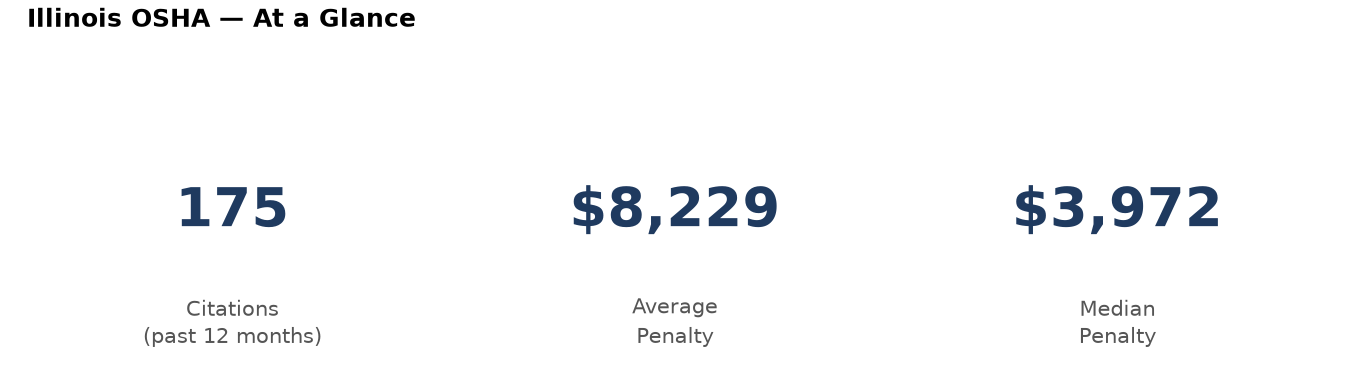
Illinois employers racked up 175 fall protection citations under 1926.501 over the past 12 months, with the average penalty landing at $8,229 and the median at $3,972. Chicago logged more of these citations than any other city in the state. Eleven of the 175 were classified as willful — the most serious category OSHA issues — which tells you enforcement in Illinois isn’t just paperwork violations getting swept up in routine inspections.
If you’ve just received a citation like this, the clock is already running. An Illinois OSHA defense attorney can review the specifics of your case before you make a decision that’s hard to undo.
What 1926.501 Actually Requires On Site
The 1926.501 standard is the backbone of OSHA’s fall protection rules for construction. In plain terms, it says that once a worker is exposed to a fall of six feet or more onto a lower surface, the employer has to do something about it — install guardrails, string up safety nets, or put workers in a personal fall arrest system with the right anchor points, harnesses, and lanyards. There’s no gray area about whether protection is optional at that height; the standard assumes it’s mandatory unless the employer can show an exception applies and has documented a plan for it.
Inspectors don’t need to see an accident happen to write a citation. They just need to see a worker within range of an unprotected edge, skylight, or floor opening. That’s why so many of these citations get issued during routine walk-arounds or after a complaint call, not just after an injury.
Roofing And Framing Crews Are Drawing The Most Attention
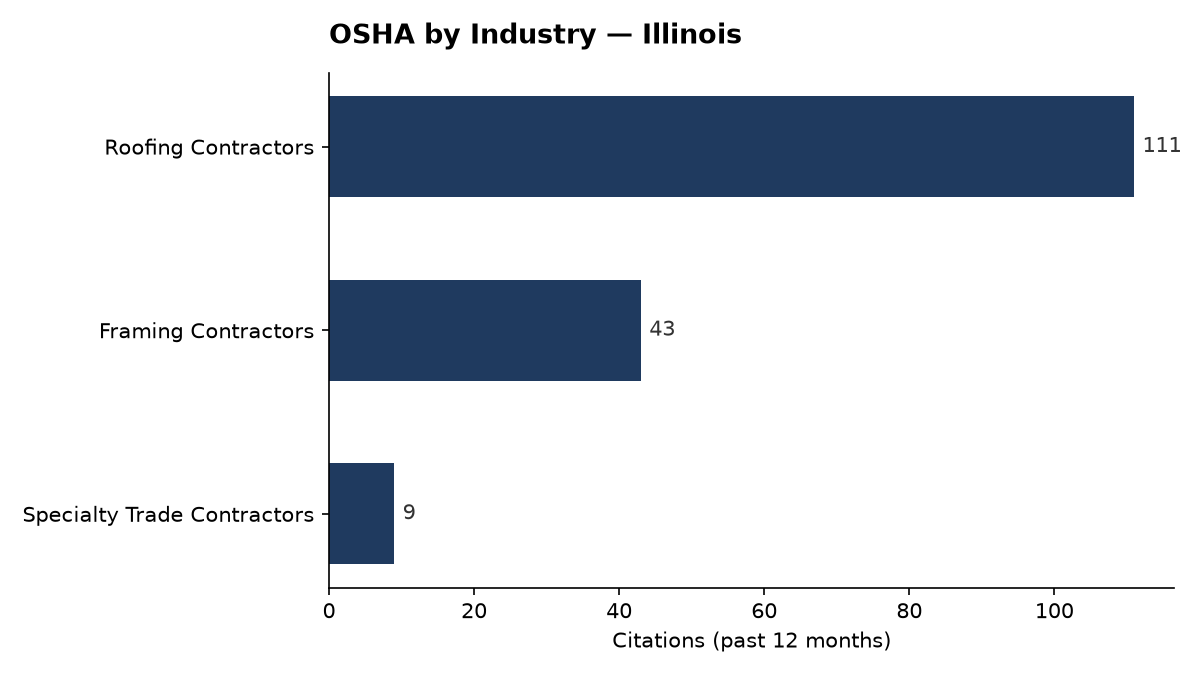
Of the 175 citations, 111 went to roofing contractors — well over half the total. Framing contractors accounted for another 43, and specialty trade contractors picked up 9 more. That distribution isn’t surprising. Roofing and framing crews spend nearly all their working hours at height, often on steep or unfinished surfaces where a guardrail or anchor point takes real planning to set up correctly, and where a rushed schedule tempts crews to skip a step. Inspectors in Illinois know this, and Chicago’s dense mix of residential re-roofing and multi-family framing work gives them plenty of jobsites to check.
What These Citations Actually Cost In Illinois
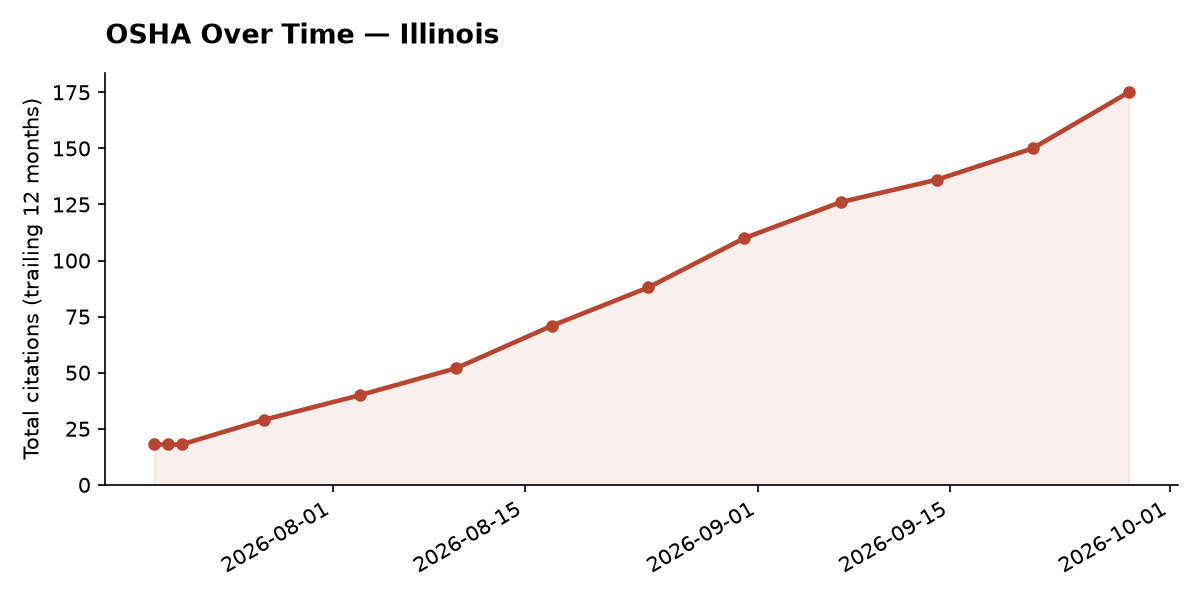
The numbers break down like this: 117 citations were classified Serious, 46 were Repeat, 11 were Willful, and 1 was Other-than-Serious. That mix matters because Willful and Repeat citations carry penalties far above the state average — and Illinois has more of both than many states see in a year. Five recent examples make the pattern concrete. Brian Arthurs, doing business as Hilltown Construction, Inc. in New Lenox, was cited $39,723 for a willful violation under 19260501 B13, issued September 30, 2025. Kw Framing, Inc. in Northbrook was cited $39,723 for a willful violation under 19260501 B01, issued January 30, 2026. Timberview Builders LLC in Urbana faced the same $39,723 willful penalty under 19260501 B13, issued November 21, 2025. Frr Construction, Inc. in Arlington Heights was cited $39,723, also willful and under 19260501 B13, issued February 13, 2026. And Martin Araujo, doing business as Araujo Construction Corp. in Chicago, was cited $39,723 under the same willful classification and subsection, issued August 13, 2026.
Notice that all five of these willful penalties landed at the same $39,723 figure — that’s the current statutory maximum per willful violation, and it shows up repeatedly once OSHA decides a violation wasn’t accidental. On the other end, the statewide median of $3,972 reflects the more common Serious citations that make up the bulk of the 175 total. One more number worth knowing: the average penalty reduction between initial and final assessment in these cases runs about 21%. That gap exists because employers who push back — through negotiation, an informal conference, or a formal contest — often get somewhere, especially when the initial classification or abatement date is disputable. For a fuller breakdown of how OSHA calculates and adjusts these numbers, see this guide to OSHA fall protection violations penalty amounts.
A 21% average reduction is not something that happens by accident. Talk to an Illinois OSHA defense attorney before you decide whether to pay, negotiate, or contest.
The 15-Day Window You Can’t Afford To Miss
Once a citation arrives, you have 15 working days to file a Notice of Contest. Miss that deadline and the citation — penalty, classification, and all — becomes a final order automatically, with almost no way back. Given that Illinois’ Willful citations are running at $39,723 apiece, and even Serious citations average well into the thousands, this is not a deadline to sit on while you think it over.
Before that window closes, it’s worth understanding your actual options, including requesting an informal conference with the local OSHA office or filing a formal contest. This overview of how to contest an OSHA citation walks through the process step by step, but the timeline itself doesn’t bend for anyone.
If you’re inside that 15-day window right now, don’t spend it guessing. Reach out to an Illinois OSHA defense attorney today so someone with experience in these cases can look at your citation, your classification, and your options while there’s still time to act.
Whether your citation lists a Serious violation with a four-figure penalty or a Willful classification near the statutory max, the facts of your specific case — the jobsite conditions, your safety program, your prior history with OSHA — all affect what happens next. Get those facts in front of someone qualified before the clock runs out.