
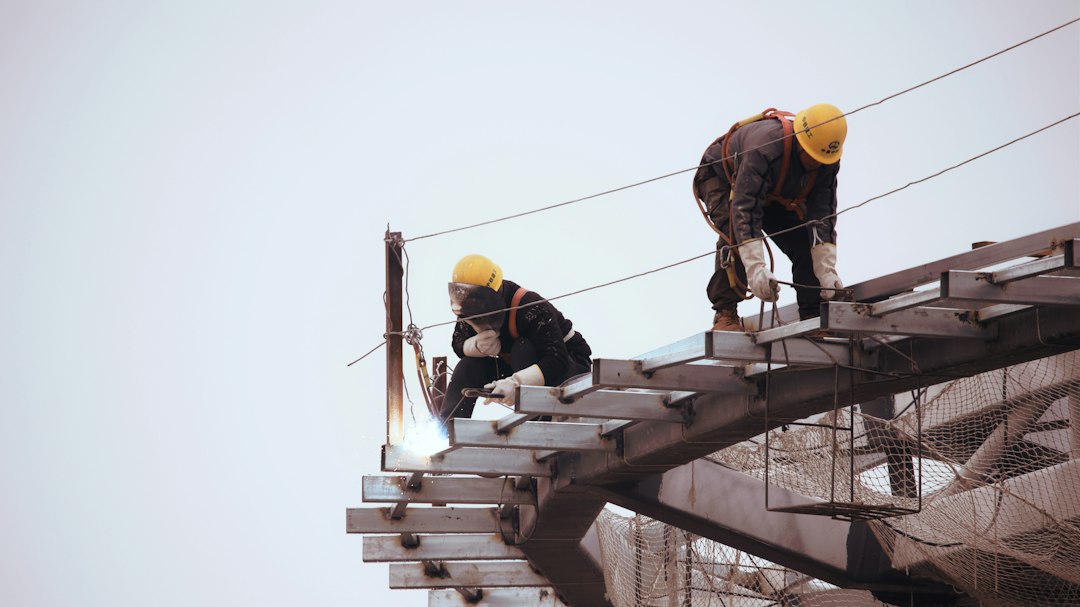
Data last updated: September 28, 2026
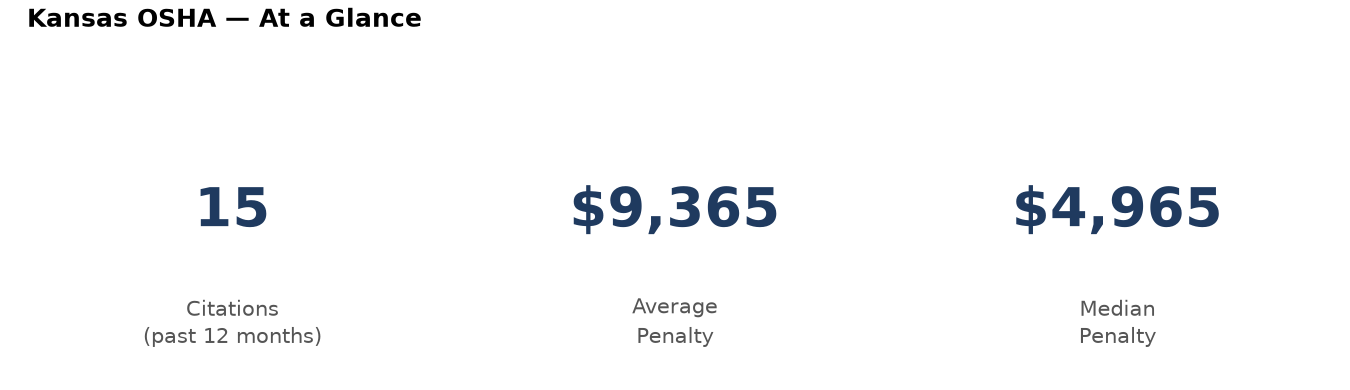
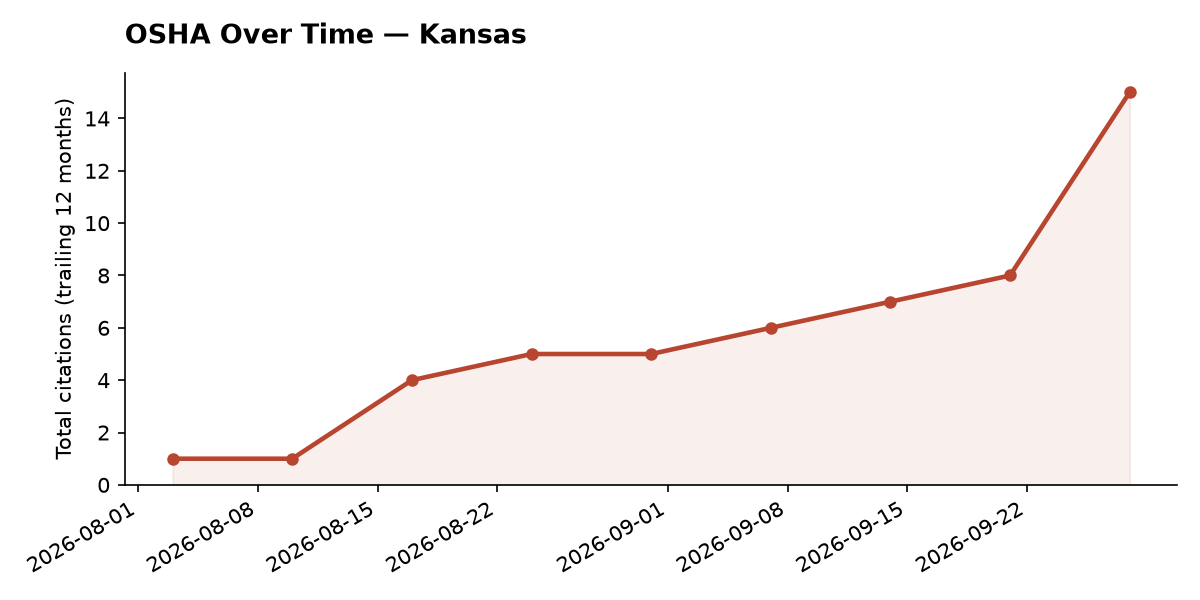
Fifteen fall protection citations doesn’t sound like a lot until you look at the mix. In Kansas over the past 12 months, OSHA issued 15 citations under the fall protection standard, and a third of them were classified as Repeat violations rather than first-time Serious findings. The average penalty came in at $9,365, with a median of $4,965 — and several individual cases landed far above both figures. Roofing contractors accounted for 12 of the 15 citations, with Wichita generating more enforcement activity than any other Kansas city.
If you’ve just received a citation letter, or you’re worried one is coming, the clock is already working against you. Talk to a Kansas OSHA defense attorney before you decide how to respond — the wrong first move can cost you the ability to fight the penalty later.
What OSHA Actually Requires Once Work Moves Above Six Feet
The standard behind every one of these Kansas citations is 1926.501, the core fall protection rule for construction. It sets the baseline: once a worker is exposed to a fall of six feet or more to a lower level on a construction site, the employer has to provide protection — guardrails, safety nets, or a personal fall arrest system. There’s no gray area about whether protection is optional at that height; the standard assumes it’s required unless the specific task falls under a narrow exception.
What trips up so many Kansas employers isn’t ignorance of the six-foot threshold. It’s execution — tie-off points that don’t exist, harnesses issued but not worn, guardrails removed for a task and never replaced. Those gaps are exactly what OSHA compliance officers are trained to spot on a walk-around, and they’re exactly what shows up in the citation examples below.
Why Roofing Crews Make Up 80% of Kansas’s Fall Protection Cases
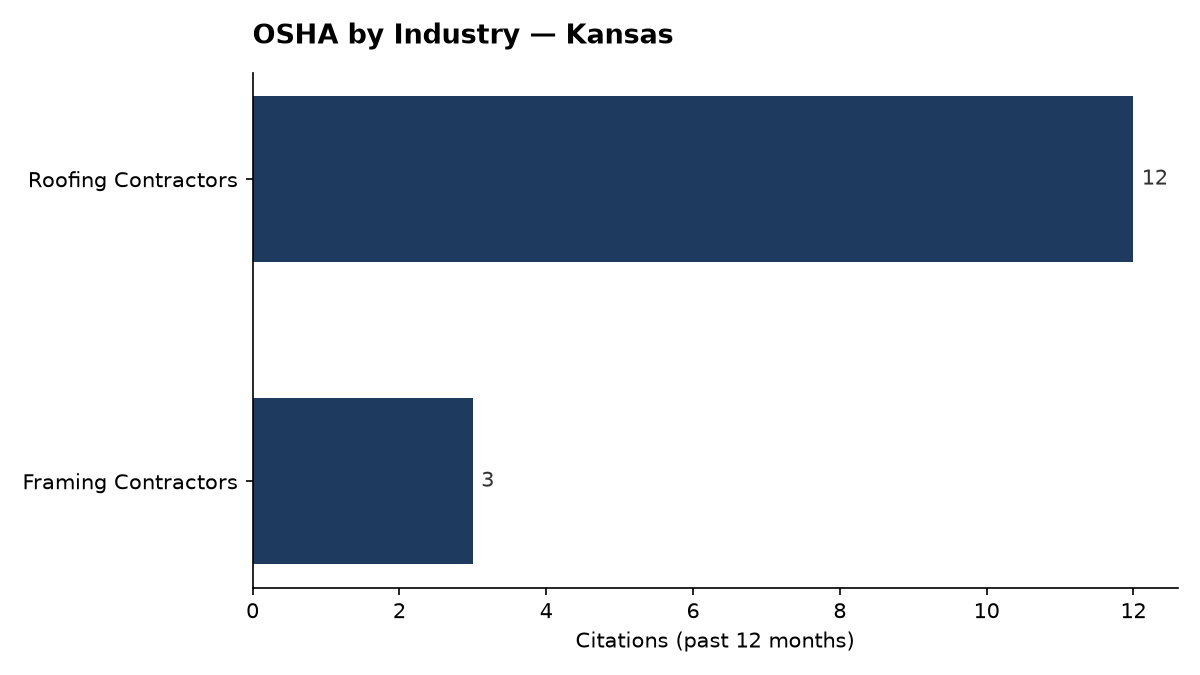
Twelve of the 15 citations issued in Kansas this year went to roofing contractors, with framing contractors picking up the other three. That split isn’t random. Roofing work puts crews at height for the entire job, often on sloped or unstable surfaces, and the pace of residential and commercial reroofing jobs pushes some crews to skip anchor points or fall arrest gear to save time. OSHA has flagged roofing as a national enforcement priority for years, and Kansas compliance officers are clearly following that lead — especially in Wichita, which recorded more citations than any other city in the state during this period.
Framing contractors show up in smaller numbers here, but the exposure is similar: workers on open floor decks, at roof edges, or on ladders without a fall arrest system tied off correctly. Any contractor whose crews regularly work above six feet, in either trade, should treat this data as a warning sign rather than a statistic that applies to someone else.
What a Repeat Citation Actually Costs in Kansas
Ten of the 15 Kansas citations were classified as Serious, the standard designation for a hazard that could cause death or serious injury. But five were Repeat citations — meaning OSHA had already cited the same employer for a substantially similar violation before. Repeat citations carry penalties several times higher than a first-offense Serious citation, and the real Kansas cases make that gap obvious.
Brent Lawrenz, cited in Goddard, faced a $29,790 penalty for a Repeat violation under 19260501 B13, issued December 8, 2025. Agustin Rojas in Wichita was hit with the same $29,790 figure for a Repeat citation under the same subsection, issued April 1, 2026. 3 Brothers Construction Inc., also in Wichita, drew a $15,789 Repeat citation under 19260501 B13, issued April 3, 2026. Rg Built LLC in Overland Park received a $9,930 Repeat citation, issued July 8, 2026. And Stanfield Roofing, Inc. in Junction City was cited $6,951 as a Serious violation under 19260501 B01, issued December 2, 2025 — a reminder that even a first-time Serious finding isn’t cheap.
Notice how much higher the Repeat penalties run compared to the lone Serious example here. That’s the mechanism OSHA uses to push repeat offenders toward compliance, and it’s also why the numbers can look dramatically different for two employers who committed a similar underlying hazard. For more on how these figures are calculated, see this breakdown of OSHA fall protection violation penalty amounts. Worth noting too: Kansas citations in this dataset saw an average penalty reduction of 16% between the initial and final amount, which tells you negotiation and contest do move the number — but only if you act inside the deadline.
A Repeat citation on your record doesn’t just cost more today. It sets the baseline for what the next citation could look like if a similar hazard turns up again. Before you accept a number this size, it’s worth getting a Kansas OSHA defense attorney to review whether the classification and penalty were calculated correctly.
The 15-Day Window You Cannot Afford to Miss
Whatever the citation says, you have exactly 15 working days from the date you receive it to file a Notice of Contest. Miss that window and the citation, the classification, and the penalty become final — no appeal, no negotiation, no second look. This applies whether you’re facing a $6,951 Serious citation like Stanfield Roofing’s or a $29,790 Repeat citation like the ones issued in Goddard and Wichita.
Filing a Notice of Contest doesn’t mean you’re guaranteed to beat the citation, but it preserves your options: informal conference with OSHA, negotiation on the classification, or a formal hearing before the Review Commission if it comes to that. The 16% average reduction seen in Kansas cases didn’t happen by accident — it happened because employers pushed back within the deadline instead of paying the first number they were handed. Read through this guide on how to contest an OSHA citation to understand the process before you make a decision.
Given how little time you have, the smartest first step is a conversation with someone who handles these cases regularly. Get in touch with a Kansas OSHA defense attorney as soon as the citation arrives, not after the deadline has already started slipping away.
If you run a roofing or framing crew in Kansas and a citation is sitting on your desk right now, don’t wait to see how it plays out on its own. Get the paperwork in front of counsel, mark the 15-working-day deadline on your calendar today, and start documenting your fall protection practices going forward so the next inspection tells a different story.