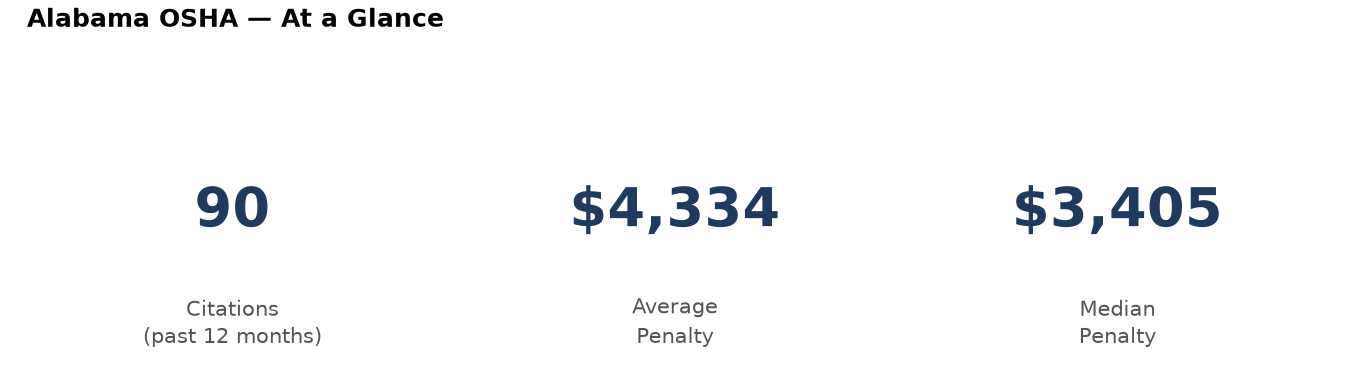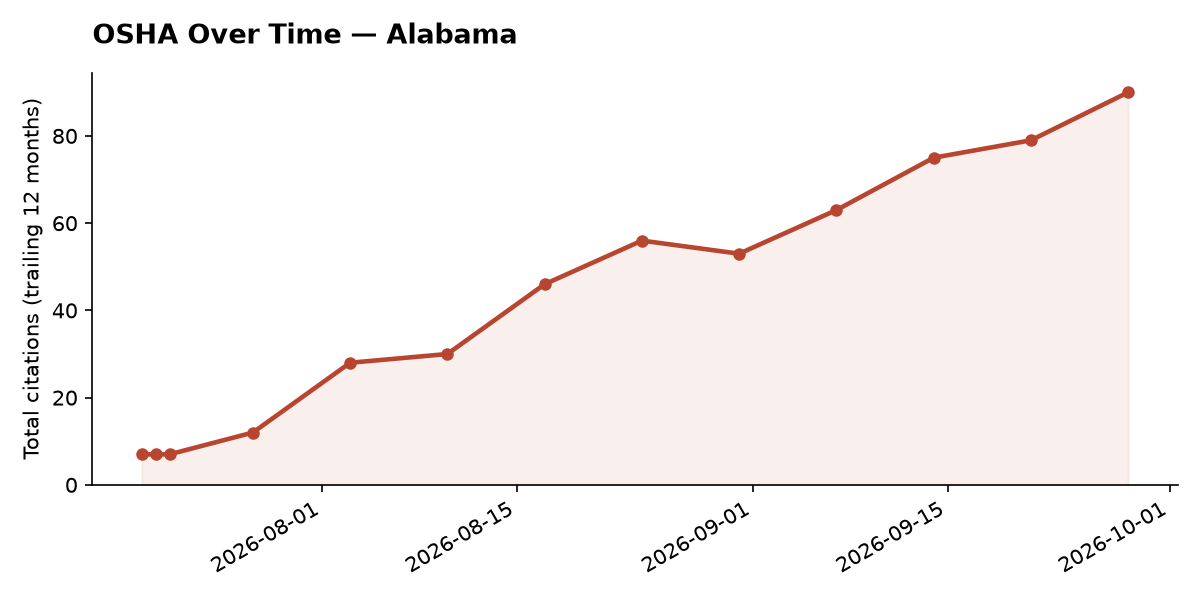

Over the past 12 months, OSHA issued 7 fall protection citations under 1926.501 to employers in Alabama. The average penalty was $4,718, with a median of $2,979. Framing and roofing contractors accounted for the vast majority of these citations, each responsible for 3 of the 7 cases.
If you’ve received a citation, the clock is already running. Talk to an Alabama OSHA defense attorney before you respond to OSHA or pay anything.
What OSHA’s 1926.501 fall protection standard requires
The rule behind nearly every one of these citations, 1926.501, sets the baseline for when and how workers must be protected from falls on construction sites. In plain terms, it requires employers to provide guardrails, safety nets, or personal fall arrest systems any time a worker is exposed to a fall of six feet or more at an unprotected edge, on a leading edge, near a floor opening, or on a steep or low-slope roof.
The standard doesn’t just say fall protection has to exist somewhere on site. It requires that the right system be in place, properly installed, and actually used by the crew doing the work. OSHA compliance officers look for gaps between what’s required and what’s actually happening on the ground: a harness sitting unused in a truck, a guardrail missing on one section of a roof edge, or a crew working a leading edge with no tie-off system at all. Any of these gaps is enough to trigger a citation.
Which Alabama industries get cited most

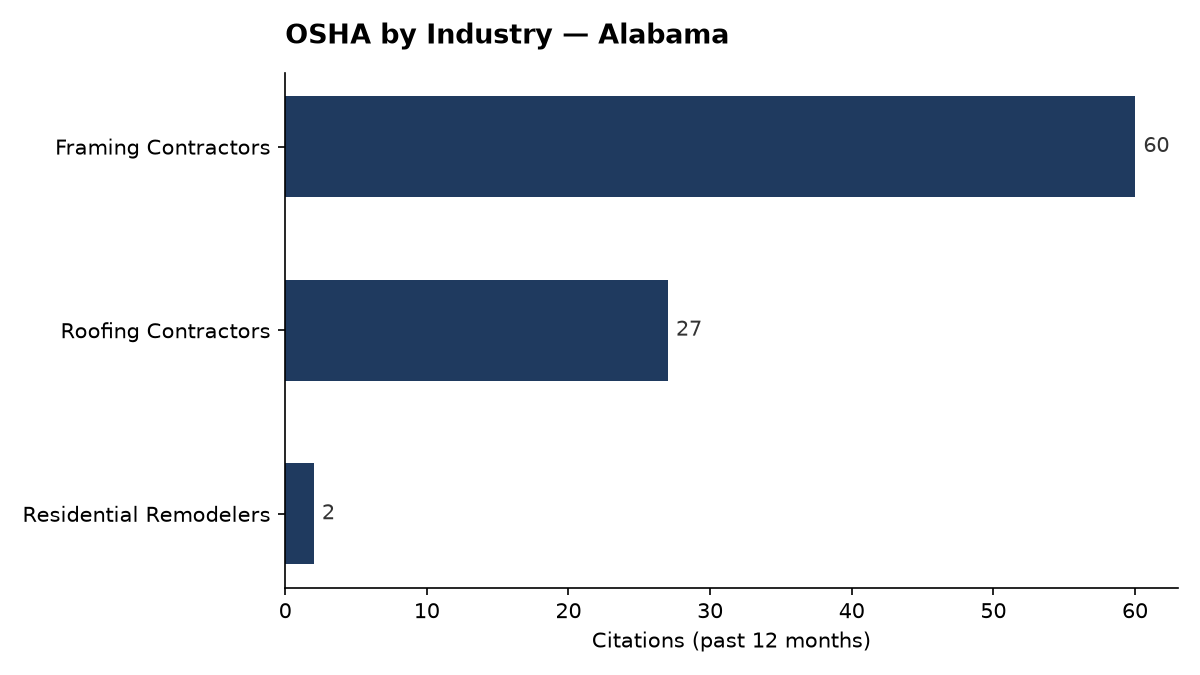
The data from the past year makes it clear where OSHA is focusing its attention in Alabama. Framing contractors and roofing contractors together account for 6 of the 7 citations recorded, with residential remodelers picking up the remainder.
This pattern isn’t surprising. Framing crews and roofers spend most of their working hours at height, often on structures that haven’t been fully enclosed or decked yet. Deadlines push crews to move fast, and fall protection setup can feel like it slows the job down, especially on smaller residential projects where margins are tight and safety staffing is thin. That combination of height exposure, time pressure, and lean crews is exactly what draws OSHA’s attention, and it’s exactly why these trades keep showing up at the top of the citation list year after year.
Residential remodeling work carries similar risk, particularly when crews are working on second-story additions, tear-offs, or re-roofing jobs where the existing structure wasn’t built with fall protection anchor points in mind.
What a fall protection citation costs in Alabama
The numbers tell a two-sided story. A $4,718 average penalty sounds manageable, but the median of $2,979 tells you that most citations in Alabama fall well below that average, meaning at least one citation in the pool was priced much higher. Whether you land near the median or closer to the average depends heavily on the classification OSHA assigns to the violation, and whether it’s treated as a repeat or willful violation rather than a first-time serious citation.
Understanding how OSHA calculates these penalty amounts matters because the initial number on your citation is rarely the final number. Penalties can be adjusted based on the size of your business, your prior citation history, and how quickly you correct the hazard. But none of those adjustments happen automatically. You have to know what to ask for and how to document your case.
A few thousand dollars might not sound like it threatens a business, but a citation on your OSHA record follows you. It affects future inspections, bidding on certain contracts, and your classification if a repeat violation happens later. The dollar amount is only part of the real cost.
Before you write a check or let the citation sit, talk to an Alabama OSHA defense attorney about whether the penalty amount and classification are actually correct.
What to do if you’ve been cited
OSHA gives employers exactly 15 working days from the date they receive a citation to file a Notice of Contest. That deadline is not flexible, and it is not a suggestion. Miss it, and the citation becomes a final order, meaning you lose your right to challenge the violation, the classification, or the penalty amount, even if you had a strong case.
Fifteen working days moves fast, especially once you factor in weekends and the time it takes to gather documentation, photos, and witness statements from the job site. That’s why the smart move is to start the process immediately, not after you’ve tried to handle it alone or waited to see if OSHA follows up.
Filing a Notice of Contest doesn’t mean you’re picking a fight with OSHA for the sake of it. It preserves your options. From there, you can negotiate a reduced penalty, correct a misclassification, present evidence that the hazard was addressed before the inspection, or argue that the alleged violation doesn’t match what actually happened on site. None of that is possible once the 15-day window closes. Learn more about how to contest an OSHA citation and what the process actually involves.
If you run a framing, roofing, or remodeling operation in Alabama and a citation just landed on your desk, don’t sit on it. Get in touch with an Alabama OSHA defense attorney today, while your 15 working days are still on the clock.