

Data last updated: August 31, 2026
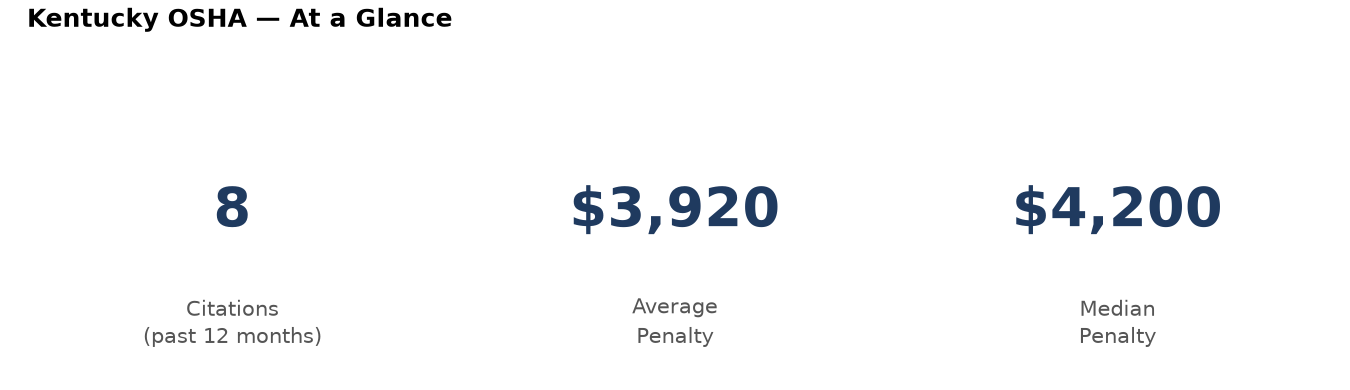
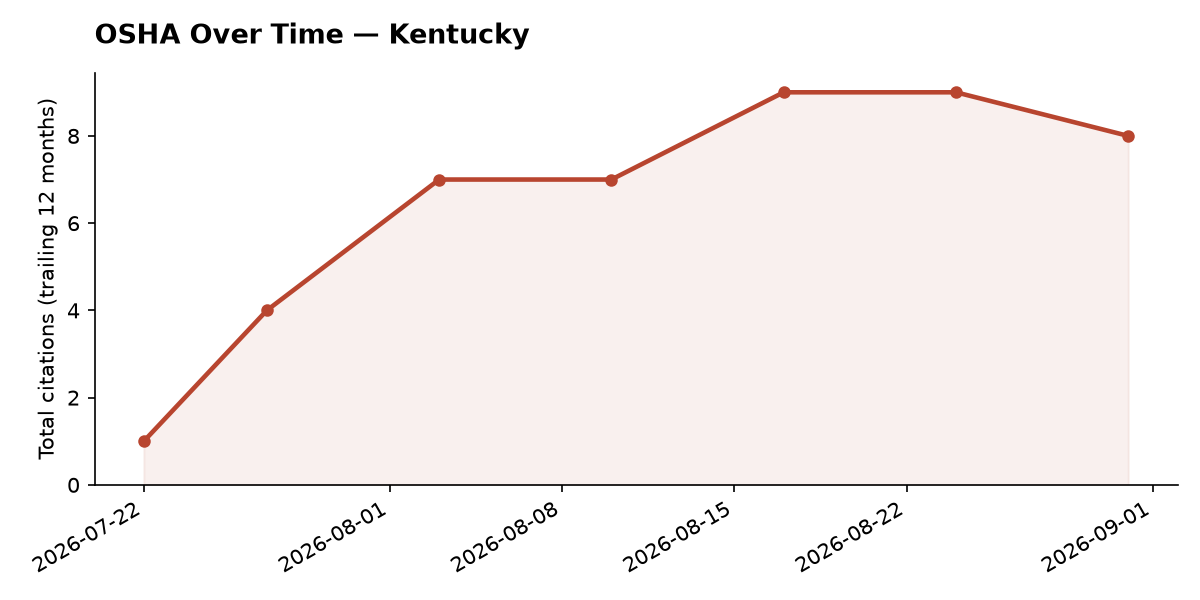
Kentucky OSHA offices issued 8 ladder violation citations under standard 1926.1053 over the past 12 months, with an average penalty of $3,920 and a median of $4,200. Every single one of these 8 citations was classified as Serious — meaning OSHA determined there was a real chance of death or significant physical harm tied to the ladder condition on site. Mayfield, Kentucky came up more than any other city in the state’s citation record.
If you’ve just opened an envelope with a citation number and a dollar figure attached, you’re on the clock before you’ve even finished reading it. Talking to a Kentucky OSHA defense attorney early gives you the best shot at reducing or reshaping what you owe.
What the Ladder Standard Actually Demands on a Kentucky Jobsite
Every one of these 8 Kentucky citations was issued under the 1926.1053 standard, which is OSHA’s general rulebook for ladder use in construction. It’s not just about owning a ladder that meets spec — inspectors are checking how the ladder is actually set up and used the moment they walk the site.
The rule covers things like how far a straight or extension ladder needs to stick out above a landing point so workers have something stable to grab while stepping off, how much weight the ladder and its support system are rated to hold, and whether the equipment shows damage that should have taken it out of service. It also addresses basic use violations — workers standing on the top rungs, ladders set up on unstable or unlevel ground, or ladders used for a job they weren’t designed for. In Kentucky, every citation issued in the past year fell under this same general framework, specifically the B01 provision, which points to setup and positioning failures rather than equipment defects alone.
Why Kentucky’s Construction Trades Keep Showing Up in These Records
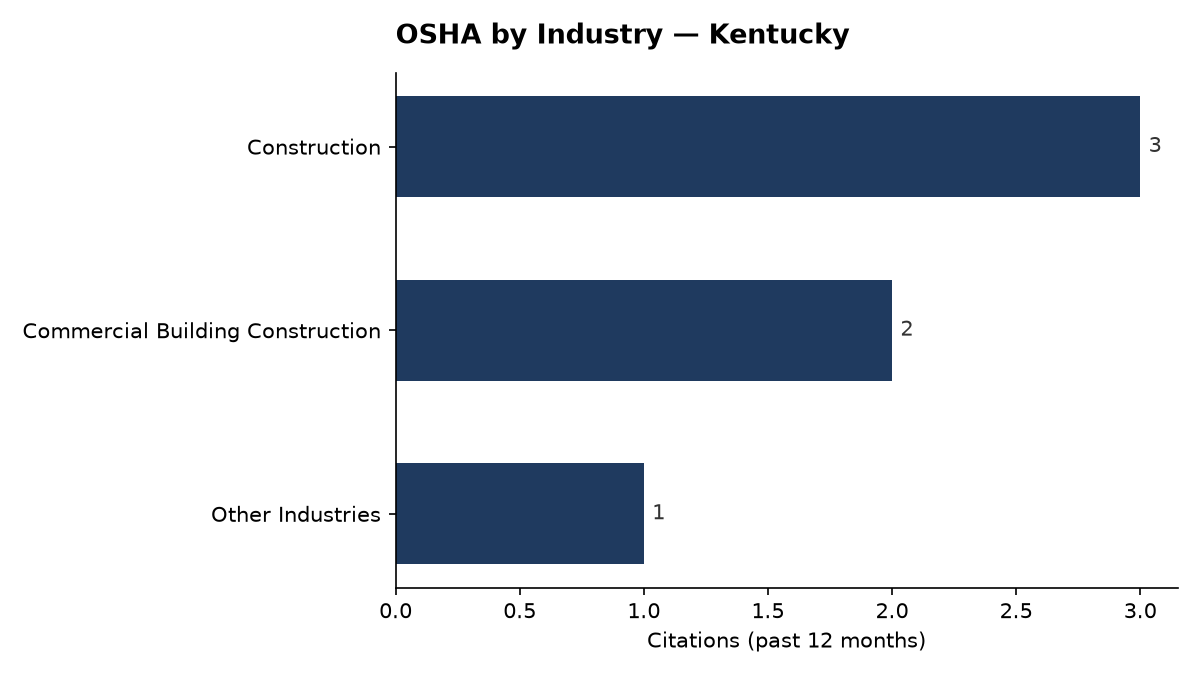
The industry breakdown in Kentucky is not spread thin. General construction accounts for 3 of the 8 citations, commercial building construction adds 2 more, and the remaining citation falls outside those categories. That means roughly two-thirds of Kentucky’s ladder enforcement activity is tied directly to general contracting and commercial building work.
This pattern tracks with how these jobs actually operate. Crews on commercial builds and general construction sites are constantly moving ladders between tasks — framing, siding, rough-in electrical, punch-list work — and each relocation is a fresh chance for a ladder to end up on an unstable surface or set at the wrong angle. Excavation and utility contractors round out the list too, since even a short duration ladder task near a trench or bore site draws the same scrutiny under 1926.1053 as a multi-story commercial job.
What These Citations Actually Cost in Kentucky
The dollar figures in Kentucky’s public record aren’t hypothetical. A-K Construction Inc in Mayfield was cited $5,600 for a Serious violation issued April 10, 2026. Norris Brothers Excavating LLC in Richardsville and Maxsteel Buildings LLC in London were each cited $4,900, issued within days of each other in early November 2025. Dirt Works Unlimited LLC in Glendale also picked up a $4,900 Serious citation in March 2026, and Turner Road Boring LLC in Windy was cited $3,500 in November 2025. All five cases were issued under the same B01 provision of 1926.1053.
What stands out is that Kentucky’s average penalty reduction between the initial citation and the final resolved amount sits at 15%. That gap doesn’t happen by accident — it reflects employers who pushed back on the initial classification, negotiated the penalty amount, or corrected the underlying issue and documented it before the case closed. Understanding how OSHA ladder violations penalty amounts are calculated, and where there’s room to argue, matters more than most business owners realize until they’re staring at an invoice.
A citation with a five-figure exposure risk, even at Kentucky’s relatively modest average, is not something to sort out alone over a weekend. Getting a Kentucky OSHA defense attorney involved before you respond can be the difference between paying the full initial number and negotiating it down.
The Clock Starts the Day You Sign for the Citation
OSHA doesn’t give employers much room here: you have 15 working days from the date you receive the citation to file a Notice of Contest. Miss that window and the citation — and whatever penalty is attached to it — becomes final, with essentially no further avenue to argue the classification or the amount. Weekends and federal holidays don’t count toward those 15 days, so the window closes faster than it looks on a calendar.
Before that deadline hits, you need to know exactly what your options are: contesting the citation outright, requesting an informal conference with the area OSHA office, or negotiating a settlement that corrects the classification or reduces the penalty. The process for how to contest an OSHA citation is specific and time-sensitive, and getting it wrong procedurally can cost you the right to argue the substance at all.
If you’re inside that 15-day window right now, don’t wait to see how it plays out. Reach out to a Kentucky OSHA defense attorney today so someone with experience in these exact cases can review your citation before the deadline passes.
Pull your citation paperwork, note the exact date you received it, and start that conversation now — in Kentucky’s ladder citation cases, the employers who act early are consistently the ones who end up paying less.