
Data last updated: September 14, 2026
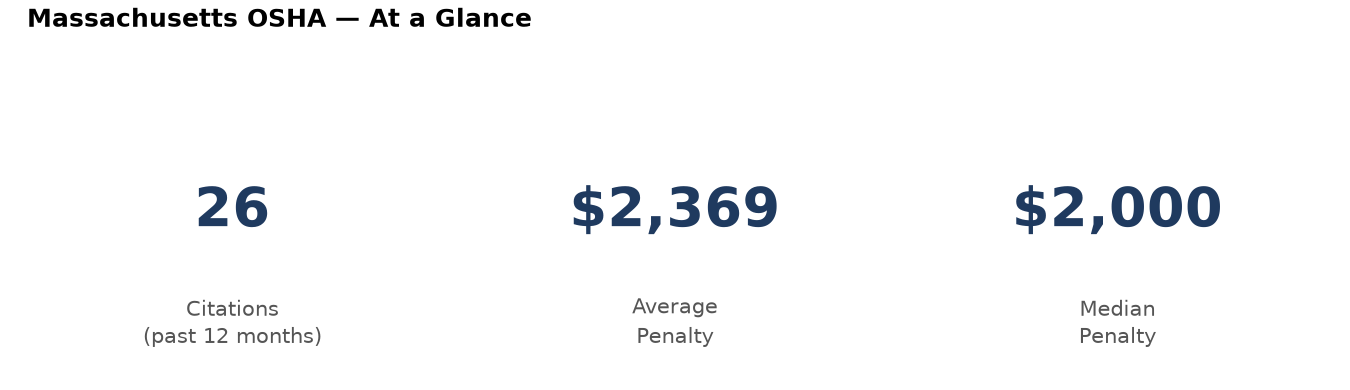
Massachusetts contractors picked up 26 scaffolding citations under OSHA standard 1926.451 in the past 12 months, with penalties averaging $2,369 and a median of $2,000. Twenty-four of those 26 were classified Serious, meaning OSHA inspectors found conditions with real potential to cause death or serious injury. Lowell logged more of these citations than any other city in the state.
If you’ve just opened an envelope with a citation number and a dollar figure attached, the clock is already running. Talk to a Massachusetts OSHA defense attorney before you decide how to respond — the deadline to push back is shorter than most business owners expect.
What Inspectors Are Actually Checking Under 1926.451
The standard behind all 26 of these cases, 1926.451, is the baseline rulebook for scaffold safety on any construction site. It’s not one narrow rule — it’s a bundle of requirements covering how a scaffold has to be built to hold its load, how workers get on and off it safely, when guardrails and planking are required, and when fall protection has to be in place before anyone steps onto the platform. You can review the full breakdown of what falls under this 1926.451 standard to see exactly which provisions inspectors cite most often.
In practice, most citations trace back to a handful of recurring problems: platforms missing guardrails, scaffolds erected without proper footing or bracing, workers accessing scaffolds without a safe ladder or stair system, and crews working at height without fall arrest gear tied off. None of these are exotic violations — they’re the everyday shortcuts that happen when a crew is trying to move fast on a tight schedule.
Roofers Account for More Than Half the State’s Citations
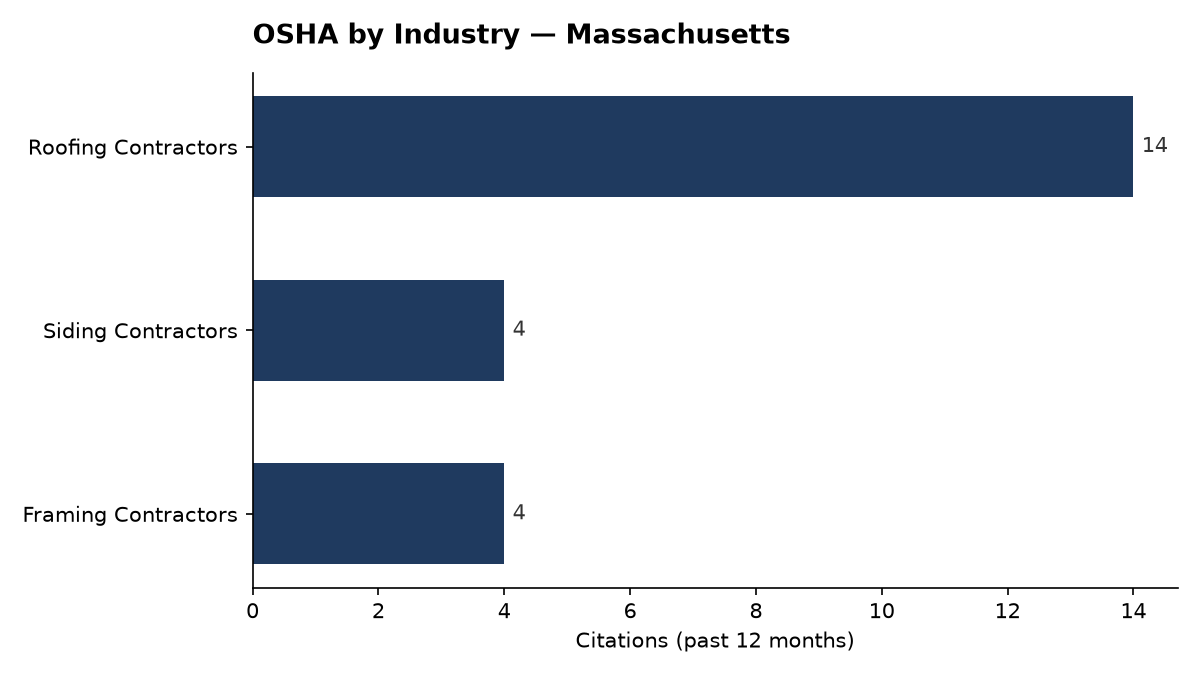
Of the 26 citations issued statewide, 14 went to roofing contractors — more than half the total. Siding contractors and framing contractors each picked up four citations apiece, rounding out the rest.
The pattern makes sense once you think about the work. Roofing and siding crews are constantly setting up and tearing down scaffolds as they move around a building, often on residential jobs where there’s less dedicated safety staff watching setup. Framing crews face a similar exposure during multi-story builds, where scaffold platforms get reconfigured as the structure rises. Each move is a fresh chance for a guardrail to get skipped or a plank to be left unsecured.
What a Citation Like This Actually Costs in Massachusetts
With an average penalty of $2,369 and a median of $2,000, most Massachusetts scaffolding citations aren’t the six-figure headline numbers you see in Willful or Repeat cases elsewhere. Every one of the 26 citations here fell into the Serious or Other-than-Serious category — no Willful or Repeat classifications this period, which keeps the per-citation numbers lower than they could be. But real, named companies are still paying real money. Recent examples from the public OSHA record include:
- Stuart General Construction Corp. in Leominster — $5,958, Serious, cited under 19260451 E01, issued March 26, 2026
- Batista Roofing And Vinyl Siding, Inc. in Lowell — $4,965, Serious, cited under 19260451 B05 II, issued December 29, 2025
- Hwa Services LLC in Westwood — $3,972, Serious, cited under 19260451 G01 I, issued January 23, 2026
- Malans Pro Construction LLC in Needham — $3,972, Serious, cited under 19260451 G01 I, issued March 03, 2026
- Real Minas Construction, Inc. in Merrimac — $3,972, Serious, cited under 19260451 C02, issued June 15, 2026
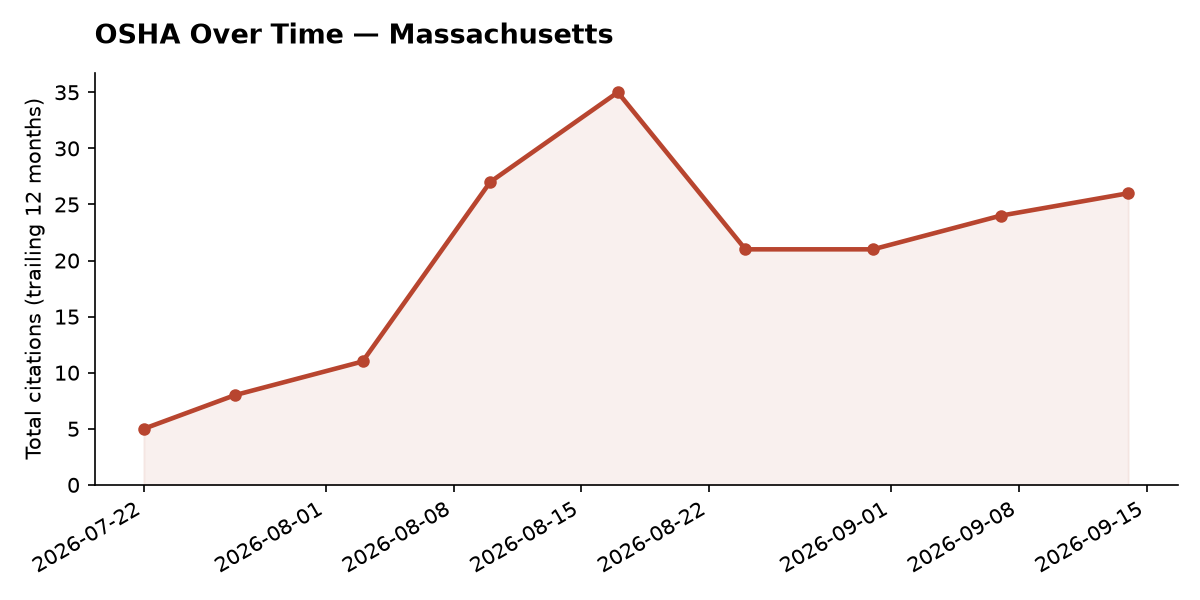
One more number matters here: the average penalty reduction between initial and final citation in these cases runs 28%. That gap doesn’t happen by accident — it reflects employers who negotiated, provided evidence, or formally contested rather than simply paying the initial number. For a fuller look at how these dollar figures get calculated and reduced, see this breakdown of OSHA scaffolding violations penalty amounts.
A nearly 30% average reduction means a lot of that penalty is negotiable — but only if you act with the right advice behind you. This is exactly the kind of number a Massachusetts OSHA defense attorney can put to work on your specific citation.
Your 15-Day Window Starts the Day You Receive the Citation
Once a citation lands, you have 15 working days to file a Notice of Contest. Miss it, and the citation — along with the full proposed penalty — becomes a final order automatically. There’s no informal grace period and no automatic extension once that window closes.
Before that deadline hits, it’s worth understanding how to contest an OSHA citation the right way, including what informal settlement conferences with OSHA can accomplish and how contesting differs from simply asking for more time to fix the hazard. Given that the 28% average reduction figure shows real money is often on the table, this isn’t a step to skip or handle alone.
Whether your citation involves a missing guardrail, an unsecured platform, or a fall protection gap like the ones cited across Leominster, Lowell, Westwood, Needham, and Merrimac this year, the smartest move is the same: get a qualified opinion before the 15-day clock runs out. Reach out to a Massachusetts OSHA defense attorney now so you don’t lose your right to push back on the citation or the penalty attached to it.