
Data last updated: September 28, 2026
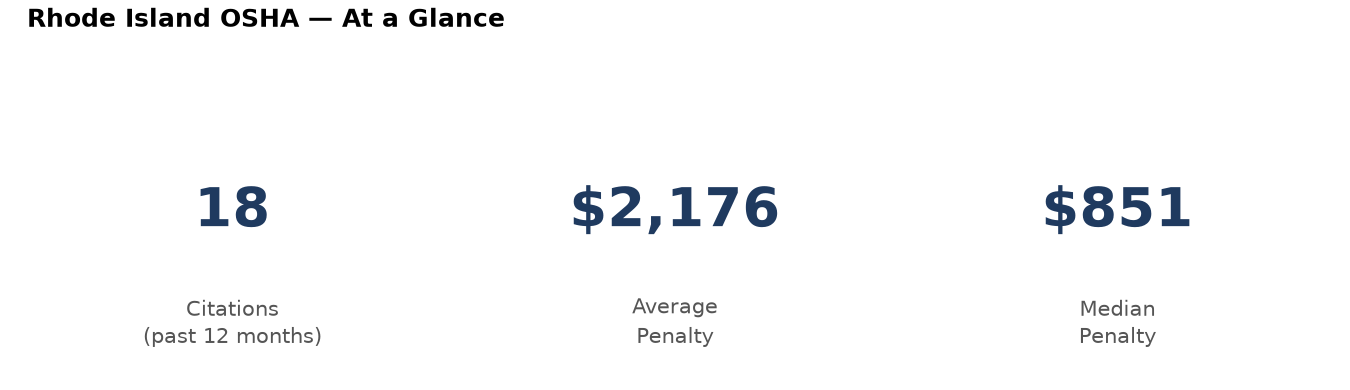
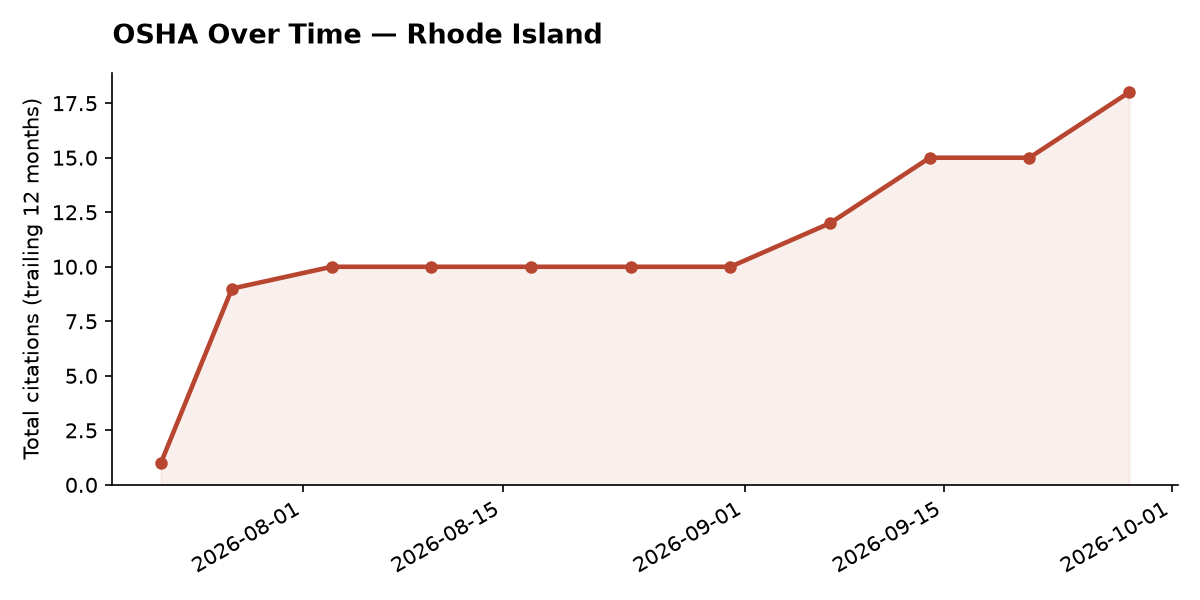
Rhode Island is a small state, but OSHA still issued 18 scaffolding violations here in the past 12 months — and every single one was classified Serious. The average penalty came in at $2,176, with a median of $851, and Newport recorded more of these citations than any other city in the state. If you build, remodel, or repair anything above ground level in Rhode Island, this is the enforcement pattern you need to understand before an inspector shows up on your site.
If you have already received a citation and the clock is running, do not wait to see what happens. Talk to a Rhode Island OSHA defense attorney now, while you still have options to negotiate or contest what is on paper.
What the Scaffolding Standard Actually Demands on a Rhode Island Job Site
Every one of these 18 citations traces back to the 1926.451 standard, OSHA’s core rulebook for scaffold construction, capacity, access, and fall protection. This is not a niche technical rule — it covers the basics: whether a scaffold was built to hold the load placed on it, whether workers had safe access to get on and off it, whether guardrails and planking met minimum requirements, and whether fall protection was in place at height.
Several of the recent Rhode Island cases were cited under subsection A01, which deals with the fundamental duty to make sure a scaffold and its supporting structure can carry its own weight plus at least four times the maximum intended load. That is a foundational requirement, and it is also one of the easiest things for an inspector to spot and document during a routine walk-through. Other citations referenced sections F14 and G01, which relate to access and to fall protection setup respectively — both common trouble spots when crews are moving fast on a tight schedule.
Who’s Getting Cited: Trade Contractors and Roofers Dominate the List
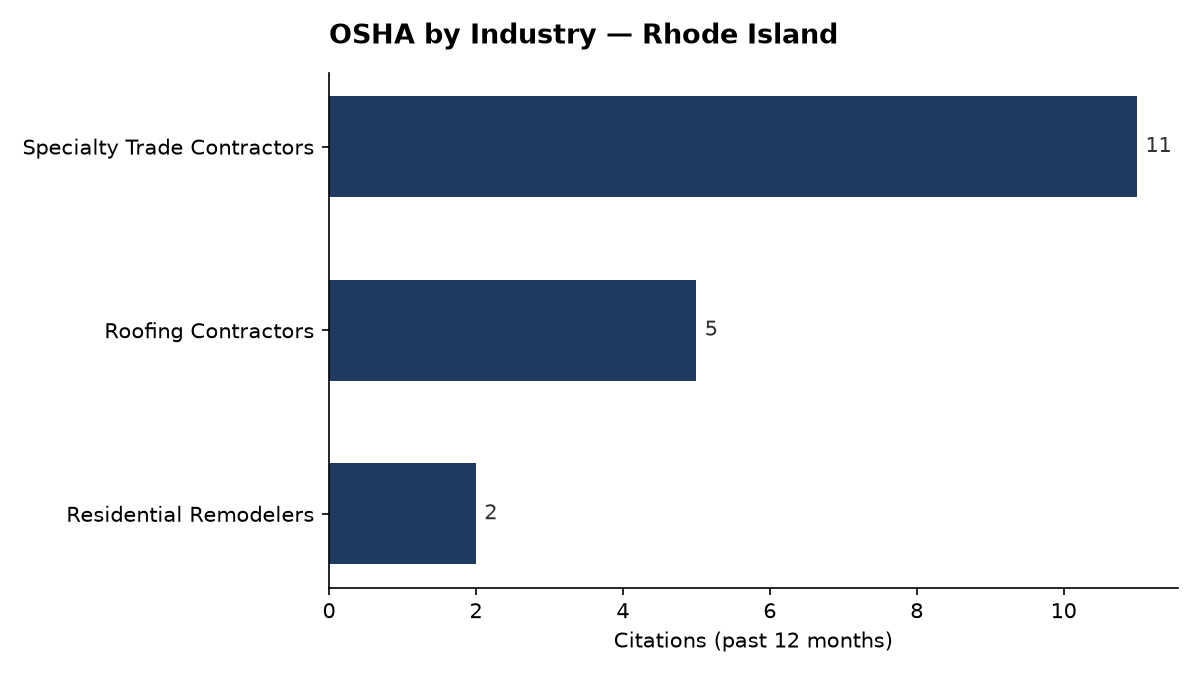
The industry breakdown in Rhode Island is not surprising once you look at who is actually working from scaffolds day to day. Specialty trade contractors accounted for 11 of the 18 citations — the largest share by a wide margin. This category includes masonry, drywall, and plastering crews, all trades where scaffolding is the default way of reaching upper walls and ceilings for extended stretches of time.
Roofing contractors were next, with 5 citations, which tracks with the nature of the work — roofers frequently combine scaffold access with steep-slope fall exposure, giving inspectors two overlapping hazards to document in one visit. Residential remodelers rounded out the list with 2 citations, reflecting smaller-scale renovation work where scaffolding gets set up temporarily and sometimes without the same rigor as a larger commercial job.
The named cases from the past year show exactly how this plays out. Jr Drywall Services Inc in Barrington was cited for a violation under A01 at $8,276, issued in late January. Dubon Masonry Construction, LLC in Central Falls picked up a $5,958 citation under F14 in June. Ear Construction Inc in Newport and Rm Plastering, LLC in Cumberland were each cited $4,965 under A01, issued in November and December respectively. Soares Masonry, LLC in Jamestown rounded out the group with a $4,965 citation under G01 in late February. All five were classified Serious — consistent with the statewide pattern where every scaffolding citation issued in Rhode Island over this period fell into that same category, rather than Willful or Repeat.
What These Citations Cost, and Why the Number on the Notice Isn’t Final
An average penalty of $2,176 sounds manageable next to headline-grabbing fines from larger states, but the individual cases above show real citations running well above $4,000 and even past $8,000 for a single violation. And the average penalty figure only tells part of the story — OSHA data for Rhode Island shows an average reduction of 29% between the initial penalty and the final amount actually paid. That gap exists because employers who respond, negotiate, or formally contest a citation frequently end up paying less than what was first proposed. Employers who do nothing generally pay the full amount. For more detail on how these figures are calculated and what drives them up or down, see this breakdown of OSHA scaffolding violations penalty amounts.
A nearly 30% average reduction is not a rounding error. On a citation in the $5,000 to $8,000 range like the ones issued to companies in Barrington, Central Falls, and Jamestown, that difference can mean over a thousand dollars saved — money that stays in the business instead of going to a penalty that may have been negotiable in the first place.
Before you decide whether to pay, appeal, or negotiate, get a second set of eyes on the citation. Speak with a Rhode Island OSHA defense attorney about your specific case and what the average 29% reduction could mean for your bottom line.
The 15-Day Clock Starts the Moment You Sign for the Citation
Here is the detail that catches employers off guard: once OSHA delivers a citation, you have 15 working days to file what is called a Notice of Contest. Miss that window, and the citation becomes a final order automatically — no matter how strong your case might have been, no matter whether the classification or the cited subsection was even correct. There is no informal extension once that clock runs out.
Fifteen working days moves faster than most people expect, especially once weekends and any holiday are factored in. That is not a lot of time to review the specific subsection cited — whether it is A01, F14, G01, or another part of 1926.451 — gather your own documentation of what the scaffold actually looked like at the time, and decide whether to contest, request an informal conference, or negotiate a settlement. For a full walk-through of the contest process and what each option actually involves, see this guide on how to contest an OSHA citation.
Given that every scaffolding citation issued in Rhode Island this past year was Serious rather than a lower-level Other violation, none of these cases were treated lightly by OSHA to begin with. That makes it worth having someone experienced in this exact process look at your citation before the 15 working days run out.
Don’t let the clock run out on your options. Connect with a Rhode Island OSHA defense attorney today and find out whether contesting, negotiating, or paying the citation as issued makes the most sense for your business.
Pull your citation paperwork, check the date it was issued, and count forward — that is your real deadline, not a soft guideline. Whether you are dealing with a $851 median case or something closer to the $8,276 issued in Barrington, the smartest move is getting informed advice before that window closes rather than after.