
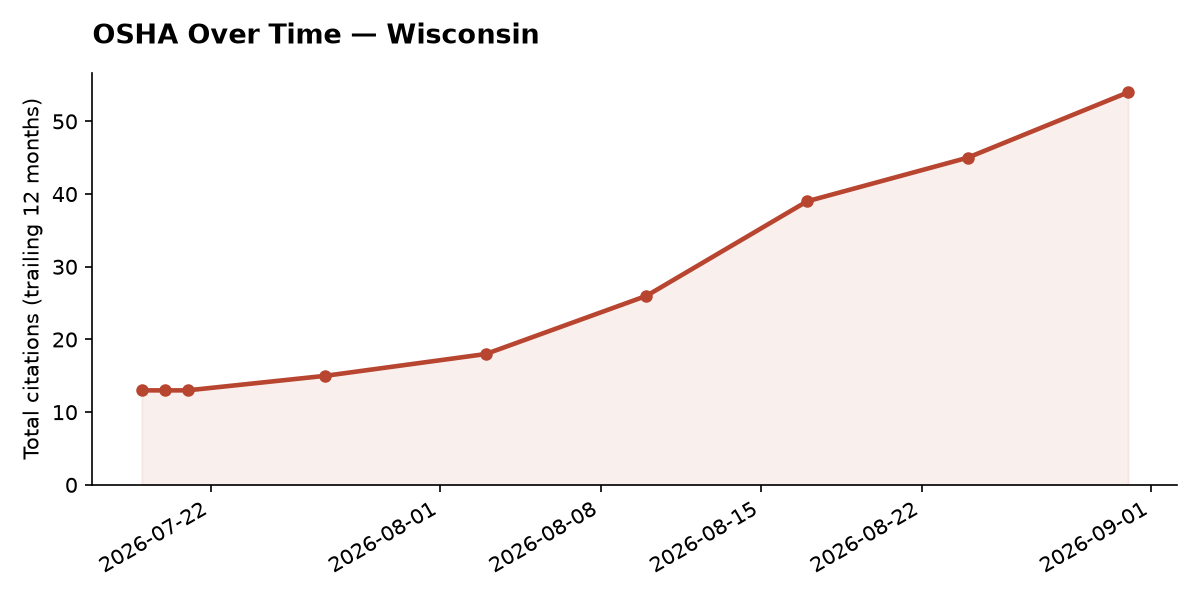
Data last updated: August 31, 2026
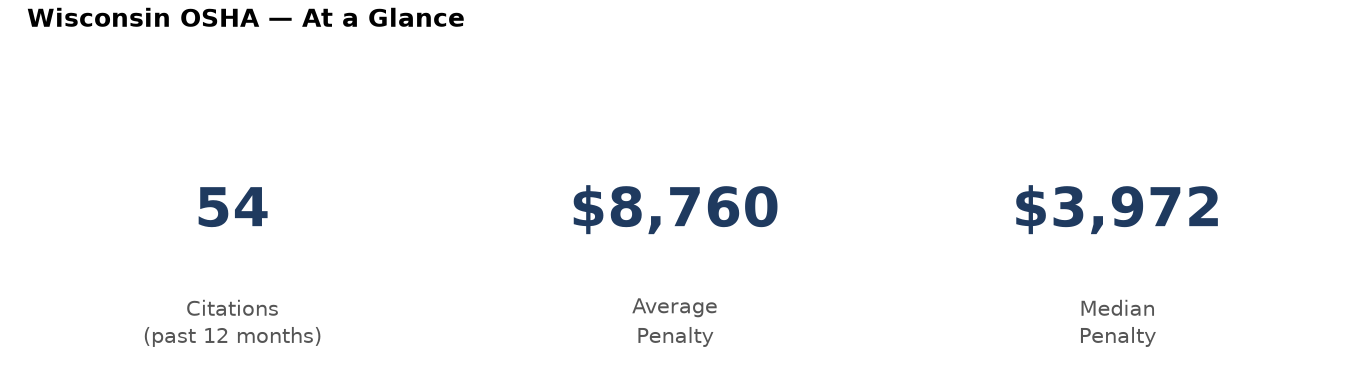
Wisconsin employers picked up 54 fall protection citations over the past 12 months, with an average penalty of $8,760 and a median of $3,972. Roofing contractors account for 41 of those 54 — by far the biggest slice — and 16 citations were classified as Repeat, a category that pushes penalties into a different tier entirely. Oak Creek saw more of these citations than any other city in the state.
If you or your company just received a citation like this, the clock is already running. You have a Wisconsin OSHA defense attorney available to review your case before you decide how to respond, and that conversation is worth having early rather than late.
Why 1926.501 Keeps Showing Up on Wisconsin Job Sites
Almost every one of these 54 cases traces back to a single standard: 1926.501, the core fall protection rule for construction. It requires employers to protect anyone working at height — generally once a worker is 6 feet or more above a lower level — using guardrails, safety nets, or a personal fall arrest system. There’s no gray area built into the rule about how high is too high to skip protection; the trigger height is fixed, and OSHA inspectors know exactly what to look for when they pull up to a site with an open edge, an unprotected roof, or a ladder set against a wall with no tie-off in sight.
The standard itself is simple to state and expensive to ignore. You can read the full breakdown of what it requires and how inspectors apply it on our page on the 1926.501 standard.
Roofing Drives the Numbers in Wisconsin
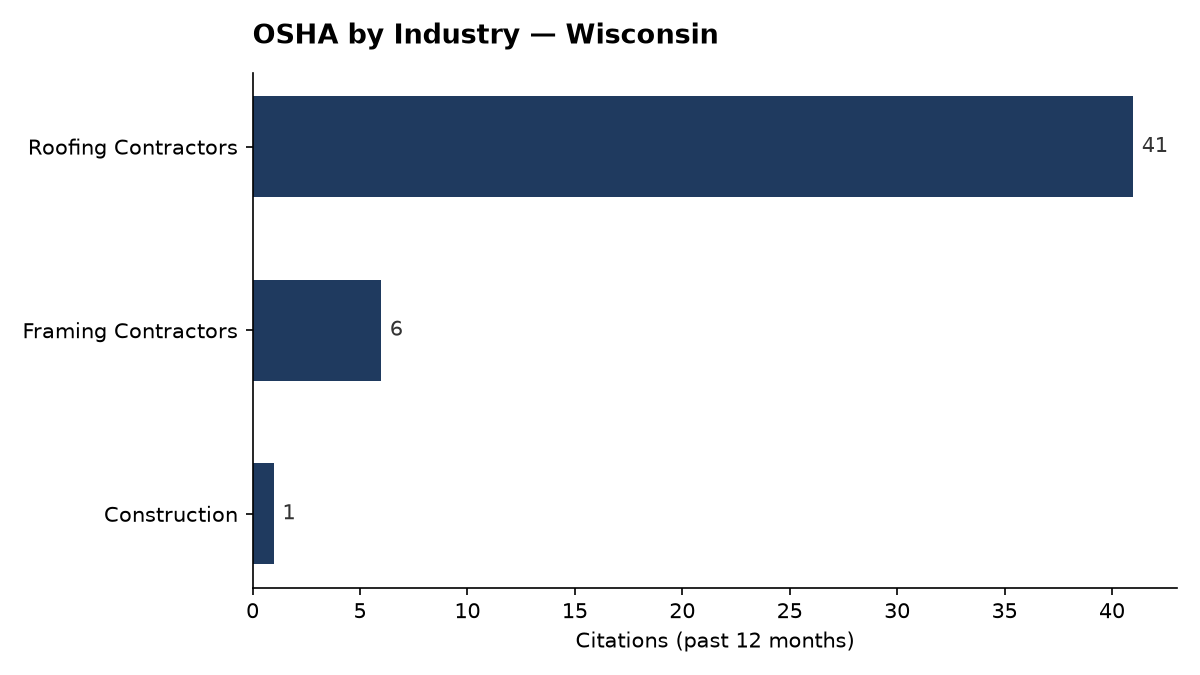
Roofing contractors were cited 41 times — roughly three out of every four fall protection citations issued in the state over this period. Framing contractors came in a distant second at 6 citations, and general construction rounded out the list with a single citation. That imbalance isn’t random. Roofing work puts crews at height on sloped, often wet or icy Wisconsin surfaces for hours at a stretch, and it’s one of the trades where a missing anchor point or an unclipped harness is visible from the street. OSHA compliance officers routinely stop when they see a crew working a roofline without visible fall protection, which is part of why roofing contractors account for the overwhelming majority of these cases statewide.
What These Citations Actually Cost
The average penalty of $8,760 hides a wide range. Of the 54 citations, 37 were classified as Serious, 16 as Repeat, and just 1 as Other-than-Serious. Repeat citations are the ones that do the real damage to a company’s bottom line — OSHA treats a second occurrence of a similar violation as evidence the employer already knew about the hazard, and the penalty math reflects that.
Five real examples from the past year make the point. Omega Roofing Limited Liability Company in Mayville was cited $69,510 as a Repeat violation under 19260501 B13, issued September 24, 2025. Alexander Hernandez, doing business in West Bend, faced a $59,580 Repeat citation under the same subsection, issued June 12, 2026. In Oak Creek — the city with the most citations statewide — Daniel Castro was cited $29,790 and Residential Roofing LLC was cited a matching $29,790, both Repeat violations, issued five days apart in late September 2025. Vanessa Morales in Menasha was cited $25,537, also Repeat, issued January 26, 2026.
Notice the pattern: every one of these five examples is a Repeat citation, and every one is well above the state median of $3,972. That gap between a first-time Serious citation and a Repeat citation is the single biggest cost driver in this data. It’s also worth knowing that the average penalty reduction between the initial and final amount statewide was 13% — meaning negotiation and contest do move the number, but they rarely erase it. For a fuller picture of how these dollar figures are calculated, see our breakdown of OSHA fall protection penalty amounts.
A five- or six-figure penalty on a Repeat citation isn’t something to absorb quietly. Before you pay or plan your response, talk to a Wisconsin OSHA defense attorney about what your specific citation actually supports and what options you have.
Your Window to Respond Is Short — Don’t Let It Close
Once a citation arrives, you have 15 working days to file a Notice of Contest. Miss that window and the citation becomes a final order — the penalty is locked in, the violation is on record, and your ability to challenge the classification (Serious versus Repeat matters enormously, as the numbers above show) disappears. Fifteen working days moves faster than most business owners expect, especially once you factor in gathering documentation, photos, and witness accounts from the site.
If you’re weighing whether to contest, negotiate, or simply pay, our page on how to contest an OSHA citation walks through the mechanics of that decision. But the clock doesn’t pause while you research it on your own. Given that 16 of the 54 citations in Wisconsin were Repeat — the costliest category by far — getting a second set of eyes on your paperwork before the deadline passes is the single most useful thing you can do right now. Reach out to a Wisconsin OSHA defense attorney while you still have time to act on their advice.
Whatever stage you’re at — a citation just landed, or you’re bracing for one after an inspection — the numbers above show this isn’t a paperwork issue you can set aside. Get advice on your specific situation before the 15-working-day window runs out.