
Data last updated: September 21, 2026
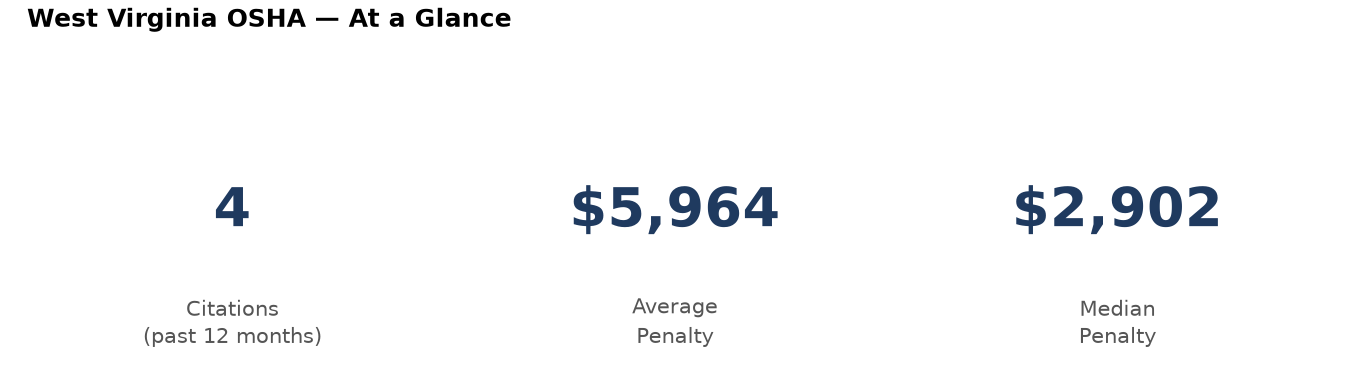
West Virginia recorded just four fall protection citations under 1926.501 in the past 12 months — a small number compared to bigger construction states, but every one of them was classified as Serious, and the penalties ranged from $1,500 to $16,550. The average penalty came in at $5,964, with a median of $2,902. If you run a roofing, siding, or general trade crew in this state, the odds of a citation are low, but the financial hit when one lands is not small at all.
If you have already been cited, or you suspect an inspection is coming, do not wait to figure out your options. Talk to a West Virginia OSHA defense attorney before you sign anything or miss a deadline.
What OSHA Actually Requires Once Workers Are Off the Ground
The standard behind every one of these citations, 1926.501, sets the baseline rule for construction: once a worker is exposed to a fall of roughly six feet or more to a lower level, the employer has to do something about it. That something is guardrails, safety nets, or a personal fall arrest system — not a promise to be careful, not a verbal reminder at the morning huddle. Inspectors are not looking for intent to cut corners. They are looking at whether the physical protection was actually in place at the moment someone was on a roof edge, a ladder, scaffolding, or an unprotected floor opening. That is why all four West Virginia citations landed as Serious: the violation itself created a realistic chance of death or serious injury, regardless of whether anyone actually got hurt.
Roofing Work Is Driving Most of the Enforcement Here
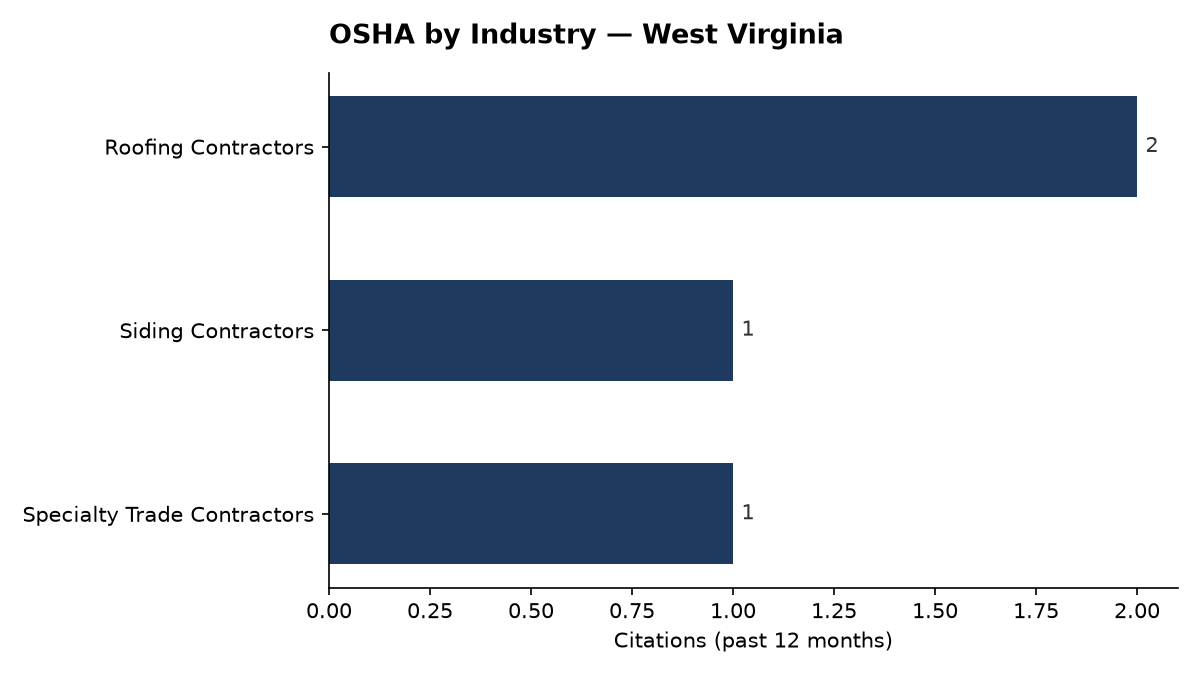
Of the four citations issued statewide, two went to roofing contractors, with one more each in siding and general specialty trade work. That pattern lines up with what you would expect: roofing puts workers at height on nearly every job, often on steep or unstable surfaces, and OSHA’s regional offices know it. Siding crews face similar exposure whenever they work off ladders or elevated platforms on multi-story structures. If your business falls into either category, you are operating in the segment of the West Virginia construction industry that draws the most attention from compliance officers, especially on jobs visible from the street or reported by a passerby.
Hurricane, West Virginia was the single city with the most citations in this data set, tied to two of the four cases below. That is not a coincidence tied to the town itself so much as it reflects where active roofing and residential trade work has been happening recently.
What Four Citations Actually Cost — And Why the Number on Paper Isn’t Final
Here is the real record, company by company:
- Ayer Corporation (Ranson) — $16,550, Serious, cited under 19260501 B13, issued August 5, 2026
- Tri-State Roof Masters LLC (Hurricane) — $3,405, Serious, cited under 19260501 B13, issued December 23, 2025
- Fabrizzio’s Enterprises LLC (Hurricane) — $2,400, Serious, cited under 19260501 B10, issued August 5, 2026
- Morales Contractor, L.L.C. (Charleston) — $1,500, Serious, cited under 19260501 B01, issued January 8, 2026
Notice the spread: one company’s penalty was more than ten times another’s, even though both were coded Serious. That gap usually comes down to things like the number of workers exposed, whether it was a first citation, and how the employer’s size and safety history factored into OSHA’s penalty calculation. For more detail on how those numbers get built, see this breakdown of OSHA fall protection violations penalty amounts.
Statewide, the average penalty reduction between the initial citation and the final settled amount was 10%. That is not a huge cut, but it tells you two things: negotiation does move the number, and it rarely erases it. Contractors who go in without preparation tend to pay closer to the original figure. Contractors who understand the record, the applicable subsection, and the abatement options tend to do better.
A penalty in the $2,900 to $16,500 range is real money for a small or mid-size contractor, and it can climb fast if OSHA finds a second or willful violation down the line. Before you decide whether to pay, negotiate, or fight it, get a West Virginia OSHA defense attorney to look at your specific citation and inspection file.
The Clock Starts the Day You Receive the Citation
This is the part contractors miss most often: you have exactly 15 working days from the date you receive an OSHA citation to file a Notice of Contest. Miss that window, and the citation — and the penalty — becomes final, with almost no way to appeal it afterward. There is no grace period for being busy on a job site or waiting to hear back from an insurance adjuster.
If you plan to contest the classification, argue the penalty amount, or negotiate an informal settlement, you need to start that process immediately, not after you have had time to think it over. Read through what filing actually involves in this guide on how to contest an OSHA citation, and treat the deadline as non-negotiable.
Given how much weight the subsection code and inspection date carry in these cases — as seen with the B13, B10, and B01 citations above — this is not something to handle alone in the margins of a busy week. Speak with a West Virginia OSHA defense attorney while you still have time to act within the 15-day window.
Whether your citation looks more like the $1,500 Morales Contractor case or the $16,550 Ayer Corporation case, the smartest move is the same: get the citation reviewed by someone who handles these regularly, before the contest deadline closes and the decision gets made for you.