
Data last updated: September 28, 2026
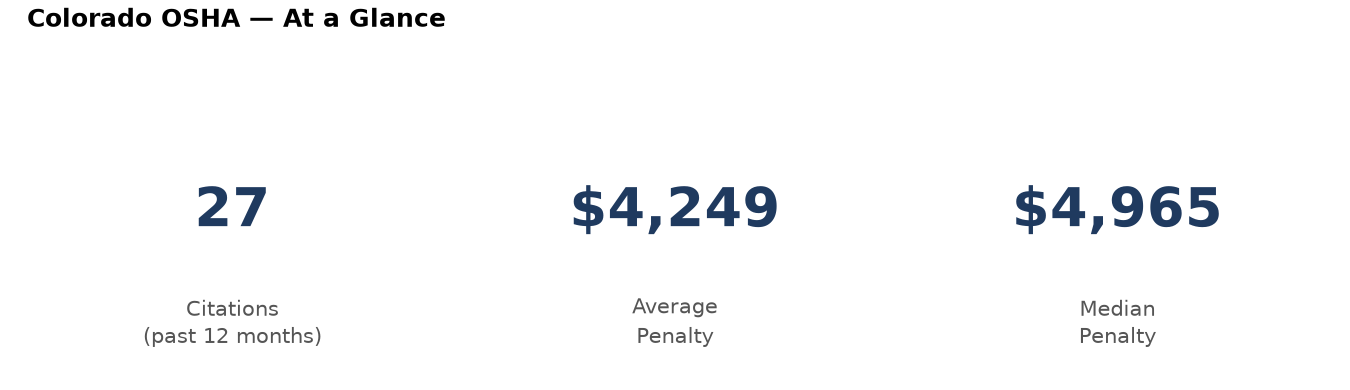
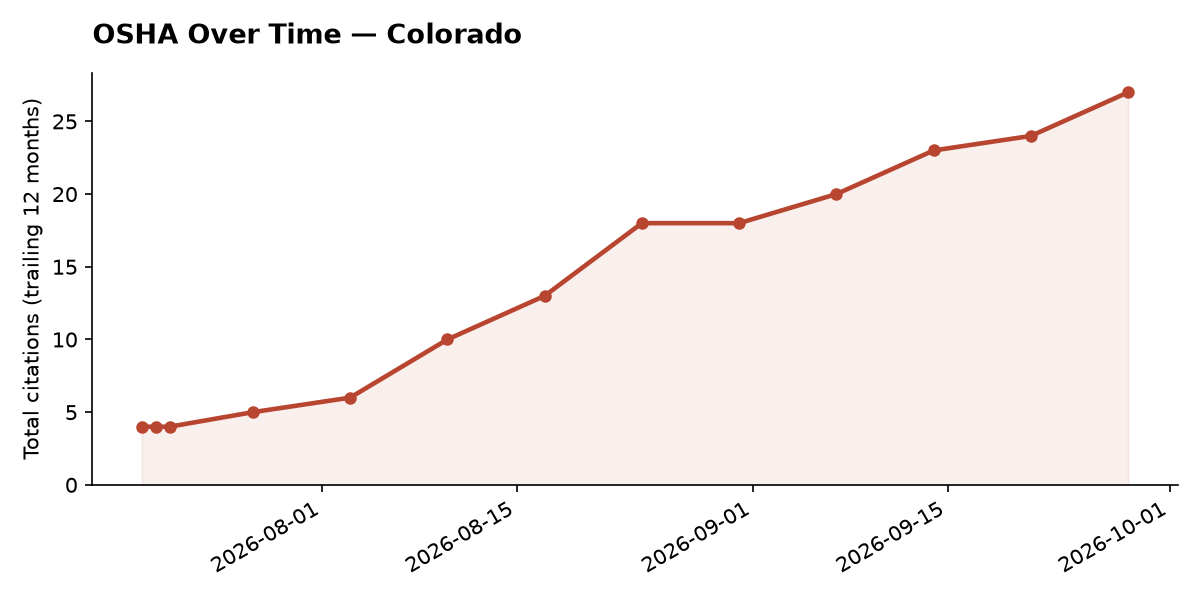
Colorado employers picked up 27 fall protection citations in the past 12 months, with an average penalty of $4,249 and a median closer to $4,965. Castle Rock saw more of these cases than any other city in the state. If you just opened an envelope from OSHA with a Colorado citation number on it, the numbers below are the ones that matter for what happens next.
If you have an active citation, the clock is already running. You get 15 working days from receipt to file a Notice of Contest, and that window closes fast. Talk to a Colorado OSHA defense attorney before it does.
Why 6 Feet Matters More Than Most Crews Think
Nearly every one of these 27 cases traces back to one federal rule: 29 CFR 1926.501. In plain terms, once a worker in construction is exposed to a fall of 6 feet or more onto a lower surface, the employer has to have already put something in place to catch or stop that fall — guardrails, safety nets, or a personal fall arrest system tied off correctly. There’s no grace period for get to it in a minute. OSHA treats the exposure itself, not the intent, as the violation. That’s why a crew working a roofline for twenty minutes without tie-off can generate the same citation as one working all day.
Of the 27 Colorado cases, 23 were classified Serious, meaning OSHA determined the fall hazard could plausibly cause death or serious injury. Three were Repeat citations — issued because the same employer had a substantially similar violation cited before, which pushes penalties up sharply. One was Other-than-Serious. Repeat status is the one to watch closely, because it strips away a lot of the standard penalty discounts and signals to OSHA that a follow-up inspection is more likely.
Roofing and Framing Crews Carry the Weight of Colorado’s Numbers
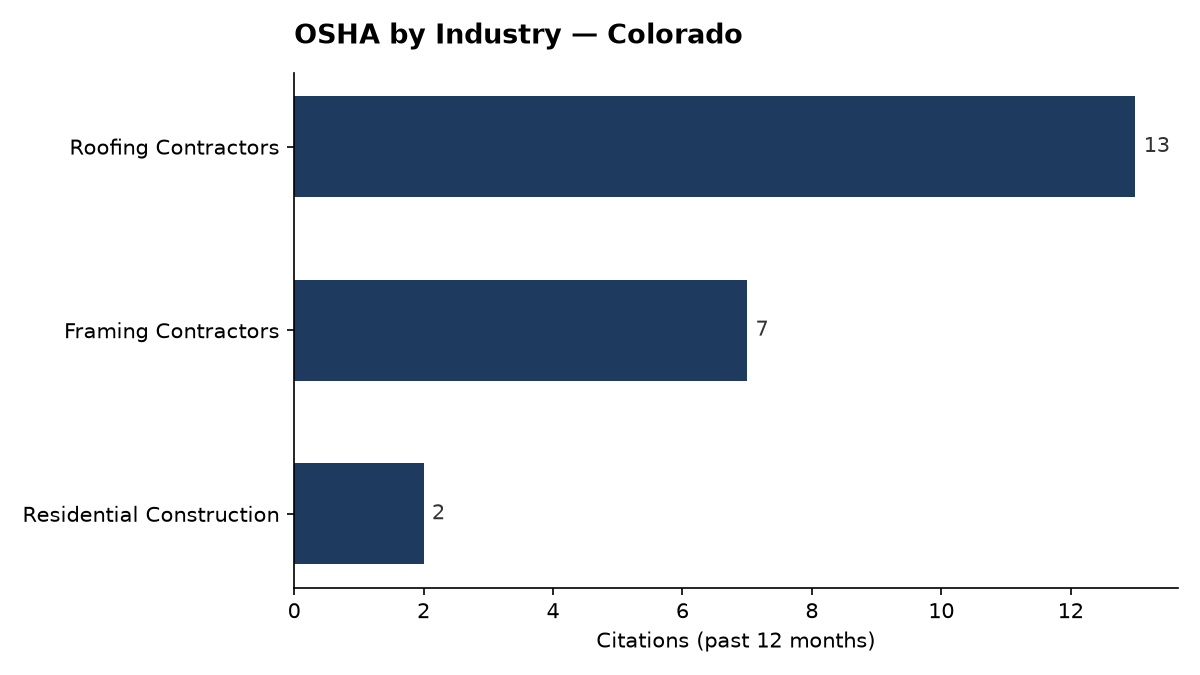
The industry split here isn’t subtle. Roofing contractors accounted for 13 of the state’s 27 citations — nearly half. Framing contractors were next with 7, and residential construction firms picked up 2 more. Together, roofing and framing make up roughly three-quarters of all fall protection enforcement activity in Colorado this year.
That concentration makes sense given the work. Roofers spend entire shifts at or above the 6-foot trigger height, often on pitched surfaces with limited anchor points, which is exactly the scenario 1926.501 was written for. Framing crews face similar exposure on open floor edges and unfinished wall assemblies before guardrails go up. Compliance officers in Colorado know where to look, and steep-slope residential roofing in particular draws routine, targeted inspections — not just complaint-driven ones.
What These Citations Actually Cost in Colorado
The dollar figures range widely depending on classification. At the lower end, Serious citations in this dataset landed at $4,965 — that’s what both Fix It 720 LLC in Castle Rock and Lakamp Construction Incorporated in Lone Tree were assessed, each cited under subsection B13 in late 2025. Repeat citations cost considerably more: Elmer Contractor LLC in Colorado Springs was hit with $8,513, Harper Development LLC in Arvada with $8,341, and Cruz Construction Corp. in Centennial with $5,000, all classified Repeat under the same B13 subsection.
Here’s the detail worth sitting with: the average penalty reduction between initial and final assessment in Colorado over this period was 15%. That gap exists because employers who engage — through the informal conference process, negotiation, or a formal contest — routinely get penalties adjusted downward. Employers who ignore the citation or miss deadlines typically pay the full initial number. For the specifics on how classification drives the final bill, see this breakdown of OSHA fall protection violations penalty amounts.
A $4,249 average penalty sounds manageable until you’re the one writing the check, and Repeat classifications can double that number or more. Before you decide whether to pay, contest, or negotiate, get a read from a Colorado OSHA defense attorney on what your specific citation actually supports.
Your 15 Working Days Start the Moment You Sign for the Citation
OSHA doesn’t send a reminder. From the date you receive the citation, you have 15 working days to file a Notice of Contest if you intend to dispute the classification, the penalty amount, or the abatement date. Miss that window and the citation becomes a final order — no appeal, no negotiation, no informal conference. That’s true whether the citation is for $4,965 or $8,513.
This deadline is also why the 15% average reduction seen in Colorado exists in the first place: it’s the result of employers who acted inside the window, not after it closed. If you’re unsure whether to contest, request an informal conference, or negotiate abatement terms, the process itself is explained in detail in this guide to how to contest an OSHA citation. But the practical first step is the same regardless of which path fits your situation.
Given how little time you have and how much a Repeat classification changes the math, the most useful thing you can do today is get a Colorado OSHA defense attorney to look at the actual citation language before your 15 working days run out.
Pull your citation paperwork, note the issuance date, and count forward to your deadline right now — not after you’ve decided what to do. Whether your crew was cited under B13 like the five Colorado examples above, or for a different subsection entirely, the classification and the calendar are the two things that determine your options from here.