
Data last updated: September 28, 2026
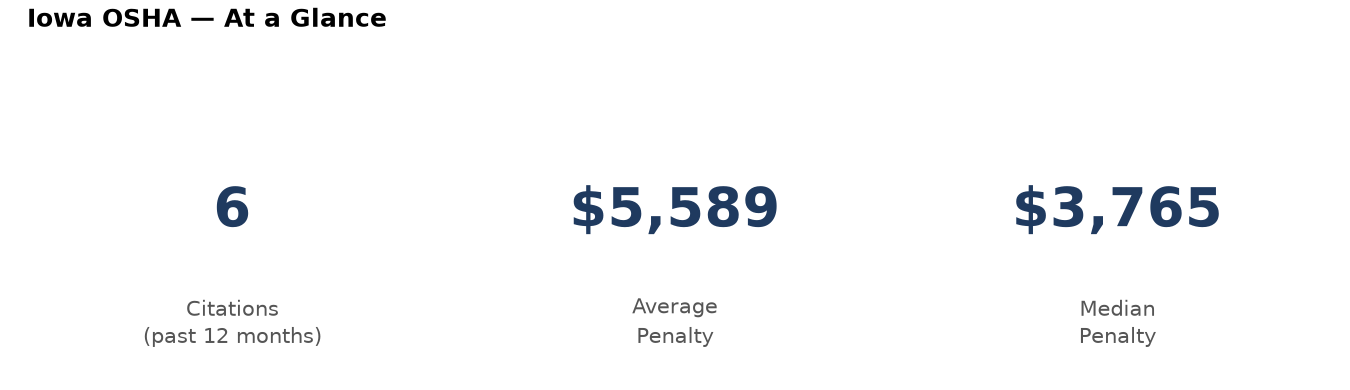
Iowa recorded just six fall protection citations under 1926.501 over the past 12 months, but do not read that small number as low risk. The average penalty was $5,589, the median was $3,765, and four of the six citations were classified as Serious — meaning OSHA determined the fall hazard could plausibly have caused death or serious physical harm. Des Moines was the city with the most citations, and specialty trade contractors accounted for four of the six cases.
If you have already received a citation letter, the numbers below matter less than the calendar sitting on your desk right now. Before you decide how to respond, it may be worth a short conversation with an Iowa OSHA defense attorney who handles these cases regularly.
What 1926.501 Actually Requires on an Iowa Roof or Deck
The standard behind every one of these citations, 1926.501, is OSHA’s core fall protection rule for construction. Stripped of the legal language, it says this: once a worker is exposed to a fall of six feet or more to a lower level, the employer has to do something concrete about it — install guardrails, deploy a safety net, or put the worker in a properly rigged personal fall arrest system. There is no gray area for waiting until the job gets busy or the crew is short-staffed. The obligation kicks in the moment someone steps onto an elevated surface without protection, and OSHA compliance officers look for exactly that moment when they show up on a site.
What trips up a lot of Iowa contractors is not ignorance of the rule but inconsistent application of it — guardrails on one section of a roof but not another, or a harness that is worn but not tied off to anything rated for the load. Citations get written for gaps, not just total absence of a system.
Specialty Trades Carry the Weight of Iowa’s Enforcement Activity
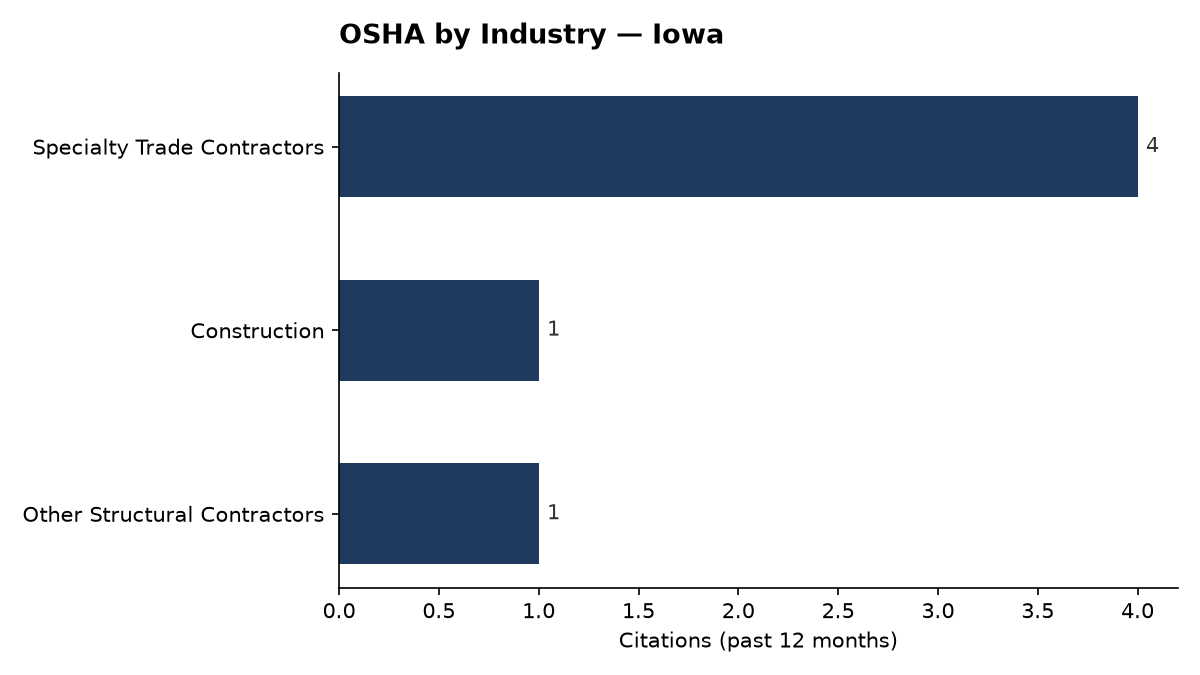
Of the six citations issued statewide, four went to specialty trade contractors — the roofers, mechanical installers, and finish crews who spend their workdays at height rather than on the ground. One citation went to a general construction firm and one to an other structural contractors business. That pattern is not unique to Iowa, but it is consistent: specialty trades are exposed to fall hazards on nearly every job, which means they show up disproportionately in OSHA’s enforcement data compared to trades that work mostly at grade.
The real cases bear this out. Brockway Mechanical & Roofing Company, Inc. in Des Moines was cited under subsection B10 for a Serious violation and penalized $14,895, issued February 20, 2026 — the largest penalty in this dataset. Mts Contracting, Inc., also in Des Moines, drew a $7,500 Other-than-Serious citation under B01 in April 2026. Klc Construction, LLC in Osceola was fined $4,220 for an Other-than-Serious violation cited under B04 II. Erger Construction LLC in Iowa City faced a $3,310 Serious citation under B11, issued in October 2025. And Fs Construction in Rock Valley was cited $2,365 under B10 for a Serious violation in December 2025. Every one of these is a specialty trade or construction firm working at height, and every citation traces back to the same underlying standard.
What a Citation Like This Actually Costs an Iowa Business
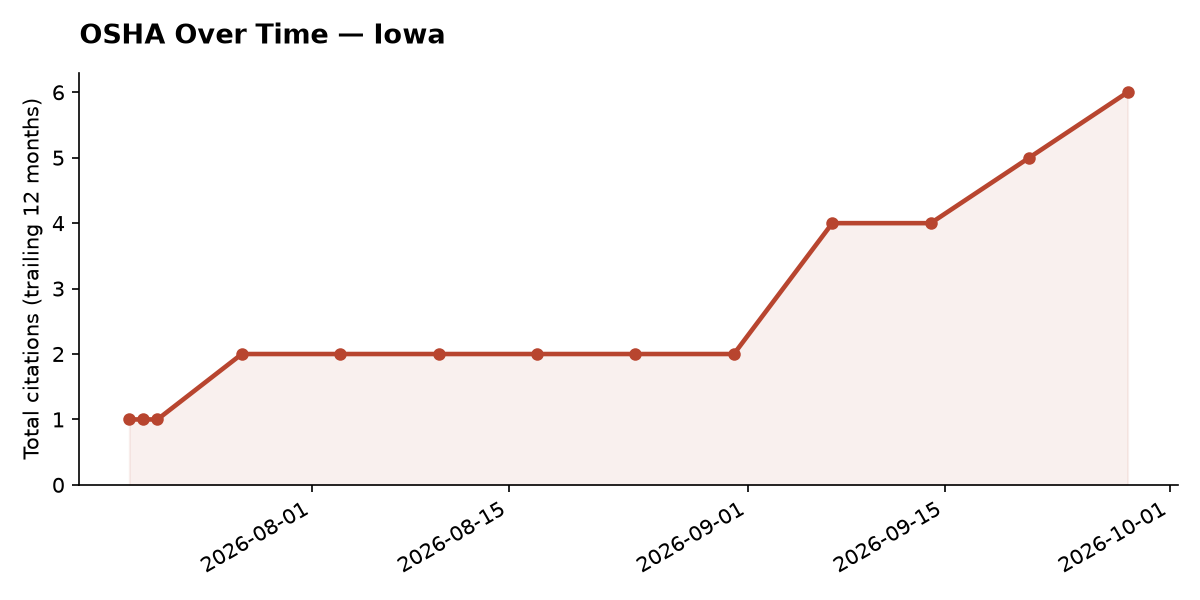
Six citations with an average of $5,589 might sound modest next to national headlines about six-figure OSHA fines, but that average hides real variation. The gap between Fs Construction’s $2,365 penalty and Brockway’s $14,895 shows how much weight the Serious classification and specific subsection cited can carry. Willful and Repeat violations, which did not appear in this particular Iowa dataset but do show up elsewhere, push penalties several times higher — so a Serious citation today can become something far more expensive if the same hazard recurs.
There is also a negotiation angle worth knowing about. Iowa’s average penalty reduction between initial and final assessment was 14 percent, which tells you that citations are not always set in stone once issued. Employers who engage — whether through informal conference, evidence submission, or formal contest — often end up paying less than the number on the original letter. Understanding how OSHA fall protection violations penalty amounts are calculated, and where there is room to push back, is usually the difference between accepting a number and reducing it.
That 14 percent reduction did not happen by accident in most cases — it happened because someone with legal experience in these matters pushed back on the record. If your citation just arrived, it’s worth talking to an Iowa OSHA defense attorney before you decide whether to pay, negotiate, or contest.
The 15-Day Window Nobody Should Ignore
Here is the part that catches people off guard: once you receive an OSHA citation, you have exactly 15 working days to file a Notice of Contest. Miss that window and the citation becomes a final order, penalty and all, with almost no path to challenge it afterward. Weekends and holidays don’t count toward your favor here — 15 working days moves fast, especially if you are also trying to fix the underlying hazard and keep a job running.
Filing a Notice of Contest does not commit you to a courtroom fight. It preserves your options while you and your attorney evaluate the citation, the classification, and whether the penalty reflects what OSHA can actually prove. Understanding how to contest an OSHA citation before that window closes is the single most important thing an employer facing a fall protection citation can do in the first two weeks.
If you’re inside that window right now, don’t wait for it to shrink further. Reach out to an Iowa OSHA defense attorney today and find out what your specific citation number, classification, and penalty actually mean for your business.
Iowa’s fall protection numbers are small compared to bigger construction states, but each of these six citations represents a real business, a real penalty, and in four cases, a Serious classification that OSHA does not hand out lightly. Whether your citation looks more like Fs Construction’s $2,365 case or Brockway’s $14,895 one, the clock started the day you received it — so figure out your next move now, not after the 15 working days are gone.