
Data last updated: September 28, 2026
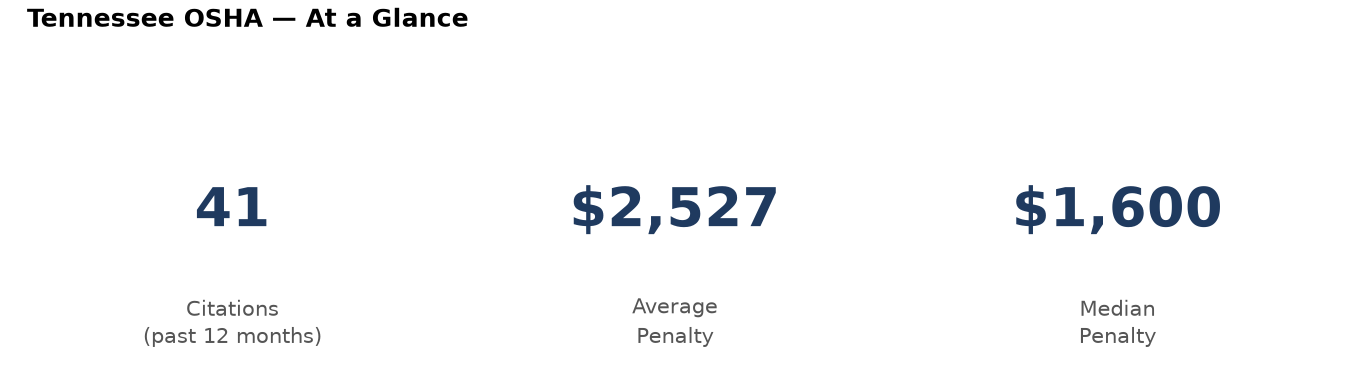
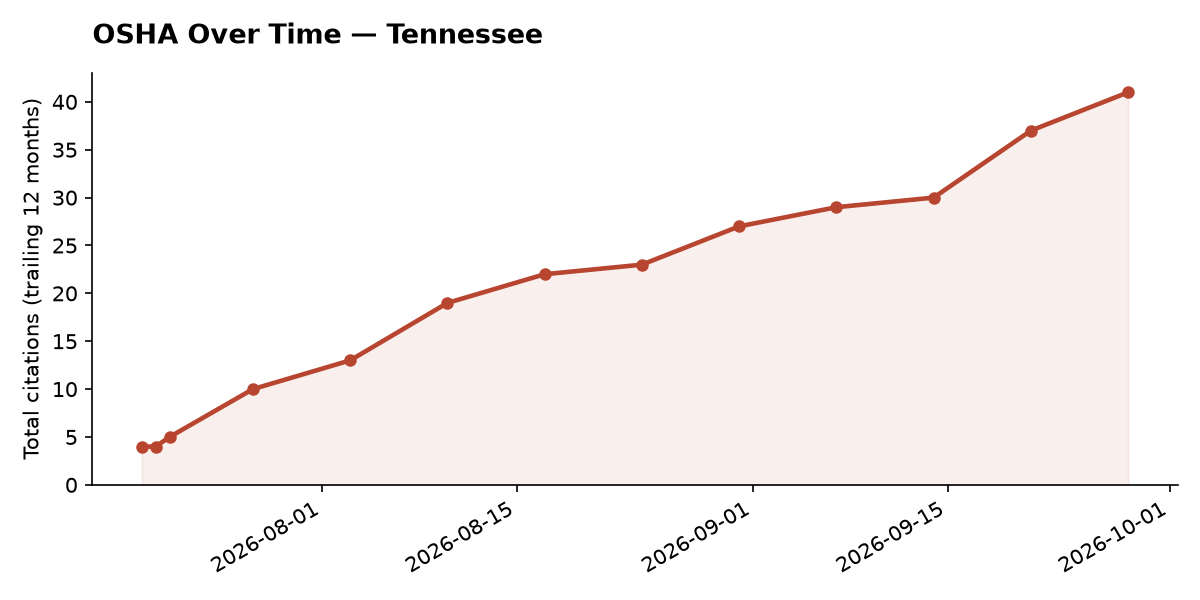
Over the past 12 months, Tennessee employers picked up 41 citations for fall protection violations, with penalties averaging $2,527 and a median of $1,600. Thirty-seven of those were classified Serious, three were Other-than-Serious, and one carried a Repeat designation — a category that pushes penalties sharply higher because OSHA has already flagged the employer for the same problem before. Chattanooga logged more of these citations than any other city in the state.
If you’re staring down a citation like this right now, the clock is already running. Talk to a Tennessee OSHA defense attorney before you decide how to respond — the wrong move in the first two weeks can cost you options later.
The Rule Behind Every One of These Citations: 1926.501
Nearly every citation on this list traces back to one standard: 1926.501, OSHA’s general fall protection rule for construction. The requirement is straightforward on paper — once a worker is six feet or more above a lower level, the employer has to provide protection using guardrails, safety nets, or a personal fall arrest system. There’s no gray area about whether protection is optional at that height; the only question OSHA inspectors ask is whether it was actually in place, properly rigged, and actually being used when they showed up.
In practice, that’s where things fall apart. A crew might own the right harnesses and lanyards but leave them in the truck for a five-minute task on a steep roof pitch. A guardrail system might be installed on three sides of an opening and skipped on the fourth. Inspectors don’t grade on effort — they document what they see, and what they saw in Tennessee led to 41 citations this year.
Roofing and Framing Crews Carry Most of Tennessee’s Citation Load
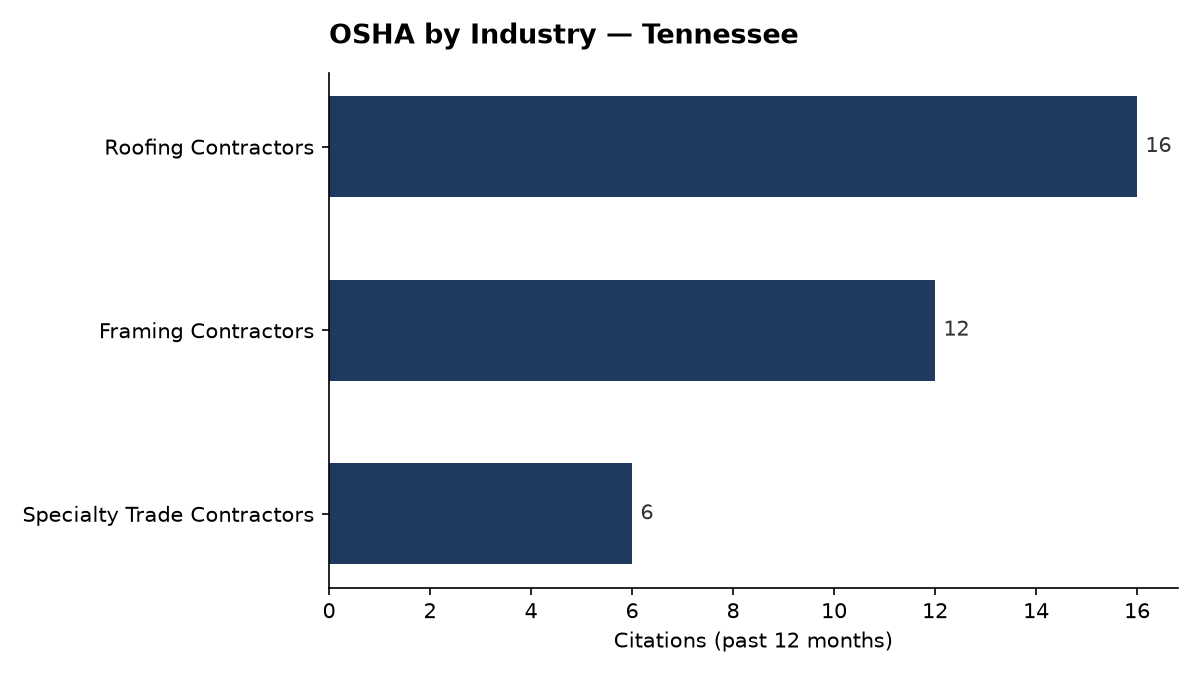
The industry breakdown here isn’t subtle. Roofing contractors alone accounted for 16 of the state’s 41 citations, followed by framing contractors with 12, and specialty trade contractors with 6. Together, roofing and framing make up more than two-thirds of all the fall protection citations issued in Tennessee this year.
That concentration makes sense given the nature of the work. Roofers and framers spend entire shifts at height, often on surfaces that shift, slope, or lack any built-in edge protection. Add tight deadlines and crews rotating between jobsites, and fall protection gear becomes the thing that gets skipped when a task looks quick or the next section of roof is just a few feet away. OSHA knows this, which is exactly why roofing and framing crews draw disproportionate inspection attention in this state.
The named citations from the past year reflect that pattern. Best Choice Roofing Holdings, LLC in Sparta was cited for a Serious violation and penalized $7,000, issued in December 2025 under subsection B10. Bajo Sol Construction LLC in Pigeon Forge picked up a $5,400 Serious citation under subsection B11 in May 2026. Miguel Flores in Gallatin received a $5,400 Serious citation under subsection B01 in July 2026. Lee Company in Nashville was cited $4,500 under subsection B04-I in February 2026. And Adolfo Torres in Kingsport received the state’s Repeat citation, carrying an $8,000 penalty, issued in February 2026 — a clear illustration of how much more expensive a second offense becomes.
What These Numbers Mean for Your Wallet
An average penalty of $2,527 sounds manageable next to some of the six-figure headlines you see in national OSHA coverage, but that average hides real variation. The Repeat citation against Adolfo Torres came in at $8,000 — more than three times the state average — precisely because Repeat violations are treated as a pattern, not a one-off mistake. If you’ve been cited before for anything similar, expect the next penalty to land much higher than the median.
There’s another number worth sitting with: Tennessee’s average penalty reduction between initial and final assessment is just 3%. That’s low. It means that once OSHA issues a citation here, the amount rarely moves much on its own, whether through informal negotiation or the passage of time. Waiting it out, or hoping the number softens without a formal response, is not a strategy that Tennessee’s own data supports. For a full breakdown of how these numbers are calculated and what drives them up or down, see this guide to OSHA fall protection violations penalty amounts.
If a 3% average reduction is roughly what you can expect without pushing back, it’s worth finding out what you could get with proper representation. A Tennessee OSHA defense attorney can review your specific citation and tell you honestly whether contesting makes sense for your case.
You Get 15 Working Days — Then the Citation Stands
Here’s the part employers most often get wrong: OSHA gives you only 15 working days from the date you receive a citation to file a Notice of Contest. Miss that window, and the citation becomes a final order automatically — no hearing, no negotiation, no second chance. The penalty amount and the violation classification (Serious, Repeat, whatever it is) become permanent parts of your record.
Fifteen working days is not a lot of time to pull together documentation, decide whether your safety program actually supports your position, and figure out whether the classification OSHA assigned is accurate. Companies that wait until day 12 or 13 to start looking for help often run out of runway before they’ve even had a real conversation about their options. The process itself, including what a formal contest actually involves and what it can and can’t change, is laid out in this guide on how to contest an OSHA citation.
Given that Tennessee’s own numbers show penalties rarely shrink on their own, the smartest move is to get a professional opinion early — while you still have the full 15 working days to act on it, not the last 48 hours.
If you’ve received a fall protection citation anywhere in Tennessee, from Chattanooga to Kingsport to Nashville, don’t let the clock run out while you decide what to do. Reach out to a Tennessee OSHA defense attorney now and find out exactly where you stand before your contest window closes.