Data last updated: September 28, 2026
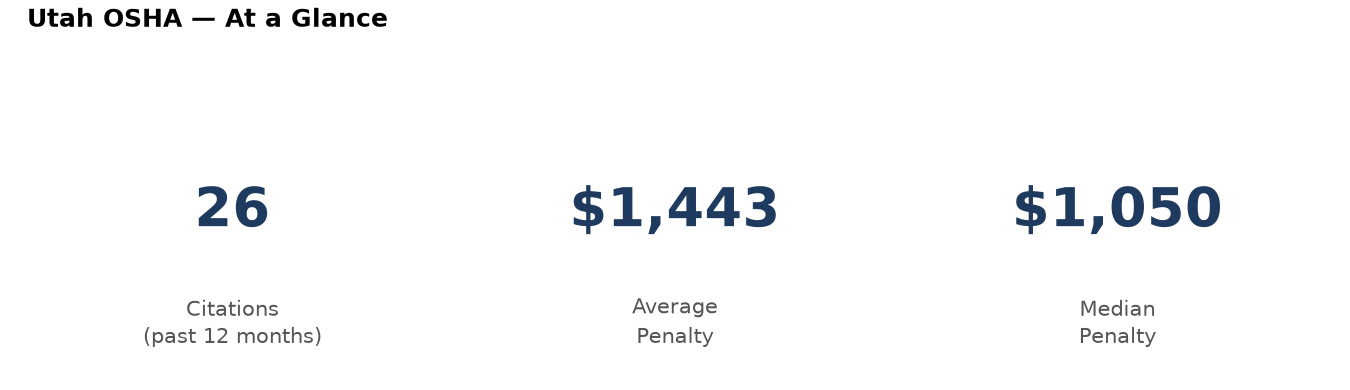
Twenty-six fall protection citations went out to Utah employers in the past 12 months, every single one classified as Serious. The average penalty landed at $1,443, with a median of $1,050 — not enormous numbers compared to some states, but enough to sting a small framing or roofing outfit, and enough to trigger a legal process most contractors have never dealt with before.
If you have a citation in hand right now, the clock is already running. Talk to an Utah OSHA defense attorney before you decide how to respond — you have only 15 working days to contest it, and that window closes fast.
Why Utah Inspectors Keep Writing Up the Same Standard
Every one of these 26 citations traces back to the fall protection standard known as 1926.501. In plain terms, this rule says that once a worker is exposed to a fall of roughly six feet or more on a construction site, the employer has to do something concrete about it — guardrails, safety nets, or a personal fall arrest system. It’s not a suggestion or a best practice. It’s the baseline OSHA expects on every roof, floor opening, and elevated platform in the state.
What stands out in Utah’s numbers is that all 26 citations were coded Serious, with none marked Willful or Repeat. That matters. Serious violations mean OSHA determined there was a real probability of death or serious injury, but it stops short of alleging the employer knowingly ignored the rule or had been cited for the same thing before. That distinction keeps penalties on the lower end of the scale compared to states where Willful and Repeat findings push fines into five figures — but Serious still carries real financial and legal consequences, and a pattern of Serious citations can turn into a Repeat finding fast if it happens again.
Framing, Roofing, and Specialty Trades Carry the Weight
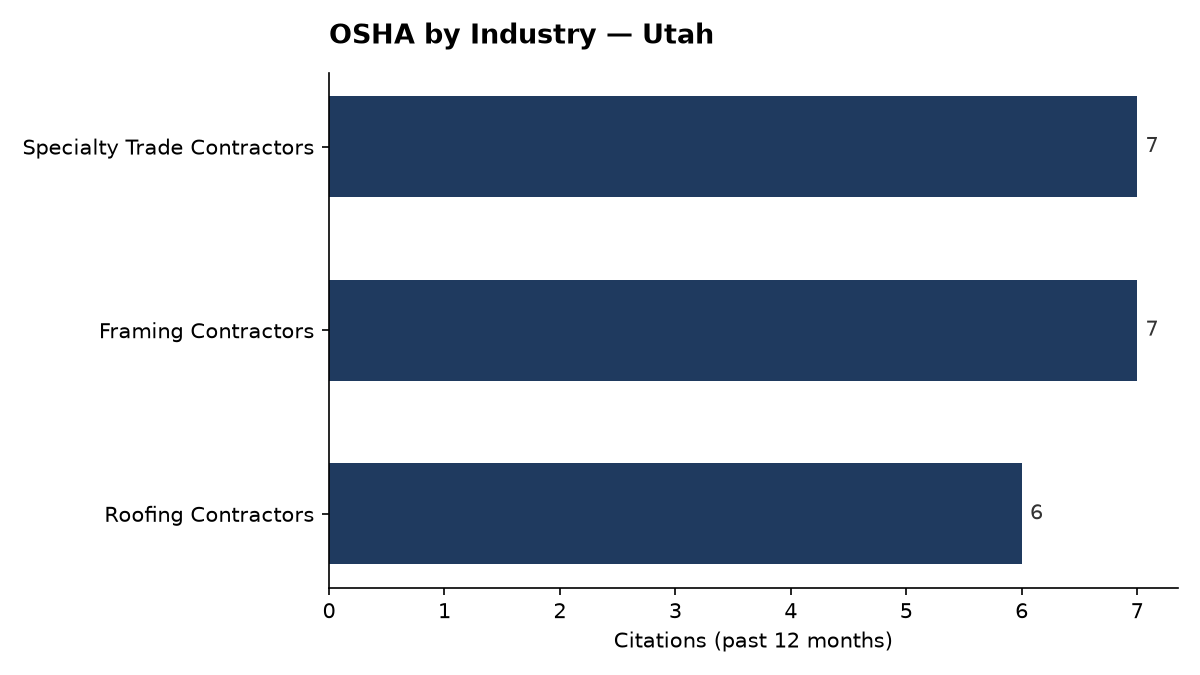
Three groups account for almost all the citations in Utah. Specialty trade contractors picked up 7 citations, framing contractors also picked up 7, and roofing contractors weren’t far behind at 6. Together that’s 20 of the 26 citations issued statewide — a clear signal that fall protection enforcement in Utah is concentrated on crews doing elevated work: framing walls and trusses, tearing off and installing roofs, and the broad category of specialty trade contractors that includes everything from siding to gutter installation to exterior finish work.
The reason is straightforward. These trades put workers at height constantly, often for short stretches on residential jobs where crews move fast and tie-off gets treated as optional. OSHA knows this, and Utah’s enforcement pattern reflects it — inspectors are showing up on framing and roofing sites more than anywhere else in the construction sector.
What These Citations Actually Cost in Utah
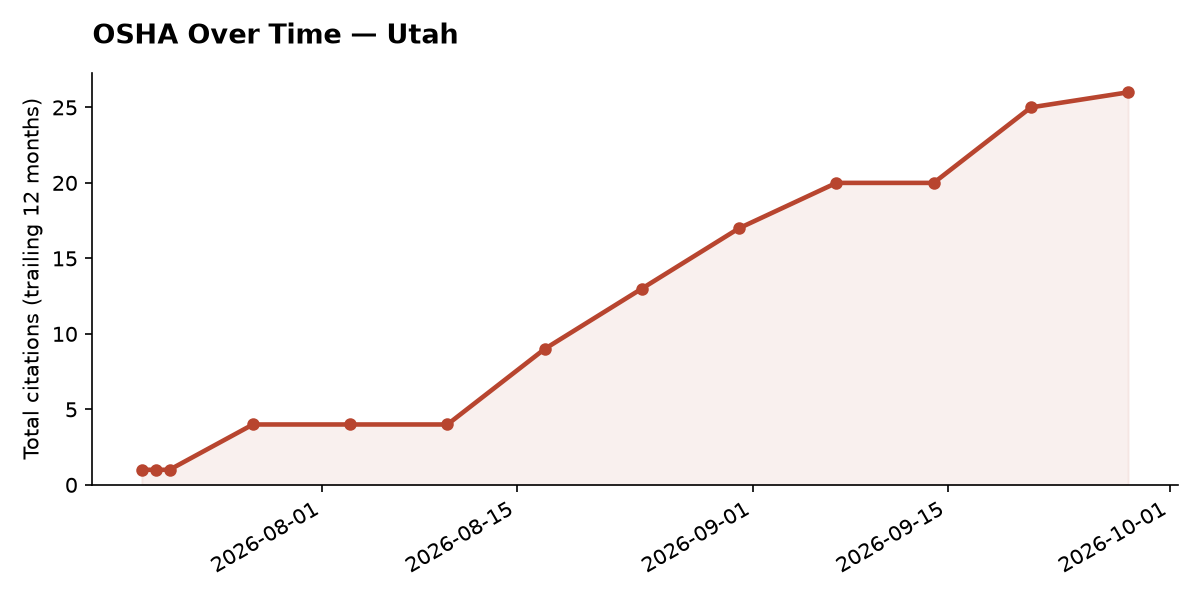
The dollar figures are modest by national standards, but they add up, and they’re negotiable more often than employers assume. Utah’s average penalty reduction between the initial citation and the final settled amount runs about 30 percent — meaning close to a third of the original fine typically gets negotiated away, usually with legal representation involved. That’s a meaningful gap, and it’s one reason employers who fight back or negotiate tend to come out ahead of those who simply pay the initial number. For more detail on how these figures get calculated in the first place, see this breakdown of OSHA fall protection violations penalty amounts.
Real examples from the past year show the range. Builder Services Group Inc in Salt Lake City was cited $4,200 for a Serious violation under 19260501 B04 I, issued October 9, 2025. Viotell Roofing Solutions Inc in Alpine faced a $3,490 penalty under the same subsection, issued May 26, 2026. Dream House Construction LLC in St George and Tom Stuart Construction, Inc. in Lehi were each cited $2,800 under subsection B01, issued December 17, 2025 and February 12, 2026 respectively. And Swift Roofing LLC in Layton was cited $2,100 under subsection B11, issued December 16, 2025. Salt Lake City itself leads the state in total citation volume, which tracks with its concentration of active commercial and residential construction.
Before you decide whether $2,800 or $4,200 is worth paying outright or worth contesting, it’s worth getting a professional read on your specific citation. an Utah OSHA defense attorney can tell you within a short conversation whether your case has room to negotiate, and whether the underlying facts even support the classification OSHA assigned.
Your Move If a Citation Just Arrived
OSHA gives you exactly 15 working days from the date you receive a citation to file what’s called a Notice of Contest. Miss that window and the citation becomes a final order — no appeal, no negotiation, penalty locked in. That’s a hard deadline, not a guideline, and it applies whether your citation was $1,050 or $4,200.
Before that window closes, you want to understand your options. Some employers negotiate an informal settlement conference with the local OSHA area office. Others file a formal contest and litigate. Which path makes sense depends on the specifics of your citation — the cited subsection, the evidence the inspector documented, and whether your safety program had gaps that are easy to fix versus gaps that suggest a bigger compliance problem. This guide on how to contest an OSHA citation walks through the mechanics, but the timeline is tight enough that reading alone won’t get you there in time.
If you’re staring at a citation from a Utah OSHA area office right now, don’t wait until day 14 to make a decision. Reach out to an Utah OSHA defense attorney today, while you still have time to actually use the options available to you.