

Data last updated: September 28, 2026
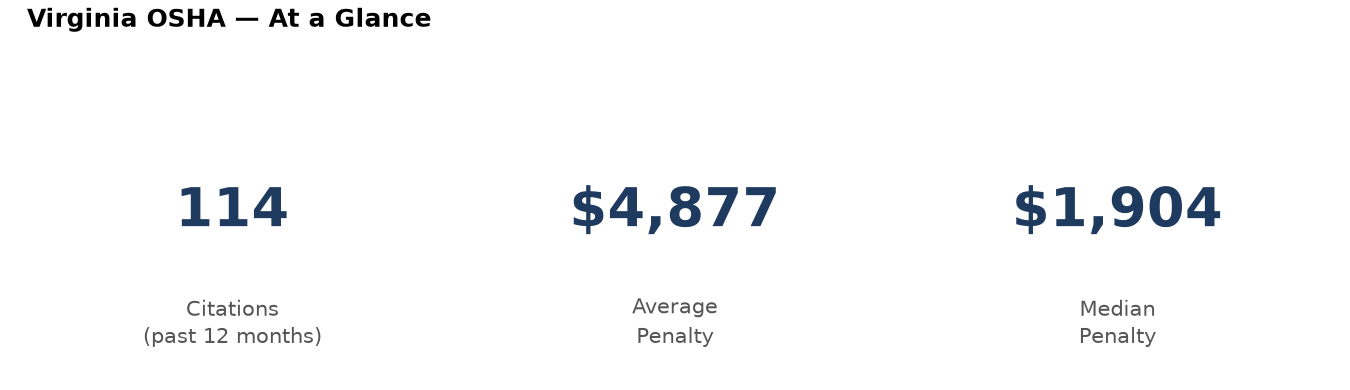
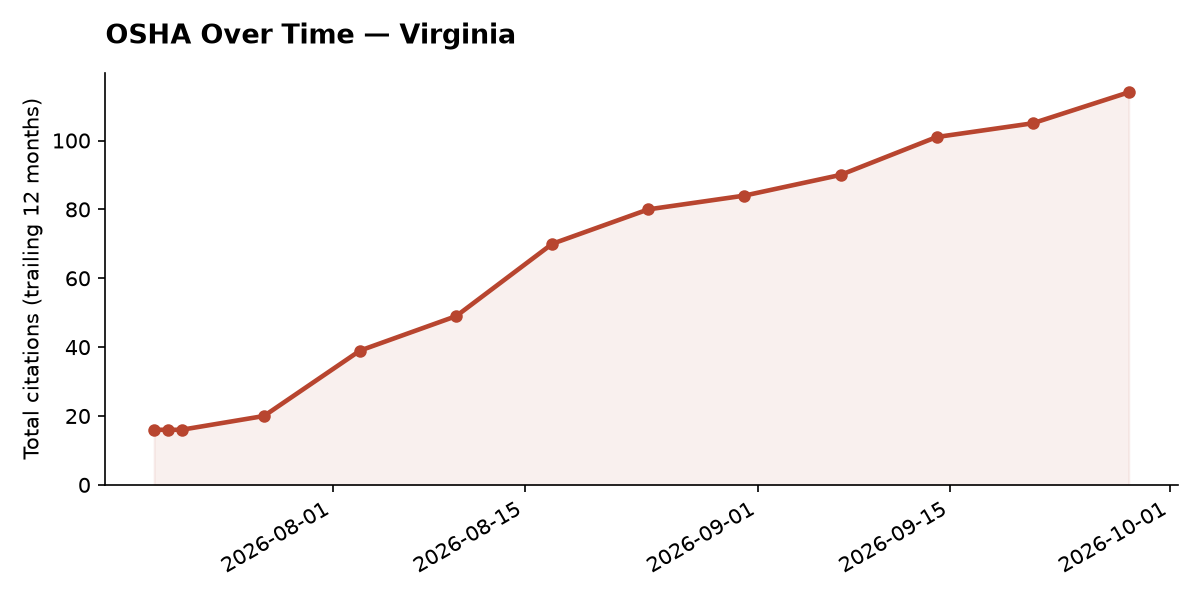
Virginia employers picked up 114 fall protection citations under 1926.501 over the past 12 months, with penalties averaging $4,877 and a median of $1,904. Richmond had more of these citations than any other city in the state, and roofing and framing contractors accounted for more than half of all the cases on record. Four of the 114 citations were classified as Willful and four as Repeat — the two categories that carry the steepest penalties and the most scrutiny from OSHA.
If you or your company just received a fall protection citation in Virginia, talk to a Virginia OSHA defense attorney before you respond to OSHA. You have a limited window to act, and what you say now can shape the outcome.
What OSHA Actually Requires Once Workers Are Off the Ground
The rule behind nearly all of these Virginia cases, 1926.501, sets the baseline for protecting construction workers from falls. Once someone is working at a height of roughly six feet or more above a lower level, the employer has to put something between that worker and a fall — guardrails, safety nets, or a personal fall arrest system rigged and used correctly. It sounds simple in writing. In practice, OSHA inspectors find gaps constantly: harnesses on site but not worn, anchor points that would not hold a fall, guardrails missing on a single section of a roof edge, or crews working an open floor with no protection at all while materials get staged. Any one of those gaps is enough to trigger a citation, and inspectors do not need to see an actual fall happen — exposure to the hazard is the violation.
Roofers and Framers Carry the Weight of Virginia’s Enforcement Numbers
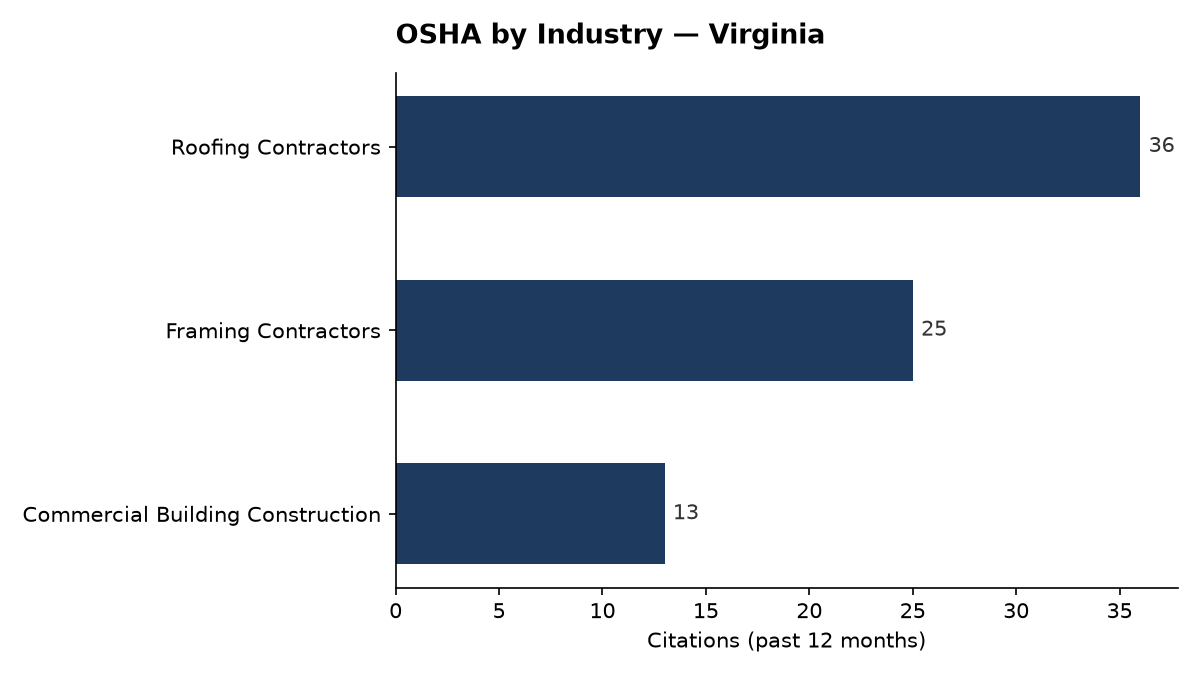
Of the 114 citations, 36 went to roofing contractors and 25 to framing contractors, with commercial building construction crews picking up another 13. That pattern is not a coincidence. Roofing and framing work puts people at unprotected edges and open sides for hours at a stretch, often on smaller crews without a dedicated safety lead on-site every day. Commercial building projects show up too, usually tied to structural steel, floor openings, or leading-edge work during the framing phase before permanent guardrails go in. If your company operates in any of these trades in Virginia, you are working in the segment OSHA inspectors are most likely to walk onto without an appointment.
The Real Cost Spread: From a Few Thousand Dollars to Six Figures
The average Virginia fall protection penalty sits at $4,877, but that number hides a wide range. The median penalty of $1,904 tells you that a lot of citations resolve at the lower end — smaller, Serious-level violations tied to a single crew or a single missed anchor point. Then there are the outliers. Ninety-seven of the 114 citations here were classified Serious, which is the standard tier for a hazard that could cause death or serious injury. But four were Willful and four were Repeat, and those are the ones that move the average. Consider Ion Developer, LLC in Hamilton, cited $81,435 as a Repeat violation under subsection B13, or Loredo Construction LLC in Roanoke, hit with a $75,000 Willful citation under the same subsection. Bobby Boothe Roofing Inc. in Abingdon and Leonard Roofing LLC in Meadowview each drew $37,500 Willful citations, and Seashore Contractors LLC in Richmond was cited $22,500, also Willful. Willful findings mean OSHA concluded the employer knew about the hazard, or showed plain indifference to it, and that classification alone can multiply a penalty several times over compared to a first-time Serious citation. Worth noting: the average gap between initial and final penalty amounts in Virginia runs about 11 percent, which means negotiation and legal pushback do move the number, but only if you engage the process instead of just paying the first bill. For more detail on how these figures are calculated, see this breakdown of OSHA fall protection violations penalty amounts.
A Willful or Repeat classification on your citation is not something to sit on. Get a Virginia OSHA defense attorney reviewing your paperwork while your options are still open.
The Clock Starts the Day the Citation Arrives
Once OSHA issues a citation, you have exactly 15 working days to file a Notice of Contest. Miss that window and the citation — along with the proposed penalty — becomes a final order automatically, with almost no room left to argue classification, reduce the fine, or push back on the facts. Fifteen working days moves faster than most people expect, especially once you account for internal review, insurance conversations, and figuring out who on your team is even authorized to respond on the company’s behalf. This is the single most important deadline in the entire process, and it applies whether your citation was for $1,904 or $81,435. The mechanics of filing, what it does and does not commit you to, and how it interacts with informal settlement conferences are covered in this guide to how to contest an OSHA citation. But the practical point is simpler: don’t wait until day 14 to start figuring out your options.
With 15 working days on the clock, the smart move is to get a Virginia OSHA defense attorney involved now — not after the deadline has passed. Talk to a Virginia OSHA defense attorney and find out what your citation actually means for your business.
Pull your citation paperwork, check the issue date, and count forward — that deadline is not negotiable once it passes. Whether your case looks like the smaller Serious citations that make up most of Virginia’s 114, or one of the Willful and Repeat cases carrying five- and six-figure penalties, the next two weeks are the window where your response actually matters.