
Data last updated: September 21, 2026
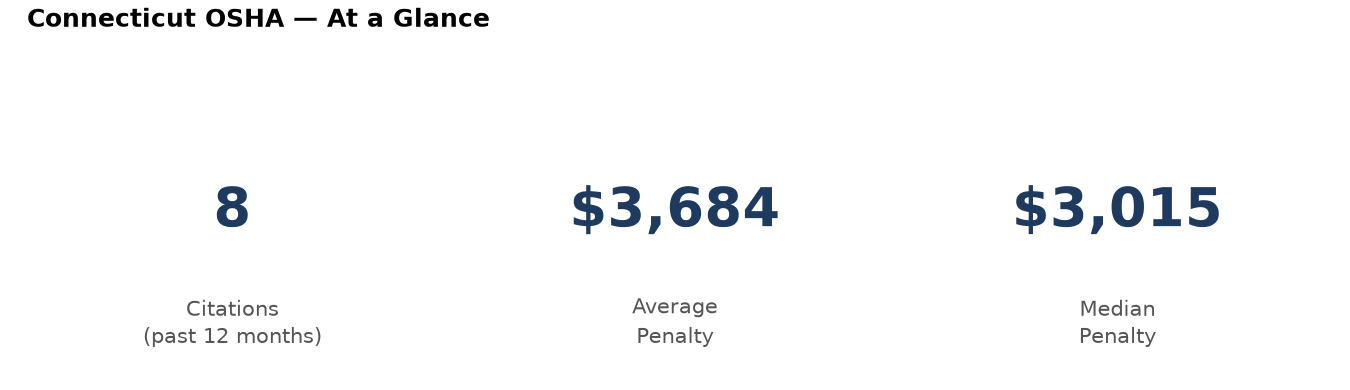
Connecticut employers racked up 8 ladder-related OSHA citations over the past 12 months, with penalties averaging $3,684 and a median fine of $3,015. That might sound like a small number statewide, but six of the eight citations were classified as Serious, and the dollar amounts on individual cases ranged as high as $11,585. If you’re one of the businesses holding a citation right now, the number that matters most isn’t the state average — it’s the one printed on your own paperwork, and the clock that started ticking the day it arrived.
If you’ve been cited or you suspect one is coming, don’t wait to see how it plays out. Talk to a Connecticut OSHA defense attorney now, while you still have options for negotiating the penalty or challenging the finding.
The Rule Behind Every One of These Cases: 1926.1053
Every citation on this list traces back to a single OSHA standard, 1926.1053, which lays out the ground rules for ladder use on construction sites. In plain terms, it covers how a ladder has to be set up before anyone climbs it, how far it needs to extend past the landing surface at the top, how much weight it’s rated to hold, and the requirement that damaged or compromised ladders get pulled from service instead of used anyway. It also addresses the everyday habits inspectors watch for — things like carrying tools in a way that blocks a three-point grip, or using the top step of a stepladder as a work platform. None of this is exotic engineering. It’s basic setup discipline, which is exactly why inspectors find violations so easily when they show up on a job site.
Roofers Account for Most of Connecticut’s Cases
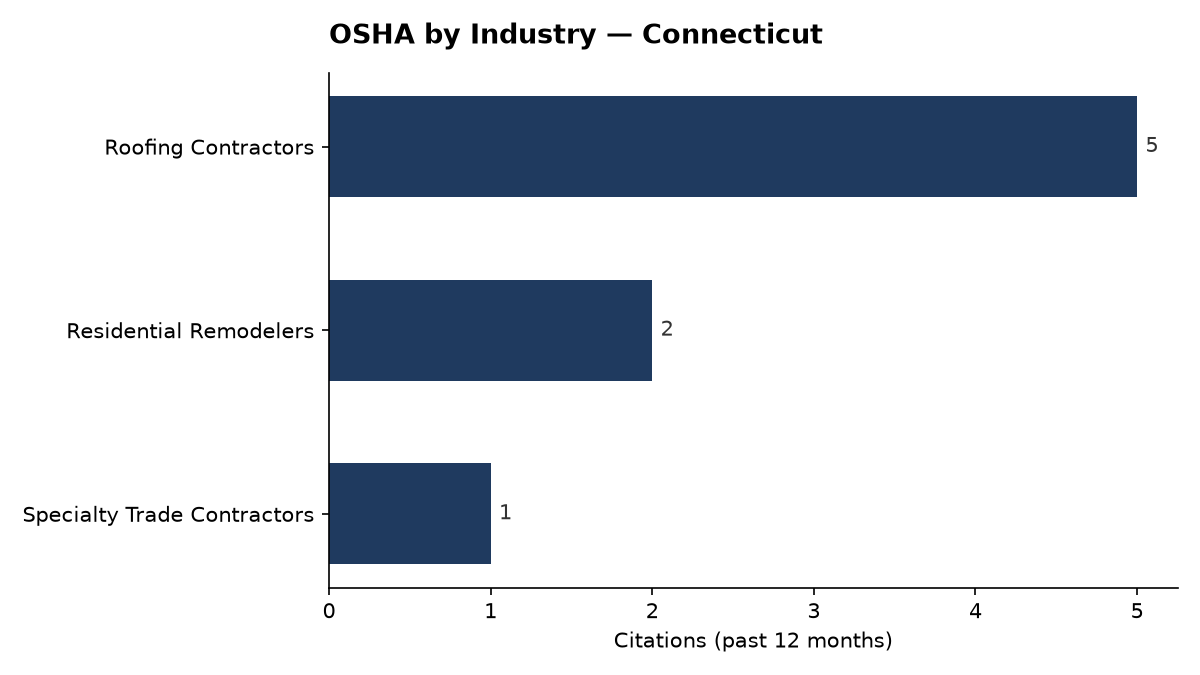
Of the eight citations issued statewide, five went to roofing contractors, with residential remodelers picking up two more and specialty trade contractors rounding out the list with one. That concentration isn’t a coincidence. Roofing work means constant ladder access to rooflines, gutters, and edges, often on steep or uneven ground, and often on tight residential lots where there isn’t a lot of room to set a ladder at the proper angle. Ridgefield turned up as the city with the most citations in this period, and one of the state’s highest-dollar cases, a $5,958 penalty against Jay Builders, Llc, came out of that town. Residential remodeling crews face similar exposure any time a job involves exterior work above the first floor, which explains why they show up as the second-largest group here.
What a Ladder Citation Actually Costs in Connecticut
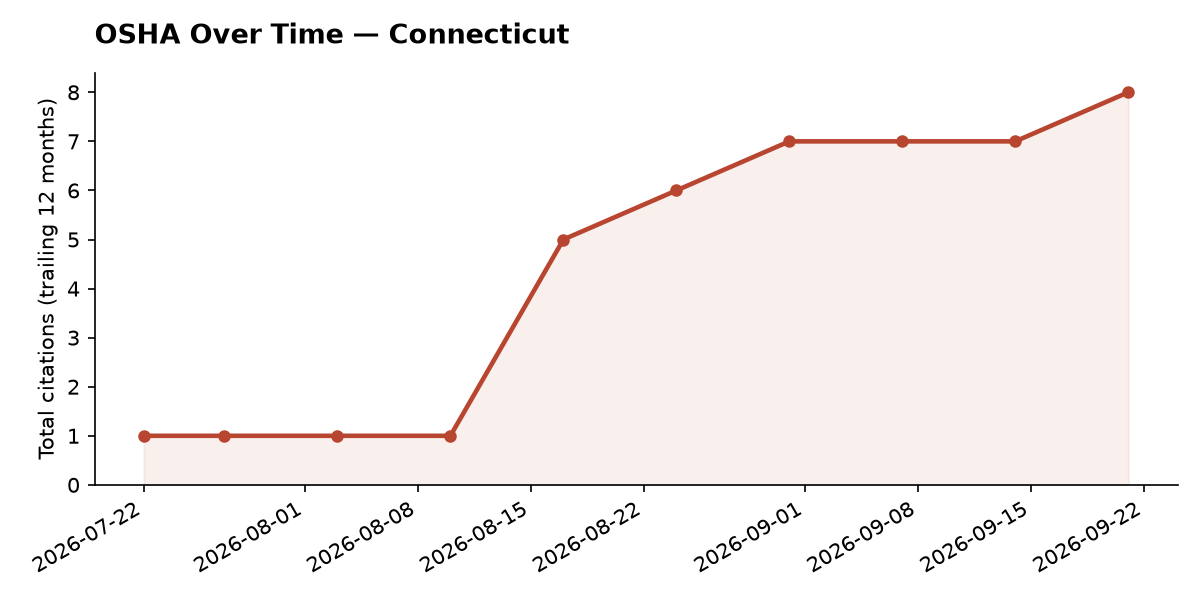
The $3,684 average across these eight cases hides a wide spread. Seci Construction Inc. in Hartford was hit with an $11,585 penalty, the largest in this dataset, tied to a Serious violation cited under section B01 and issued in April 2026. Jay Builders, Llc in Ridgefield followed at $5,958 for a Serious violation under B05(I), also issued in April 2026. Santos Construction Group in Pawcatuck was fined $3,972 for a Serious citation issued in September 2025, Chacon Roofing, Llc in East Haven paid $3,547 for a Serious violation issued in February 2026, and Edison Construction Llc in West Hartford was cited $2,483, also Serious, issued in November 2025. Six of the eight citations statewide carried the Serious label, meaning OSHA determined there was a real probability of serious injury or death tied to the hazard — that classification is a big part of why the penalties in this group run higher than a typical Other-than-Serious finding.
One more number worth knowing: penalties in this dataset were reduced by an average of 8% between the initial citation and the final resolved amount. That’s not a guarantee, and it’s a modest number compared to what’s possible in some negotiated settlements, but it shows that the amount on your citation letter is a starting point, not necessarily the final bill. Whether that number moves in your case depends heavily on the specifics of the citation and how it’s handled. For more on how these figures get calculated in the first place, see this breakdown of OSHA ladder violations penalty amounts.
Before you decide whether to pay, negotiate, or push back, get a second opinion from someone who handles these cases regularly. A Connecticut OSHA defense attorney can look at your citation and tell you, honestly, whether it’s worth contesting.
The 15-Working-Day Window You Can’t Afford to Miss
Once a citation is issued, federal rules give you exactly 15 working days to file a Notice of Contest. Miss that window and the citation becomes a final order — no appeal, no negotiation, no reduction, regardless of whether you think the finding was fair. That deadline moves fast, especially if you’re also dealing with correcting the hazard, managing a crew, and running the rest of your business. This guide on how to contest an OSHA citation walks through the mechanics of filing, but the short version is: don’t sit on the letter. Even if you ultimately decide to pay rather than fight, you want that to be an informed decision made within the window, not a default that happened because time ran out.
If the clock is already running on your citation, don’t spend those 15 days guessing. Reach out to a Connecticut OSHA defense attorney today and find out what your realistic options actually look like before the deadline closes them off.
Whatever industry you’re in, the fastest way to protect your business right now is to get the citation in front of someone who reads these every week, not just once.