

Data last updated: September 28, 2026
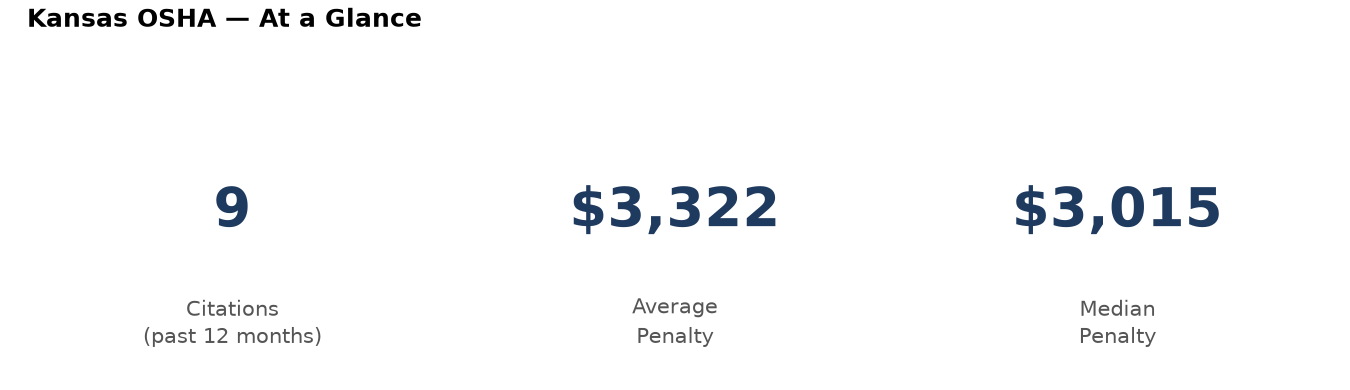
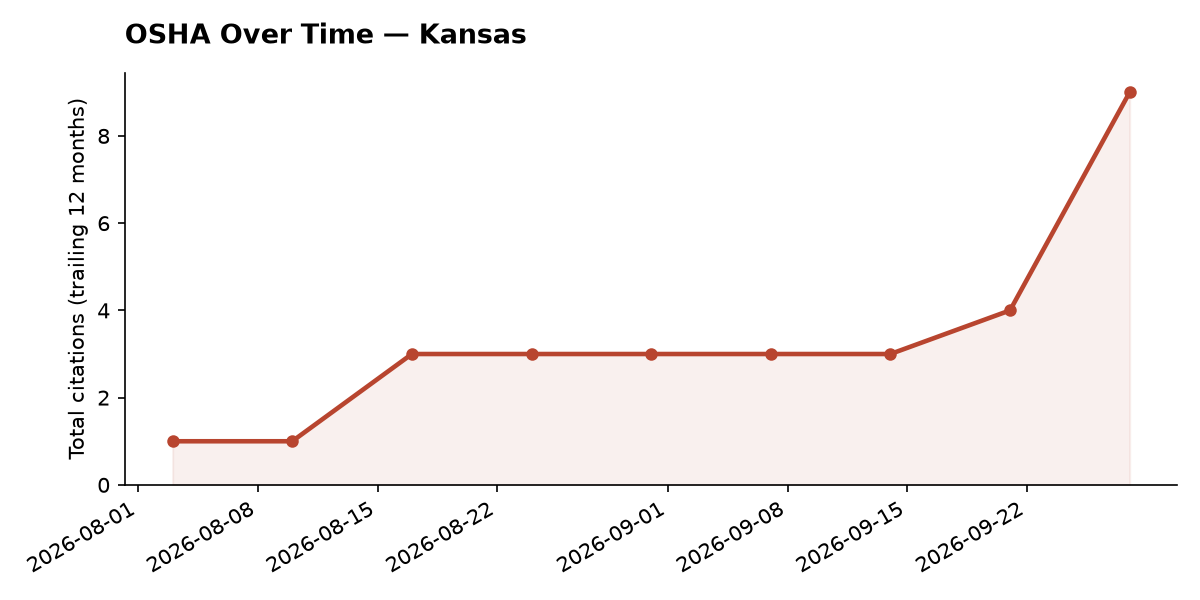
Kansas OSHA activity logged just 9 ladder-related citations over the past 12 months, but don’t read that small number as low risk. Every single one was classified as Serious, the average penalty landed at $3,322, and Wichita alone accounted for several of the cases. If you build or repair roofs in this state, the odds of a ladder citation are higher than you might think.
If you’ve already received a citation, the clock is running. Federal rules give you only 15 working days from receipt to file a Notice of Contest, and once that window closes, the penalty is locked in. Talking to a Kansas OSHA defense attorney before that deadline passes is the single most useful step you can take right now.
What the ladder standard actually demands on a Kansas jobsite
Every one of these citations traces back to the 1926.1053 standard, OSHA’s general rulebook for ladder use in construction. It’s not one narrow rule — it’s a bundle of requirements covering how a ladder has to be set up, how far it needs to extend past a landing point, how much weight it’s rated to carry, whether damaged or jury-rigged equipment can be used at all, and how workers are expected to climb and position themselves while using it.
In practice, inspectors are usually looking for the basics: a ladder that doesn’t extend the required distance above the roofline, a ladder set at the wrong angle, one with a broken rung or split rail still in service, or one being used to carry loads beyond its rating. These aren’t exotic violations. They’re the kind of thing that happens on a normal Tuesday when a crew is moving fast and nobody stops to check the equipment before it goes up.
Roofing crews dominate the Kansas citation list
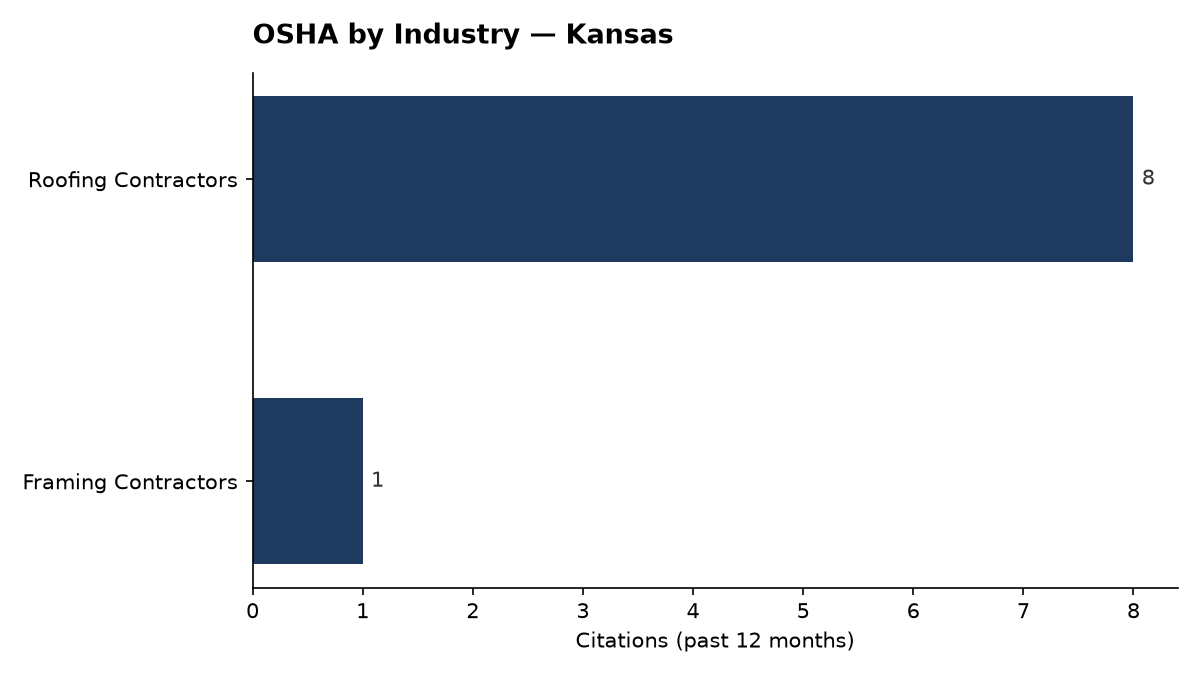
The industry breakdown here is about as lopsided as it gets: roofing contractors accounted for 8 of the 9 citations, with framing contractors picking up the other one. That’s not a coincidence. Roofing work depends almost entirely on ladder access — crews are going up and down all day, often carrying shingles, tools, or debris, and the ladder itself sits on uneven ground or against a fascia that isn’t always square. Wichita, identified as the city with the most citations in this dataset, has a dense concentration of roofing activity, which lines up directly with why it shows up so often in these records.
Framing crews use ladders too, but less continuously, which is likely why they show up far less in the numbers. If your business touches roofs in any capacity, this is the exposure area to focus your safety audit on first.
What a citation actually costs a Kansas contractor
The numbers break down like this: the average ladder violation penalty in Kansas sits at $3,322, with a median of $3,015 — meaning most cases cluster tightly around the $3,000 mark rather than skewing toward a few outliers. All 9 citations in this period were coded Serious, which is the mid-tier classification; it’s a step below Willful or Repeat, but it still carries real financial weight and stays on your OSHA history.
Recent examples make this concrete. Rg Built Llc in Overland Park was cited for $4,965 under 19261053 B01, issued in July 2026. In Wichita, Jenni Hernandez Mairena and Allan David Martinez Matamoros were each cited $3,547 under the same subsection, issued about three days apart in late March 2026. Flawless Roofing & Construction Llc, also in Wichita, was cited $3,015 in September 2025. And Israel Ayon Soto in Prairie Village faced a $2,979 penalty in April 2026. Every one of these was tagged Serious under 19261053 B01 — the same core provision showing up again and again.
One more figure worth paying attention to: penalties in Kansas have historically been negotiated down by an average of 12% between the initial citation and the final settlement. That’s not automatic, and it doesn’t happen because OSHA feels generous — it happens because employers or their OSHA ladder violations penalty amounts get formally challenged or negotiated. Simply paying the initial number without pushing back means leaving that reduction on the table.
A citation in the $3,000-$5,000 range might look manageable on paper, but it compounds if you get hit again, and it becomes part of your inspection history. Before you decide the fastest path is just to pay it, talk to a Kansas OSHA defense attorney — a short consultation costs far less than the average penalty and can materially change the outcome.
Your move once the citation letter arrives
The moment you sign for a citation, a 15-working-day countdown starts. Miss it, and you lose the right to contest anything — the classification, the penalty amount, even factual errors in the inspector’s report. That’s true whether you plan to fight it outright or just negotiate a lower figure.
The process for how to contest an OSHA citation starts with a written Notice of Contest sent to the area office, but the strength of your case depends heavily on documentation: photos of the ladder in question, maintenance records, training logs, and witness statements from the crew on site that day. Gathering that evidence quickly, while memories are fresh and equipment hasn’t been discarded, matters more than people expect.
Given that every Kansas ladder citation in this dataset was Serious rather than a lower-tier Other classification, and given the real dollar amounts attached to names like Rg Built Llc and Flawless Roofing & Construction Llc, this isn’t a category to shrug off. Get a Kansas OSHA defense attorney on the phone before your 15 working days run out — it’s the difference between a negotiated resolution and a locked-in penalty.
Whatever stage you’re at — bracing for an inspection, holding a fresh citation letter, or trying to figure out why your crew keeps getting flagged — the smartest next step is a real conversation with someone who handles these cases for a living, not another hour spent guessing at what the citation code means.