
Data last updated: September 21, 2026
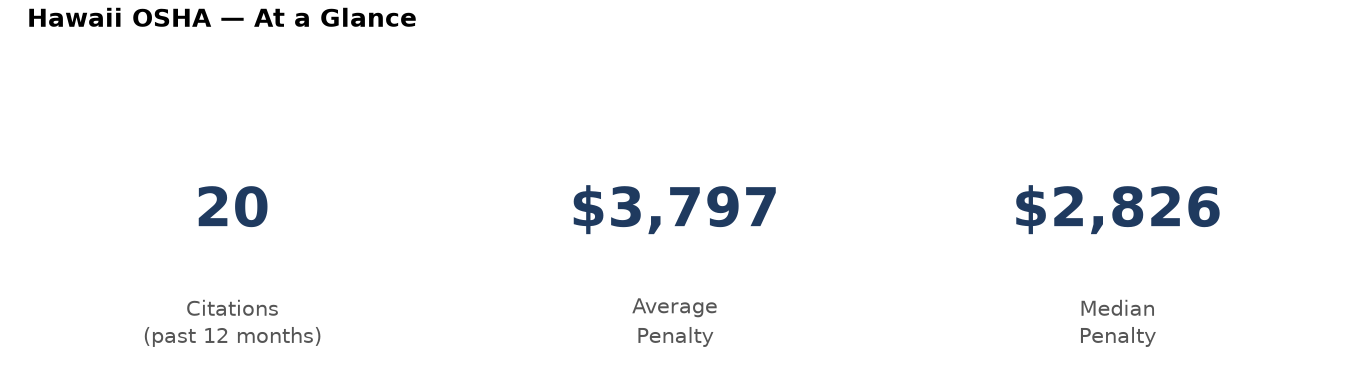
Hawaii employers racked up 20 fall protection citations under OSHA’s 1926.501 standard over the past 12 months. That might sound small next to mainland states, but the average penalty was $3,797, the median was $2,826, and three of the citations were classified as Repeat violations — a category that signals OSHA has already flagged the same employer for the same hazard before. Honolulu was the single most-cited city on the islands.
If you just opened an envelope with a citation number and a dollar figure attached to it, the clock is already running. Before you decide whether to pay, appeal, or negotiate, it helps to talk to a Hawaii OSHA defense attorney who handles these cases regularly and knows how Honolulu-area compliance officers tend to write them up.
What OSHA’s Fall Protection Rule Actually Requires on Hawaii Job Sites
The standard behind every one of these 20 citations, 1926.501, is not complicated in concept: once a worker in construction is exposed to a fall of six feet or more to a lower level, the employer has to do something about it. That something is usually one of three fixes — guardrails around the edge, a safety net system underneath, or a personal fall arrest system tied off to an anchor point rated for the load.
What trips up so many Hawaii contractors isn’t ignorance of the rule itself. It’s the gap between having harnesses on the truck and actually having workers hooked up correctly at the moment an inspector shows up. Citations under sub-provisions like B01, B11, and B13 of this standard — all of which appear in Hawaii’s recent case history — typically point to specific failures: no fall arrest system in use at all, an anchor point that doesn’t meet load requirements, or the same hazard recurring at a site the employer was already cited for.
Why Roofing and Residential Crews Account for Most of Hawaii’s Citations
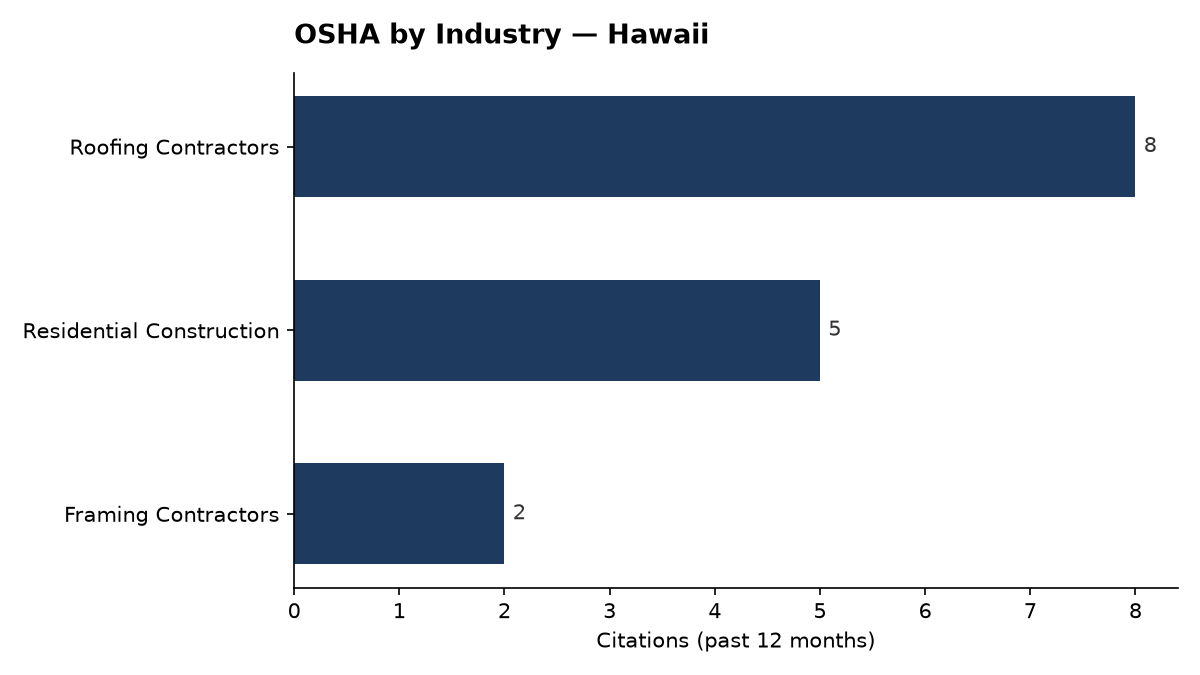
Roofing contractors alone account for 8 of the 20 citations issued statewide — 40 percent of all fall protection enforcement activity in Hawaii over the period. Residential construction added another 5, and framing contractors picked up 2 more. Together, these three trades cover the large majority of every citation issued.
That concentration isn’t random. Roofing contractors work at height by definition, often on steep or wet surfaces, frequently on residential jobs where the crew size is small and there’s no dedicated safety officer walking the site. Hawaii’s roofing citations show that pattern clearly:
- A To Z Roofing Hawaii LLC (Aiea): $9,930 — Repeat violation under 19260501 B13, issued December 10, 2025
- CJ’S Roofing & Raingutter LLC (Ewa Beach): $7,100 — Repeat violation under 19260501 B13, issued June 18, 2026
- Commercial Roofing & Waterproofing Hawaii Inc (Honolulu): $6,332 — Serious violation under 19260501 B11, issued June 12, 2026
- AFO Pro Quality Roofing LLC (Kailua Kona): $5,674 — Repeat violation under 19260501 B13, issued June 18, 2026
- AK Roofing And Raingutter LLC (Honolulu): $4,965 — Serious violation under 19260501 B01, issued November 05, 2025
Notice how three of these five are Repeat citations, not first-time Serious findings. That matters a lot for penalty size and for how OSHA will treat the next inspection at the same company. A Repeat classification tells the agency — and eventually a judge, if it gets that far — that the employer had already been put on notice about this exact hazard.
What a Fall Protection Citation Costs in Hawaii — and Why the Initial Number Isn’t Final
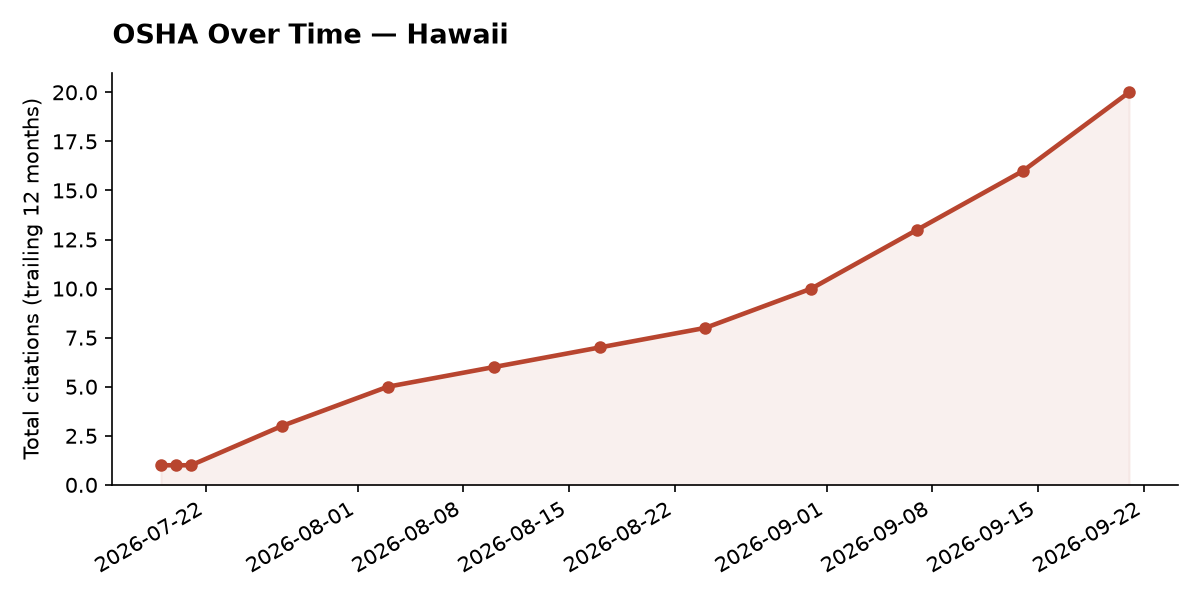
Of the 20 citations issued statewide, 17 were classified as Serious and 3 as Repeat. Serious citations reflect a hazard that could realistically cause death or serious physical harm — which is essentially every uncontrolled fall exposure at height. Repeat citations carry steeper base penalties because the employer has been down this road before.
Here’s the number that deserves real attention: Hawaii employers who pushed back on their citations saw an average penalty reduction of 22 percent between the initial assessment and the final resolved amount. That’s not a rounding error. On a $9,930 citation like A To Z Roofing’s, a 22 percent reduction is over $2,100. Multiply that across a company’s full citation package, and the case for at least reviewing the paperwork with someone who understands how OSHA fall protection penalty amounts are calculated becomes obvious.
Given the size of that potential reduction, it’s worth a conversation before you write a check. A Hawaii OSHA defense attorney can look at your specific citation language — the B01, B11, or B13 subsection, the classification, the inspection notes — and tell you honestly whether there’s room to negotiate or contest it.
You Have 15 Working Days — Here’s What Happens Next in Hawaii
Once a citation is issued, the deadline to file a Notice of Contest is 15 working days from the date you receive it. Not 15 calendar days, and not a soft target — it’s a hard cutoff. Miss it, and the citation and penalty become a final order, with essentially no further avenue to dispute the facts, the classification, or the amount.
This is exactly why speed matters more than most business owners expect when a citation shows up. You don’t need to have your full defense built out before that deadline — you need to have preserved your right to contest while you and your attorney sort out whether contesting, negotiating an informal settlement, or paying makes the most sense. Understanding how to contest an OSHA citation before that window closes is the difference between having options and having none.
If you run a roofing, residential, or framing operation anywhere from Honolulu to the outer islands, don’t assume a $2,826 median citation is too small to fight or a $9,930 Repeat citation is too big to negotiate. Both scenarios have gone the other way for Hawaii contractors who acted inside the deadline.
Talk to a Hawaii OSHA defense attorney now, while your 15 working days are still on the calendar — waiting is the one move that guarantees you lose your options.